
Poultry
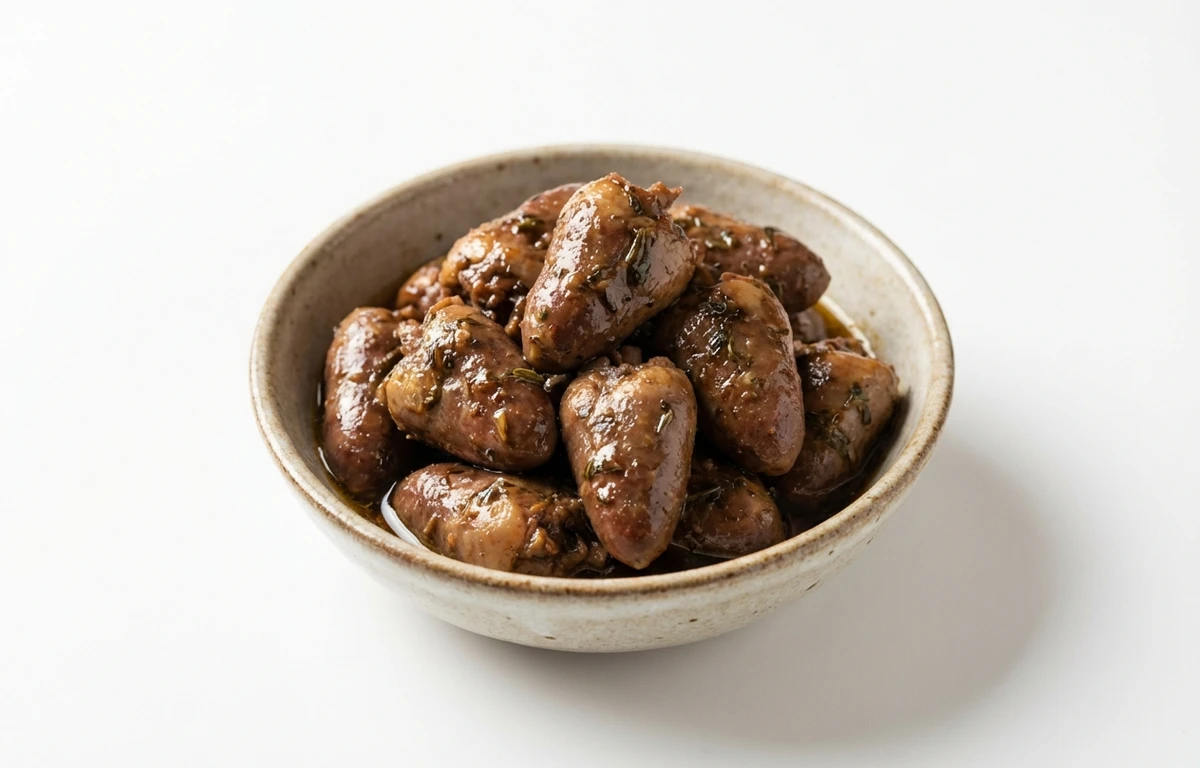
simmered chicken heart.
VegetarianVeganGluten-freeDairy-freeNut-freePeanut-freeSoy-freeEgg-freeShellfish-freeHoney-freeAlcohol-free
ALSO KNOWN AS
chicken heart
SERVING
CALORIES
185
PROTEIN
26.4g
CARBS
0.10g
FAT
7.9g
FIBER
0g
NUTRITION PROFILE · per 100 g
Everything in this ingredient.
MACRONUTRIENTS
Calories185kcal—
Protein26.4g53%
Carbohydrates0.10g0%
Fiber0g0%
Sugar0g0%
Total fat7.9g10%
Saturated fat2.4g12%
Trans fat0g—
Cholesterol242mg81%
Water64.2g—
MINERALS
Sodium64mg3%
Potassium132mg3%
Calcium15mg1%
Iron9.0mg50%
Magnesium19mg5%
Phosphorus199mg16%
Zinc7.2mg65%
Copper0.50mg56%
Manganese0.05mg2%
Selenium17.8µg32%
VITAMINS
Vitamin A8.0µg1%
Vitamin C3.2mg4%
Vitamin D0.10µg1%
Vitamin E0.20mg1%
Vitamin K0µg0%
Thiamin (B1)0.15mg13%
Riboflavin (B2)0.90mg69%
Niacin (B3)4.8mg30%
Pantothenic acid (B5)2.6mg52%
Vitamin B60.30mg18%
Folate (B9)72µg18%
Vitamin B127.3µg304%
%DV based on a 2,000 cal diet. Source: USDA FoodData Central. A dash in the %DV column means there’s no established Daily Value for that nutrient.
MEASUREMENT CONVERSIONS
How much is what.
1 cup150g
1 tablespoon9g
1 piece8g
HEALTH BENEFITS
Why eat it.
- ✓Excellent source of iron and vitamin B12, which are crucial for red blood cell formation and preventing anemia.
- ✓Rich in Coenzyme Q10 (CoQ10), an antioxidant that supports cardiovascular health and cellular energy production.
- ✓High in protein, essential for muscle building, tissue repair, and overall body function.
- ✓Provides significant amounts of zinc and selenium, minerals vital for immune system support and thyroid health.
COOKING TIPS
In the kitchen.
- 1Before simmering, trim any excess fat or connective tissue from the hearts for a better texture.
- 2Simmer gently over low heat; boiling can make the hearts tough and rubbery.
- 3Infuse flavor by simmering in a well-seasoned broth with aromatics like garlic, bay leaves, thyme, or soy sauce.
- 4After simmering, the hearts can be skewered and grilled, sliced for tacos or salads, or added to stir-fries.
STORAGE
Keep it fresh.
- Store cooked simmered chicken hearts in an airtight container in the refrigerator for up to 4 days.
- For longer storage, freeze the hearts in their simmering liquid in a freezer-safe container for up to 3 months.
FAQ
Frequently asked questions.
Is simmered chicken heart healthy?
Yes, simmered chicken heart is highly nutritious. It is an excellent source of iron and vitamin B12 for blood health, and contains Coenzyme Q10 (CoQ10), which supports cardiovascular function and cellular energy.
How much protein is in simmered chicken heart?
Simmered chicken heart is very protein-dense, providing approximately 26.4g of protein per 100g serving. This makes it an exceptional choice for muscle building and tissue repair.
Is simmered chicken heart keto-friendly?
Yes, it is very keto-friendly and ideal for low-carb diets. It contains only 0.1g of carbohydrates per 100g serving, along with 7.9g of healthy fats.
What does simmered chicken heart taste like?
Chicken hearts have a mild, slightly metallic flavor similar to dark meat chicken but with a more intense savoriness. When simmered, they develop a dense, slightly chewy, and 'snappy' texture that absorbs the flavors of the cooking liquid.
Is simmered chicken heart good for weight loss?
Yes, it can be a great addition to a weight loss diet. With 185 calories and high protein content per 100g, it promotes satiety and helps maintain muscle mass while keeping you full for longer.
How do you prepare and simmer chicken hearts?
First, rinse the hearts and trim any excess fat or connective tissue. Place them in a pot with broth or water and aromatics, then simmer on low heat for 30 to 45 minutes until they are tender and cooked through.
Is simmered chicken heart gluten-free?
Naturally, chicken hearts are gluten-free. However, if you are simmering them in a prepared sauce or broth, ensure those ingredients do not contain hidden gluten or thickening agents like flour.
How long does simmered chicken heart last in the refrigerator?
Once cooked, simmered chicken hearts should be stored in an airtight container. They will stay fresh in the refrigerator for 3 to 4 days.
Can you freeze simmered chicken hearts?
Yes, you can freeze them for up to 3 months. For the best results, freeze them in a bit of their simmering liquid to prevent the meat from becoming too tough or drying out upon reheating.
Is simmered chicken heart high in cholesterol?
Like most organ meats, chicken hearts are relatively high in dietary cholesterol. While they are very nutrient-dense, individuals monitoring their cholesterol levels should consume them in moderation as part of a balanced diet.



















