
Poultry
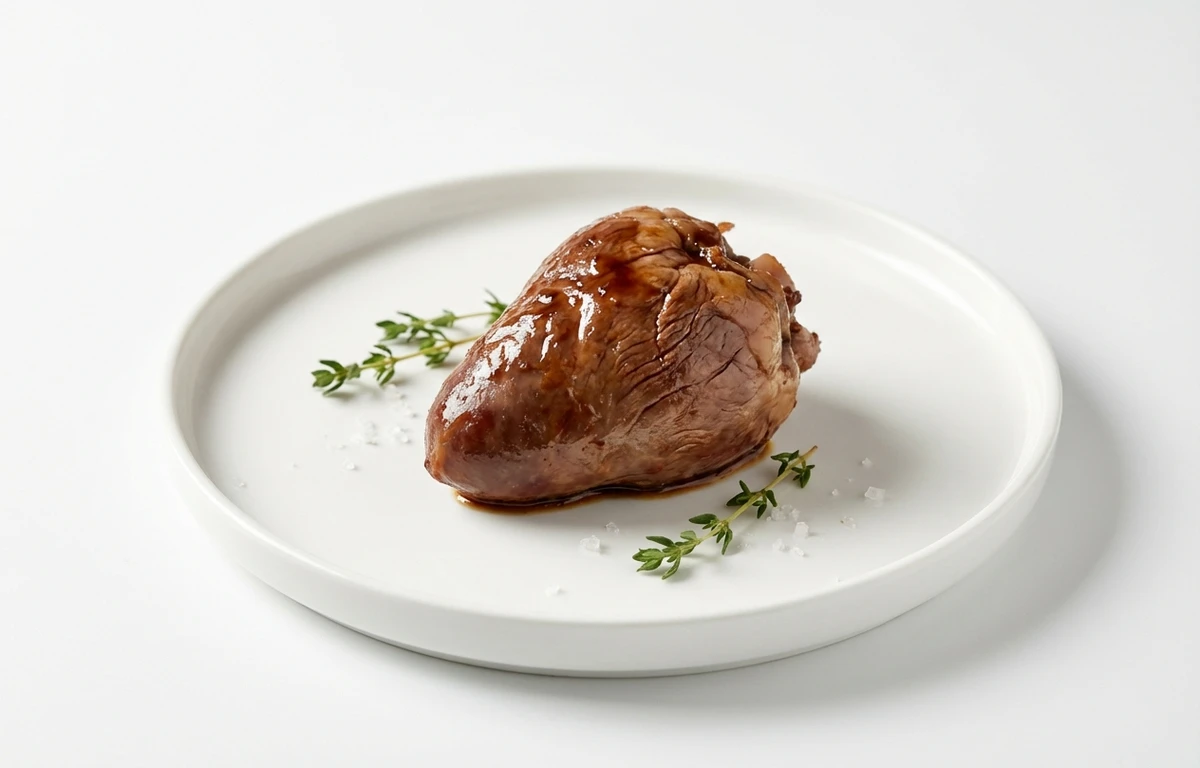
simmered turkey heart.
VegetarianVeganGluten-freeDairy-freeNut-freePeanut-freeSoy-freeEgg-freeShellfish-freeHoney-freeAlcohol-free
ALSO KNOWN AS
cooked turkey heartboiled turkey heartbraised turkey heartsimmered turkey hearts
SERVING
CALORIES
174
PROTEIN
26.5g
CARBS
0.20g
FAT
7.5g
FIBER
0g
NUTRITION PROFILE · per 100 g
Everything in this ingredient.
MACRONUTRIENTS
Calories174kcal—
Protein26.5g53%
Carbohydrates0.20g0%
Fiber0g0%
Sugar0g0%
Total fat7.5g10%
Saturated fat2.1g11%
Trans fat0g—
Cholesterol242mg81%
Water64.5g—
MINERALS
Sodium65mg3%
Potassium215mg5%
Calcium14mg1%
Iron5.8mg32%
Magnesium21mg5%
Phosphorus225mg18%
Zinc3.4mg31%
Copper0.45mg50%
Manganese0.05mg2%
Selenium35.2µg64%
VITAMINS
Vitamin A12µg1%
Vitamin C3.5mg4%
Vitamin D0.10µg1%
Vitamin E0.30mg2%
Vitamin K0µg0%
Thiamin (B1)0.15mg13%
Riboflavin (B2)1.1mg85%
Niacin (B3)5.2mg33%
Pantothenic acid (B5)2.8mg56%
Vitamin B60.40mg24%
Folate (B9)10µg3%
Vitamin B1214.5µg604%
%DV based on a 2,000 cal diet. Source: USDA FoodData Central. A dash in the %DV column means there’s no established Daily Value for that nutrient.
MEASUREMENT CONVERSIONS
How much is what.
1 cup240g
1 tablespoon15g
1 teaspoon5g
1 oz28.4g
1 lb453.6g
1 ml1g
1 liter1000g
1 piece30g
HEALTH BENEFITS
Why eat it.
- ✓Extremely high in Vitamin B12 for nerve health
- ✓Rich source of bioavailable iron to prevent anemia
- ✓Contains Coenzyme Q10 (CoQ10) which supports heart health
- ✓High quality protein source for muscle repair
- ✓Good source of zinc and selenium for immune support
COOKING TIPS
In the kitchen.
- 1Simmer on low heat to ensure the muscle remains tender rather than rubbery
- 2Trim any visible connective tissue or large vessels before or after simmering for better texture
- 3Use the simmering liquid as a base for gravies or soups as it is nutrient-dense
STORAGE
Keep it fresh.
- Store in an airtight container in the refrigerator for up to 3-4 days
- Can be frozen in a freezer-safe bag for up to 2-3 months
- Keep in the coldest part of the refrigerator, ideally below 4°C (40°F)
FAQ
Frequently asked questions.
How long does simmered turkey heart last in the fridge?
When stored in an airtight container, it will stay fresh for 3 to 4 days.
Can you freeze cooked turkey hearts?
Yes, they freeze well. Place them in a sealed freezer bag for up to 3 months.
What is the best way to pick quality turkey hearts?
Look for hearts that are plump, dark red in color, and have a clean, metallic smell without any sour notes.
What can I use as a substitute for turkey heart?
Chicken hearts are the closest substitute, though smaller. Beef heart or turkey gizzards can also be used.
How do you prepare turkey hearts for simmering?
Rinse them under cold water, trim away excess fat and the tough valves at the top, and slice in half to remove any clotted blood.
Are turkey hearts healthy?
Yes, they are very nutrient-dense, providing high levels of B vitamins, iron, and protein, though they are high in cholesterol.
Why is my simmered turkey heart tough?
It was likely boiled too vigorously or for too long. Simmering gently at a low temperature helps maintain a tender texture.
What are common dishes using simmered turkey heart?
They are often used in giblet gravies, stews, chopped into salads, or served as a high-protein snack.
Is turkey heart high in cholesterol?
Yes, like most organ meats, turkey heart contains a significant amount of cholesterol per serving.
Can I use the simmering liquid?
Absolutely. The liquid contains flavor and nutrients and makes an excellent stock for soups or sauces.



















