
Poultry
simmered turkey liver.
VegetarianVeganGluten-freeDairy-freeNut-freePeanut-freeSoy-freeEgg-freeShellfish-freeHoney-freeAlcohol-free
ALSO KNOWN AS
turkey liver
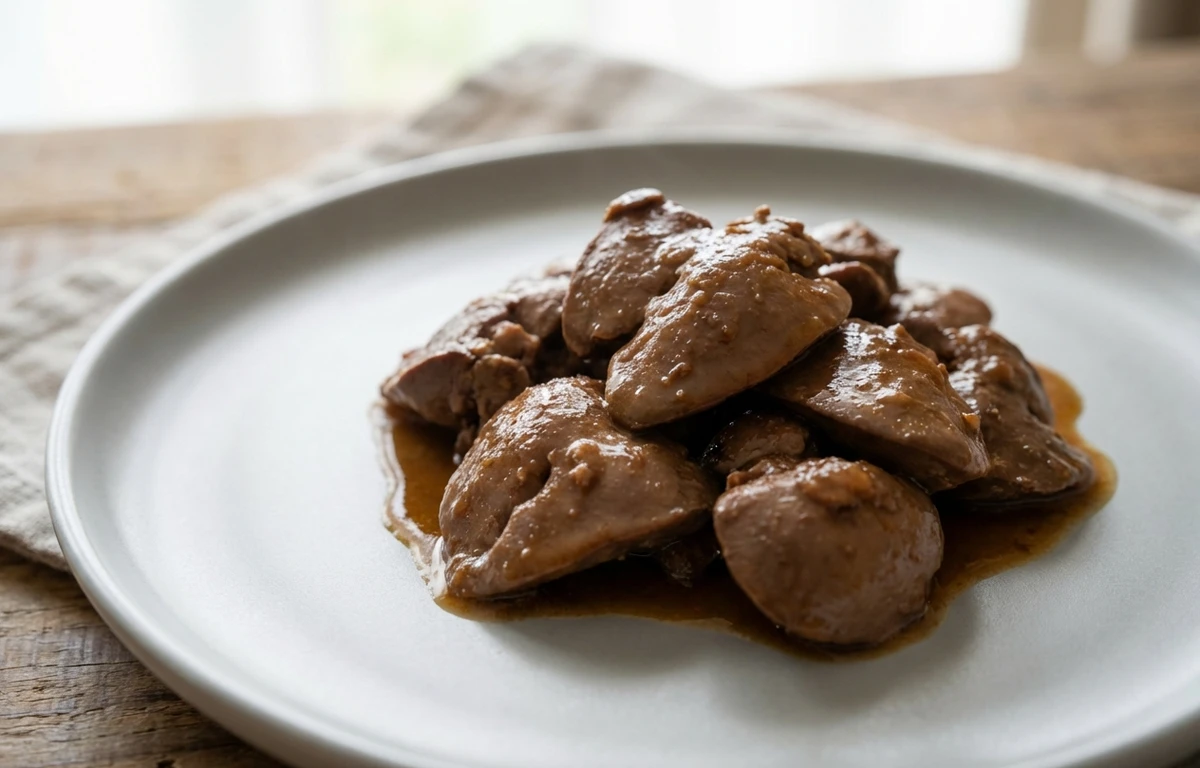
SERVING
CALORIES
189
PROTEIN
27g
CARBS
0g
FAT
8.2g
FIBER
0g
NUTRITION PROFILE · per 100 g
Everything in this ingredient.
MACRONUTRIENTS
Calories189kcal—
Protein27g54%
Carbohydrates0g0%
Fiber0g0%
Sugar0g0%
Total fat8.2g10%
Saturated fat2.3g12%
Trans fat0.06g—
Cholesterol648mg216%
Water64g—
MINERALS
Sodium98mg4%
Potassium153mg3%
Calcium19mg1%
Iron1.8mg10%
Magnesium26mg6%
Phosphorus312mg25%
Zinc4.5mg41%
Copper1.1mg117%
Manganese0.33mg14%
Selenium102µg186%
VITAMINS
Vitamin A10751µg1195%
Vitamin C22.6mg25%
Vitamin E0.15mg1%
Vitamin K0µg0%
Thiamin (B1)0.26mg22%
Riboflavin (B2)2.7mg207%
Niacin (B3)11.1mg69%
Pantothenic acid (B5)4.3mg87%
Vitamin B60.88mg52%
Folate (B9)691µg173%
Vitamin B1228.2µg1174%
%DV based on a 2,000 cal diet. Source: USDA FoodData Central. A dash in the %DV column means there’s no established Daily Value for that nutrient.
MEASUREMENT CONVERSIONS
How much is what.
1 cup145g
1 tablespoon9.1g
1 teaspoon3g
1 ml0.6g
1 liter604.2g
1 piece40g
HEALTH BENEFITS
Why eat it.
- ✓Extremely rich in Vitamin A, crucial for vision health, immune function, and cellular growth.
- ✓Excellent source of highly bioavailable heme iron, which helps prevent anemia and supports oxygen transport in the blood.
- ✓Packed with B vitamins, especially Vitamin B12 for nerve function and red blood cell formation, and folate (B9) for DNA synthesis.
- ✓A concentrated source of high-quality complete protein, essential for muscle building and repair.
COOKING TIPS
In the kitchen.
- 1Simmer gently over low to medium heat; boiling can make the liver tough and rubbery.
- 2Avoid overcooking to maintain a tender, creamy texture. The liver is done when it's firm but still slightly pink in the center.
- 3Enhance the flavor by simmering with aromatics like onions, garlic, bay leaves, or thyme.
- 4Once simmered, the liver can be puréed for pâtés, chopped for stuffings, or mashed to enrich gravies and sauces.
STORAGE
Keep it fresh.
- Store cooked turkey liver in an airtight container in the refrigerator and consume within 3 to 4 days.
- For longer storage, freeze the simmered liver in a freezer-safe bag or container for up to 3 months. Thaw in the refrigerator before using.
FAQ
Frequently asked questions.
Is simmered turkey liver healthy?
Yes, simmered turkey liver is a nutrient-dense superfood. It is an exceptional source of Vitamin A for vision and immune health, B vitamins for energy metabolism, and heme iron, which is highly absorbable and helps prevent anemia.
How much protein is in simmered turkey liver?
Simmered turkey liver is very high in protein, providing approximately 27 grams per 100-gram serving. This makes it an excellent choice for muscle building, tissue repair, and maintaining satiety.
Is simmered turkey liver keto-friendly?
Yes, it is perfectly suited for a ketogenic or low-carb diet. It contains 0 grams of carbohydrates and provides a good balance of protein and 8.18 grams of fat per 100g serving.
Can pregnant women eat simmered turkey liver?
While it is rich in folate and iron, pregnant women should consume turkey liver in moderation. Its extremely high Vitamin A (retinol) content can be harmful to fetal development if consumed in excessive amounts; it is best to consult a doctor regarding portion sizes.
What does simmered turkey liver taste like?
It has a rich, earthy, and slightly metallic flavor that is more intense than chicken liver but milder than beef liver. When simmered correctly, the texture is dense, smooth, and creamy.
How do you properly simmer turkey liver?
Place the livers in a pot and cover with water or broth, adding aromatics like onions, garlic, or bay leaves. Bring to a gentle simmer and cook for 10-15 minutes until the centers are no longer bloody but still slightly pink to avoid a rubbery texture.
How long does simmered turkey liver last in the refrigerator?
Once cooked, simmered turkey liver should be stored in an airtight container and kept in the refrigerator. It is best consumed within 2 to 3 days for optimal freshness and safety.
Can you freeze simmered turkey liver?
Yes, you can freeze simmered turkey liver for up to 2 months. Store it in a heavy-duty freezer bag or airtight container; note that the texture may become slightly more crumbly after thawing.
Is simmered turkey liver gluten-free?
Naturally, turkey liver is 100% gluten-free. However, if you are simmering it in a prepared broth or using store-bought seasonings, check the labels to ensure no gluten-containing thickeners or additives were used.
How do you know if simmered turkey liver has gone bad?
Spoiled turkey liver will typically develop a sour or ammonia-like smell, a slimy surface texture, or visible discoloration. If you notice any of these signs, or if it has been in the fridge longer than 3 days, it should be discarded.



















