Loading...
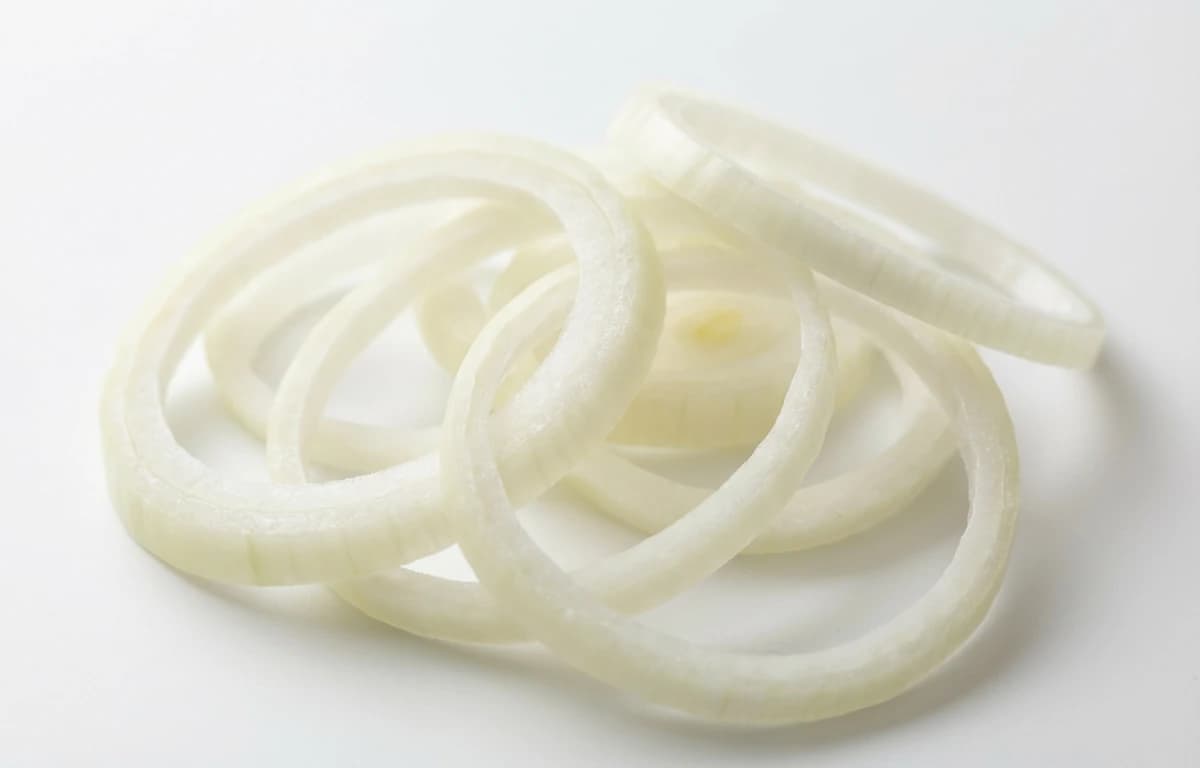
Also known as: sliced pyaz, sliced kanda
Per 100g
Nutrition data source: USDA FoodData Central
Common measurement equivalents in grams

Crispy, golden-brown onion fritters from Bengal, made with thinly sliced onions and a light chickpea flour batter. A perfect tea-time snack, especially on a rainy day, ready in minutes.
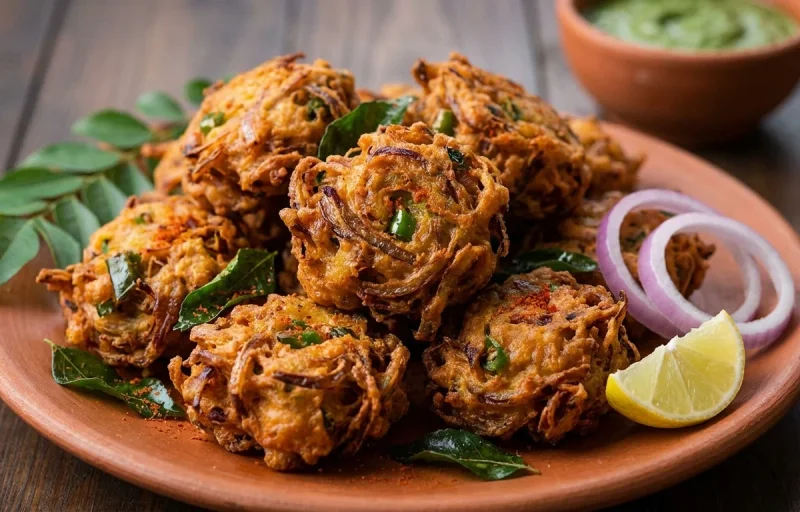
Crispy, crunchy onion fritters from Andhra, made with thinly sliced onions and a light chickpea flour batter. This popular street food snack is perfect with a cup of hot chai, especially on a rainy day.
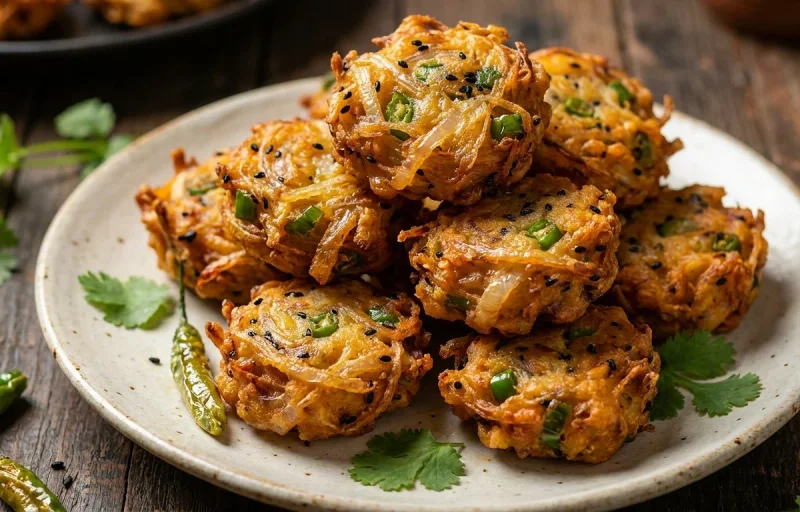
A quintessential Bengali monsoon snack, Peyaji are crispy onion fritters that are dangerously addictive. Thinly sliced onions are bound with a spiced chickpea flour batter and deep-fried to a glorious golden-brown. Served hot with a side of puffed rice (muri) and a cup of chai, they capture the essence of a rainy day in Kolkata.

Crispy, golden fritters made with sliced onions, boiled eggs, and a savory chickpea flour batter. This popular Indian street food snack is perfect for a rainy day with a cup of hot chai.
Sliced onions should be stored in an airtight container and will last for 2 to 3 days in the refrigerator.
Yes, you can freeze them in freezer bags for up to 3-6 months. They will lose their crunch, so they are best used in cooked dishes like soups or stews.
Slicing breaks the onion's cells, releasing enzymes that create a sulfur-based gas. When this gas hits the moisture in your eyes, it creates a mild sulfuric acid.
Slice them very thinly 'pole to pole' (with the grain) for a milder flavor and better structure in salads.
Shallots are the best substitute for a milder flavor. Leeks or green onions (scallions) also work well depending on the dish.
Yes, they are low in calories and provide fiber, Vitamin C, and various antioxidants like quercetin.
Rub your hands with lemon juice, vinegar, or against a stainless steel object under cold running water.
Absolutely. Raw sliced onions are common in salads, sandwiches, and as a garnish for many street foods.
Sliced Onion is a versatile ingredient found in cuisines around the world. With 40 calories per 100g and 1.1 grams of protein, it's a nutritious addition to many dishes.
Explore more ingredients in the vegetable category with complete nutrition information.
View all vegetable →Discover 2 recipes featuring sliced onion with step-by-step instructions.
Browse recipes →Explore more ingredients similar to Sliced Onion.
The most-searched ingredients on CraftMyMeals.