
Vegetable
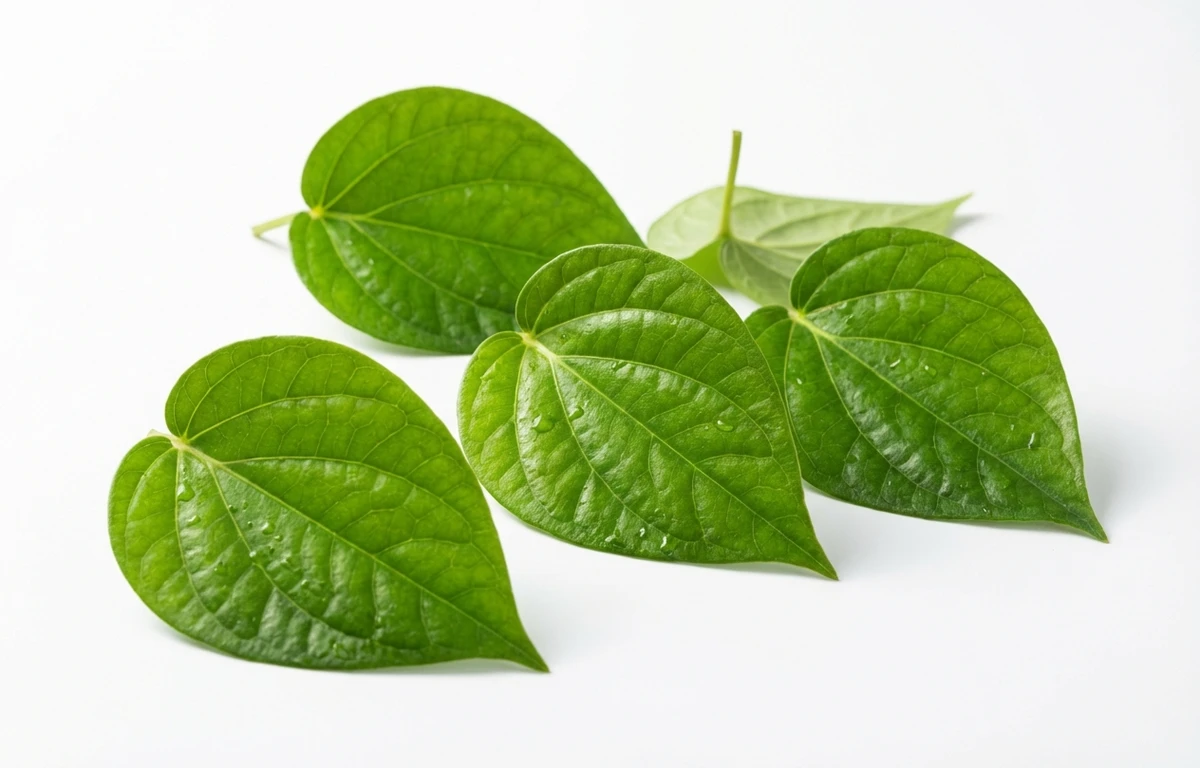
small betel leaves.
VegetarianVeganGluten-freeDairy-freeNut-freePeanut-freeSoy-freeEgg-freeShellfish-freeHoney-freeAlcohol-free
SERVING
CALORIES
44
PROTEIN
2.6g
CARBS
6.2g
FAT
0.75g
FIBER
2.0g
This ingredient is flagged as naturally gluten-free. Per 100 g, it provides 204 µg of vitamin K.
NUTRITION PROFILE · per 100 g
Everything in this ingredient.
MACRONUTRIENTS
Calories43.7kcal—
Protein2.6g5%
Carbohydrates6.2g2%
Fiber2.0g7%
Sugar0.40g1%
Total fat0.75g1%
Saturated fat0.24g1%
Trans fat0g—
Cholesterol0mg0%
Water85.9g—
MINERALS
Sodium14mg1%
Potassium678mg14%
Calcium196mg15%
Iron2.9mg16%
Magnesium89.9mg21%
Phosphorus55.7mg4%
Zinc0.39mg4%
Copper0.29mg32%
Manganese1.8mg78%
Selenium5.4µg10%
VITAMINS
Vitamin A5103µg567%
Vitamin C24.5mg27%
Vitamin D2.3µg11%
Vitamin E0.03mg0%
Vitamin K204µg170%
Thiamin (B1)0.02mg2%
Riboflavin (B2)0.07mg5%
Niacin (B3)0.47mg3%
Pantothenic acid (B5)0.47mg9%
Vitamin B60.04mg2%
Biotin (B7)1.3µg4%
Folate (B9)16.6µg4%
%DV based on a 2,000 cal diet. Source: USDA FoodData Central. A dash in the %DV column means there’s no established Daily Value for that nutrient.
MEASUREMENT CONVERSIONS
How much is what.
1 oz28.4g
1 lb453.6g
1 piece1g
HEALTH BENEFITS
Why eat it.
- ✓Traditionally used as a digestive aid and mouth freshener.
- ✓Possesses antiseptic and antimicrobial properties due to compounds like chavicol.
- ✓Contains essential nutrients like calcium, vitamin C, and carotene.
COOKING TIPS
In the kitchen.
- 1Commonly used raw as a wrap for savory fillings, such as in the Thai appetizer 'Miang Kham'.
- 2The leaves have a distinct peppery and slightly bitter flavor; use them to add an aromatic note to salads, stir-fries, or curries.
- 3For a milder flavor, you can briefly blanch the leaves before using them.
- 4Always wash the leaves thoroughly and pat them dry before use. The tough central stem is often removed before wrapping or chopping.
STORAGE
Keep it fresh.
- Wrap the leaves in a damp paper towel, place them in a zip-top bag, and store in the refrigerator's crisper drawer for up to one week.
- To prolong freshness, you can also stand the stems in a jar of water (like fresh herbs) and cover loosely with a plastic bag in the fridge.
FAQ
Frequently asked questions.
What are the nutritional values of small betel leaves?
Per 100g, small betel leaves contain approximately 43.74 calories, 2.62g of protein, 6.16g of carbohydrates, and 0.75g of fat. This makes them a low-calorie, low-fat addition to various dishes.
Are small betel leaves good for digestion?
Traditionally, small betel leaves are used as a digestive aid. Chewing the leaves can help stimulate the production of digestive enzymes and also serves as an effective natural mouth freshener.
Are small betel leaves keto-friendly?
Yes, small betel leaves are keto-friendly and low-carb. With only 6.16g of carbohydrates per 100g, they can be easily incorporated into a ketogenic or low-glycemic diet.
Are small betel leaves vegan and gluten-free?
Small betel leaves are naturally vegan and gluten-free. They are a plant-based vegetable and do not contain any animal products or gluten proteins.
How do you use small betel leaves in cooking?
They are most commonly used as edible wrappers for appetizers, such as the Thai dish Miang Kham. They can also be finely shredded into salads, added to soups, or used to wrap meat for grilling to impart a peppery aroma.
What do small betel leaves taste like?
Small betel leaves have a unique flavor profile that is peppery, pungent, and slightly bitter. They offer a refreshing, herbal taste that provides a sharp contrast to sweet or savory fillings.
How long do small betel leaves last?
When stored correctly in the refrigerator, fresh betel leaves typically last between 5 to 7 days. You should discard them if they begin to turn yellow, develop dark spots, or become slimy.
Can I eat small betel leaves raw?
Yes, small betel leaves are frequently consumed raw. They are a popular choice for fresh wraps and salads in Southeast Asian cuisines, where their raw, peppery bite is highly valued.



















