
Grain
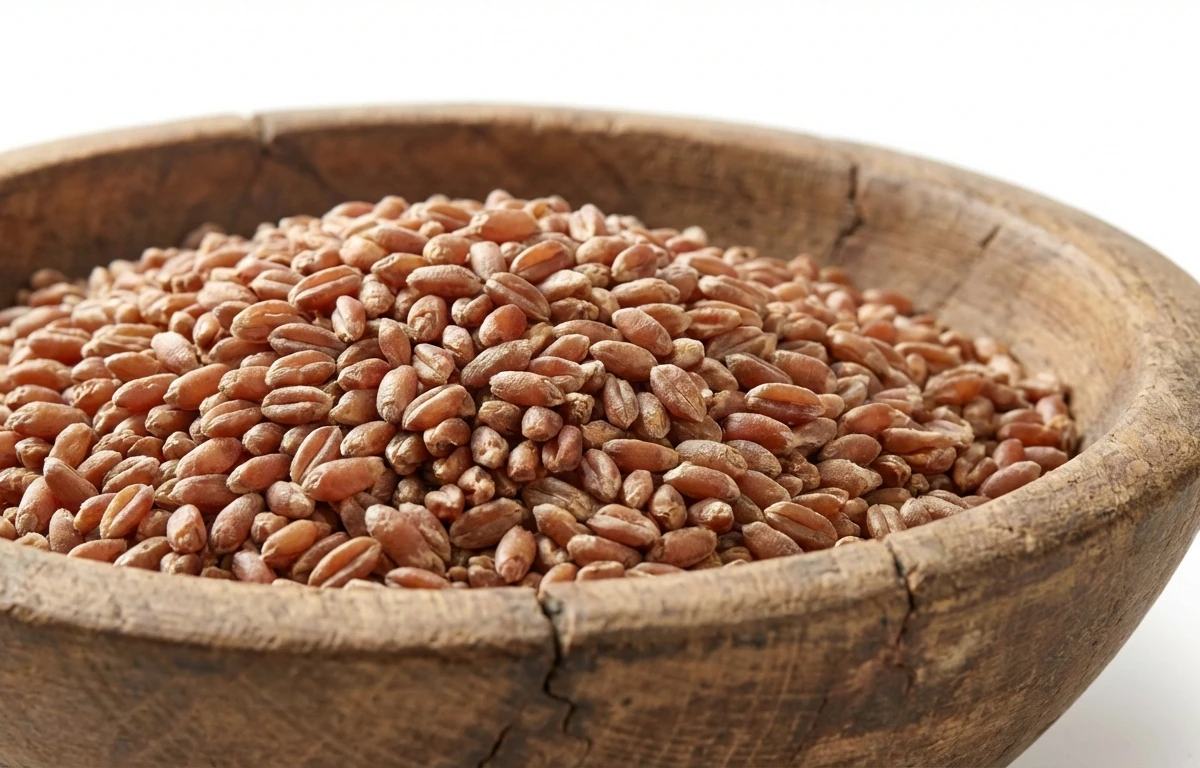
soft red winter wheat.
VegetarianVeganGluten-freeDairy-freeNut-freePeanut-freeSoy-freeEgg-freeShellfish-freeHoney-freeAlcohol-freeWhole grain
SERVING
CALORIES
331
PROTEIN
10.3g
CARBS
74.2g
FAT
1.6g
FIBER
12.5g
NUTRITION PROFILE · per 100 g
Everything in this ingredient.
MACRONUTRIENTS
Calories331kcal—
Protein10.3g21%
Carbohydrates74.2g27%
Fiber12.5g45%
Sugar0.41g1%
Total fat1.6g2%
Saturated fat0.29g1%
Cholesterol0mg0%
Water12.2g—
MINERALS
Sodium2.0mg0%
Potassium397mg8%
Calcium27mg2%
Iron3.2mg18%
Magnesium126mg30%
Phosphorus493mg39%
Zinc2.6mg24%
Copper0.45mg50%
Manganese4.4mg191%
VITAMINS
Vitamin A0µg0%
Vitamin C0mg0%
Vitamin D0µg0%
Vitamin E1.0mg7%
Thiamin (B1)0.39mg33%
Riboflavin (B2)0.10mg8%
Niacin (B3)4.8mg30%
Pantothenic acid (B5)0.85mg17%
Vitamin B60.27mg16%
Folate (B9)41µg10%
Vitamin B120µg0%
%DV based on a 2,000 cal diet. Source: USDA FoodData Central. A dash in the %DV column means there’s no established Daily Value for that nutrient.
MEASUREMENT CONVERSIONS
How much is what.
1 cup168g
1 tablespoon10.5g
1 teaspoon3.5g
1 ml0.7g
1 liter700g
HEALTH BENEFITS
Why eat it.
- ✓High in dietary fiber, which supports digestive health and helps regulate blood sugar levels.
- ✓Good source of essential minerals such as manganese, phosphorus, and selenium, which are vital for bone health, metabolism, and antioxidant defense.
- ✓Provides complex carbohydrates for sustained energy release, making it a good choice for maintaining energy levels.
- ✓Contains phytochemicals like phenolic acids and lignans, which have antioxidant properties and may help reduce the risk of chronic diseases.
COOKING TIPS
In the kitchen.
- 1Due to its lower protein and gluten content, flour from soft red winter wheat is ideal for creating tender baked goods like cakes, pastries, cookies, and biscuits.
- 2To cook the whole berries, soak them overnight to shorten cooking time, then simmer in water or broth for 45-60 minutes until tender and chewy.
- 3Use cooked wheat berries as a nutritious base for salads, grain bowls, pilafs, or add them to soups and stews for extra texture and fiber.
- 4When milling at home, use the fresh whole wheat flour promptly as the oils from the germ can cause it to spoil faster than refined flour.
STORAGE
Keep it fresh.
- Store whole wheat berries in an airtight container in a cool, dark, and dry place for up to 6 months.
- For long-term storage (over a year), place the airtight container in the freezer to prevent the natural oils in the germ from becoming rancid.
FAQ
Frequently asked questions.
Is soft red winter wheat healthy?
Yes, soft red winter wheat is a nutritious whole grain that is high in dietary fiber, which supports digestive health and blood sugar regulation. It is also a good source of essential minerals like manganese, phosphorus, and selenium, which are vital for bone health and metabolism.
How much protein and fiber are in soft red winter wheat?
Per 100g, soft red winter wheat contains approximately 10.35g of protein and is rich in dietary fiber. While its protein content is lower than hard wheat varieties, it provides a significant amount of complex carbohydrates for sustained energy.
Is soft red winter wheat gluten-free?
No, soft red winter wheat is not gluten-free. Like all wheat varieties, it contains gluten proteins and is unsuitable for individuals with celiac disease or non-celiac gluten sensitivity.
What is soft red winter wheat typically used for?
Due to its lower protein and weaker gluten content, it is primarily used to make flour for 'soft' baked goods like cakes, pastries, cookies, and crackers. It produces a tender, flaky texture rather than the chewy structure required for artisan breads.
How does soft red winter wheat differ from hard red winter wheat?
Soft red winter wheat has a lower protein content (around 10%) and a softer endosperm compared to hard red winter wheat. This makes it ideal for delicate pastries and flatbreads, whereas hard wheat is better suited for high-volume yeast breads.
Is soft red winter wheat suitable for a vegan diet?
Yes, soft red winter wheat is a plant-based grain and is 100% vegan. It is an excellent staple for vegan diets, providing essential minerals and antioxidants like phenolic acids and lignans.
How do you cook soft red winter wheat berries?
To cook the whole berries, simmer them in a 1:3 ratio of wheat to water or broth for 45 to 60 minutes until tender but chewy. They can be used in grain salads, soups, or as a nutrient-dense alternative to rice.
Can diabetics eat soft red winter wheat?
Yes, when consumed as a whole grain, its high fiber content helps regulate blood sugar levels by slowing carbohydrate digestion. However, diabetics should monitor portion sizes as it contains 74.24g of carbohydrates per 100g.
How should I store soft red winter wheat?
Whole wheat berries should be stored in an airtight container in a cool, dry, and dark place, where they can last for over a year. If the wheat is ground into flour, it is best stored in the refrigerator or freezer to prevent the natural oils from becoming rancid.
Is soft red winter wheat good for weight loss?
It can be a helpful part of a weight loss diet because the high fiber content promotes satiety and keeps you feeling full longer. However, it is calorie-dense at 331 calories per 100g, so it should be eaten in moderation as part of a balanced meal plan.



















