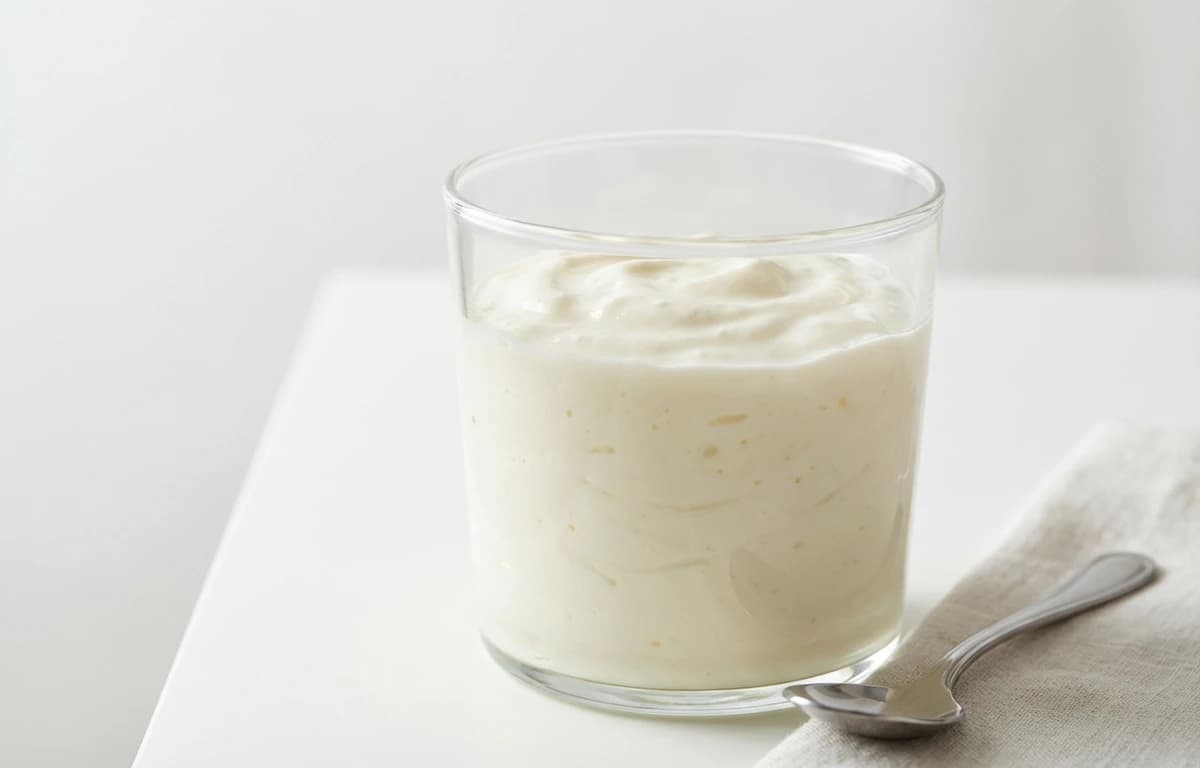
Sour Yogurt
Also known as: khatta dahi, sour curd
Loading...
Also known as: khatta dahi, sour curd
Per 100g
Nutrition data source: USDA FoodData Central
Common measurement equivalents in grams
It typically lasts 5 to 7 days after it has reached the desired sourness, provided it is kept refrigerated in an airtight container.
Freezing is not recommended for direct eating as the texture becomes grainy and watery upon thawing, but it can be used in cooked dishes or smoothies.
Look for visible mold (pink, green, or black spots), a rancid or yeasty smell, or an excessively bubbly texture.
You can use regular yogurt mixed with a teaspoon of lemon juice or vinegar, or use buttermilk for a similar acidic profile.
Yogurt continues to ferment even in the fridge. If left at room temperature for too long, the bacteria produce more lactic acid, increasing sourness.
Yes, the higher acid content in sour yogurt is more effective at breaking down proteins and tenderizing meat.
Absolutely. Its acidity reacts well with baking soda, creating carbon dioxide which helps cakes and breads become fluffier.
While it contains less lactose than milk because the bacteria consume it, it is not lactose-free. Those with severe intolerance should be cautious.
Sour Yogurt is a versatile ingredient found in cuisines around the world. With 61 calories per 100g and 3.5 grams of protein, it's a nutritious addition to many dishes.
Explore more ingredients in the dairy category with complete nutrition information.
View all dairy →Discover 2 recipes featuring sour yogurt with step-by-step instructions.
Browse recipes →