
Loading...
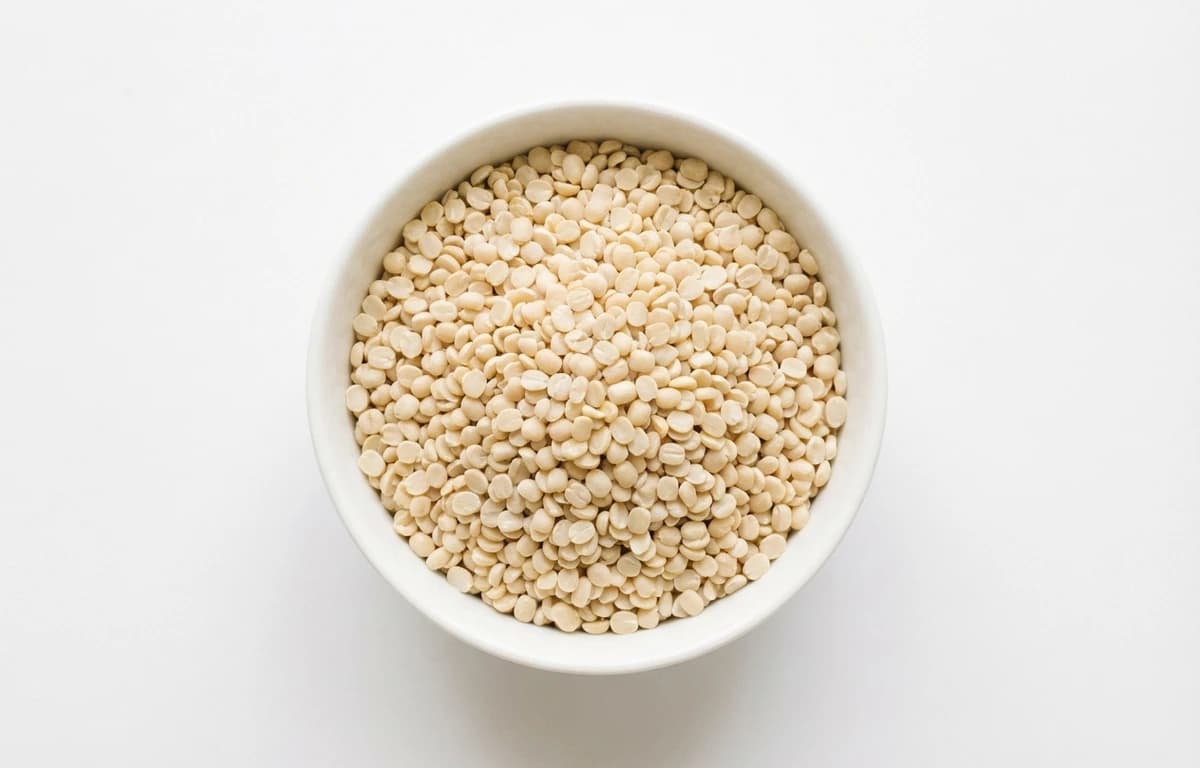
Also known as: dhuli urad dal, white lentil, split black gram, split washed urad dal, split white urad dal
Per 100g
Nutrition data source: USDA FoodData Central
Common measurement equivalents in grams
When stored in an airtight container in a cool, dry place, it can last for up to 1 year.
While not strictly necessary for split dal, soaking for 30 minutes helps it cook faster and more evenly.
Yellow moong dal or red lentils (masoor dal) are the best substitutes for texture and cooking time.
Yes, it is naturally gluten-free and safe for those with celiac disease.
Yes, cooked dal can be frozen in airtight containers for up to 3 months.
Look for uniform white/creamy color, no signs of moisture, and absence of stones or debris.
It provides the necessary protein and natural wild yeast for fermentation, giving the batter its rise and texture.
Skinned urad dal is easier to digest than whole black urad dal, but soaking and adding ginger or hing (asafoetida) during cooking further aids digestion.
Split Skinned Urad Dal is a versatile ingredient found in cuisines around the world. With 341 calories per 100g and 25.2 grams of protein, it's a nutritious addition to many dishes.
Explore more ingredients in the legume category with complete nutrition information.
View all legume →Discover 1 recipes featuring split skinned urad dal with step-by-step instructions.
Browse recipes →Explore more ingredients similar to Split Skinned Urad Dal.
The most-searched ingredients on CraftMyMeals.