
Loading...
Per 100g
Nutrition data source: USDA FoodData Central
Common measurement equivalents in grams
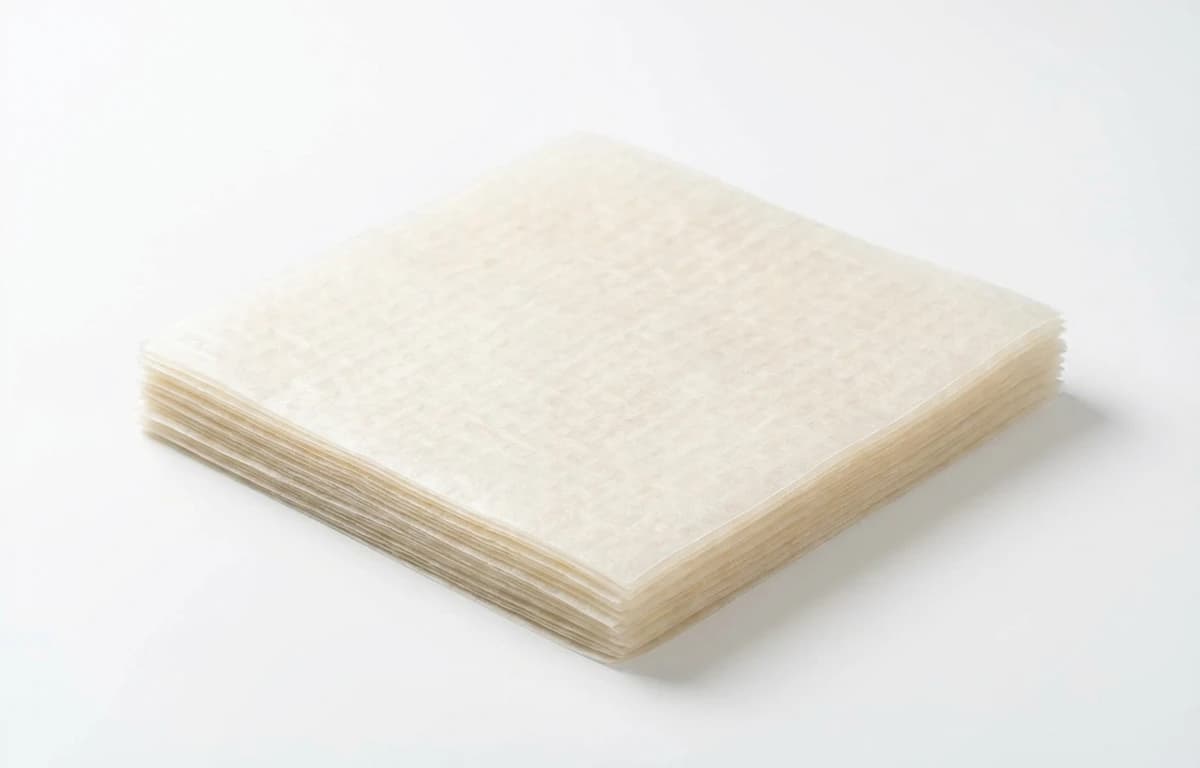
Spring roll sheets are low in fat and cholesterol, providing a good source of carbohydrates for energy. While they are a processed food, they can be part of a balanced diet when filled with nutrient-dense vegetables and lean proteins and prepared by baking or air-frying instead of deep-frying.
Per 100g, spring roll sheets contain approximately 285 calories and 60g of carbohydrates. They also provide about 7.5g of protein and are very low in fat, containing only 1g per 100g.
Most commercially available spring roll sheets are vegan as they are typically made from wheat flour, water, salt, and vegetable oil. However, it is always best to check the ingredient label to ensure no egg or animal-derived preservatives were used.
Standard spring roll sheets are made from wheat flour and are not gluten-free. For a gluten-free alternative, you should use rice paper wrappers, which are made from rice flour and water.
Unlike rice paper, wheat-based spring roll sheets do not need to be soaked. Simply peel a sheet from the stack, place your filling on one corner, roll tightly while tucking in the sides, and seal the final edge with a dab of water or a cornstarch slurry.
Yes, baking is a healthier alternative to deep-frying. Lightly brush the prepared rolls with a small amount of oil and bake at 400°F (200°C) for 15-20 minutes, turning halfway through, until they are golden and crispy.
Spring roll sheets are made of wheat flour, are opaque, and must be cooked (fried or baked) to be edible. Rice paper wrappers are made from rice flour, are translucent, and are typically soaked in water and eaten raw, as seen in Vietnamese summer rolls.
Spring Roll Sheets is a versatile ingredient found in cuisines around the world. With 285 calories per 100g and 7.5 grams of protein, it's a nutritious addition to many dishes.
Explore more ingredients in the processed category with complete nutrition information.
View all processed →Discover 1 recipes featuring spring roll sheets with step-by-step instructions.
Browse recipes →Unopened packages should be kept in the freezer. Once opened, wrap the remaining sheets tightly in plastic wrap or place them in an airtight bag to prevent them from drying out, then store them in the refrigerator for up to 5-7 days.
Keep the stack of sheets covered with a clean, damp kitchen towel while you assemble your rolls. This prevents the air from drying out the thin dough, which makes them brittle and prone to cracking.
No, spring roll sheets are not keto-friendly. They are primarily made of wheat flour and contain 60g of carbohydrates per 100g, which is too high for a standard ketogenic or low-carb diet.