
Loading...
Also known as: day-old rustic bread, hard rustic bread, stale sourdough, stale artisanal bread, stale crusty bread, stale pain de campagne
Per 100g
Nutrition data source: USDA FoodData Central
Common measurement equivalents in grams
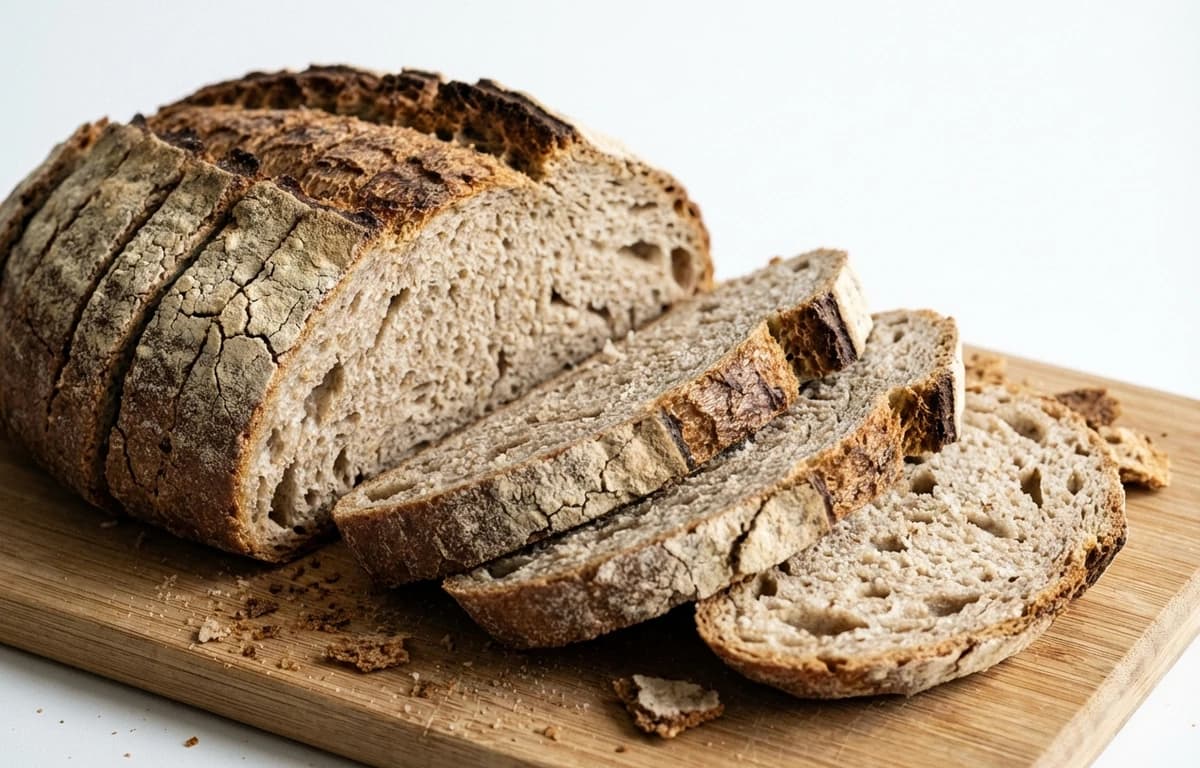
Rustic bread usually begins to harden after 2-3 days. It is considered 'stale' but perfectly edible for cooking for up to 7 days if kept dry.
Yes, lightly sprinkle the crust with water and bake in a 350°F (175°C) oven for 5-10 minutes to restore some softness.
No. If you see any fuzzy spots (green, white, or black), the entire loaf should be discarded as mold roots can penetrate deep into porous bread.
Stale bread has less moisture, allowing it to act like a sponge and soak up more egg mixture without becoming soggy or falling apart.
Keep it in a paper bag or a bread box. Plastic bags trap moisture which encourages mold growth on artisanal breads.
Absolutely. It is the preferred base for croutons; simply cube, toss with oil and herbs, and bake until golden.
Stale ciabatta, sourdough, or even thick-cut toasted baguette can work as substitutes in most recipes.
Per 100g, stale bread is slightly more calorie-dense because it has lost water weight, concentrating the nutrients and carbohydrates.
stale rustic bread is a versatile ingredient found in cuisines around the world. With 275 calories per 100g and 9.5 grams of protein, it's a nutritious addition to many dishes.
Explore more ingredients in the grain category with complete nutrition information.
View all grain →Discover 1 recipes featuring stale rustic bread with step-by-step instructions.
Browse recipes →Explore more ingredients similar to stale rustic bread.
The most-searched ingredients on CraftMyMeals.
Ensure the bread is completely dry/hard, then break into chunks and pulse in a blender or food processor until the desired consistency is reached.