
Grain
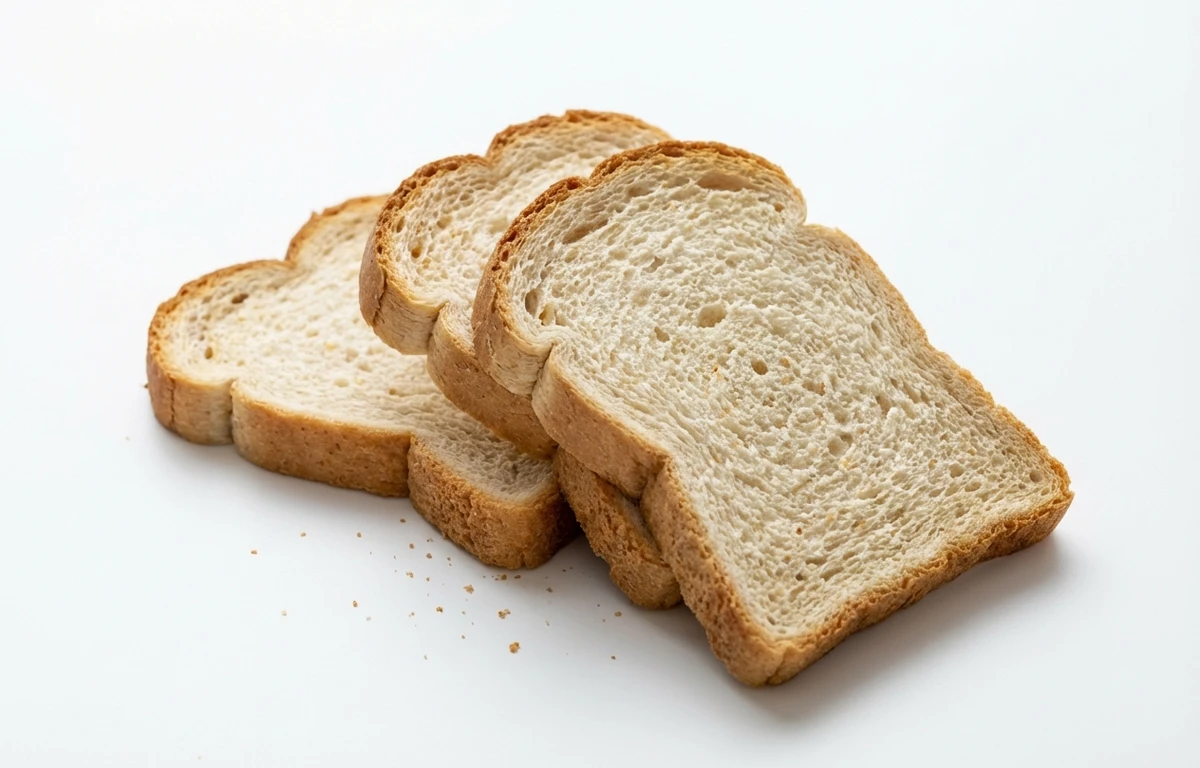
stale white bread.
VegetarianVeganGluten-freeDairy-freeNut-freePeanut-freeSoy-freeEgg-freeShellfish-freeHoney-freeAlcohol-freeFermented
ALSO KNOWN AS
day-old white breaddried white breadstale sandwich breadpurani breadbasi breaddry white bread
SERVING
CALORIES
275
PROTEIN
8.5g
CARBS
52g
FAT
3.5g
FIBER
2.4g
NUTRITION PROFILE · per 100 g
Everything in this ingredient.
MACRONUTRIENTS
Calories275kcal—
Protein8.5g17%
Carbohydrates52g19%
Fiber2.4g9%
Sugar5.2g10%
Total fat3.5g4%
Saturated fat0.80g4%
Trans fat0g—
Cholesterol0mg0%
Water28g—
MINERALS
Sodium510mg22%
Potassium120mg3%
Calcium150mg12%
Iron3.6mg20%
Magnesium25mg6%
Phosphorus105mg8%
Zinc0.80mg7%
Copper0.15mg17%
Manganese0.50mg22%
Selenium28.5µg52%
VITAMINS
Vitamin A0µg0%
Vitamin C0mg0%
Vitamin D0µg0%
Vitamin E0.30mg2%
Vitamin K0.20µg0%
Thiamin (B1)0.45mg38%
Riboflavin (B2)0.30mg23%
Niacin (B3)4.2mg26%
Pantothenic acid (B5)0.40mg8%
Vitamin B60.10mg6%
Folate (B9)110µg28%
Vitamin B120µg0%
%DV based on a 2,000 cal diet. Source: USDA FoodData Central. A dash in the %DV column means there’s no established Daily Value for that nutrient.
MEASUREMENT CONVERSIONS
How much is what.
1 cup110g
1 tablespoon7g
1 teaspoon2.3g
1 oz28.4g
1 lb453.6g
1 ml0.5g
1 liter460g
1 piece25g
HEALTH BENEFITS
Why eat it.
- ✓Quick source of energy from carbohydrates
- ✓Easier to digest for some than fresh bread
- ✓Reduces food waste in the kitchen
- ✓Provides essential B-vitamins if made from enriched flour
- ✓Excellent texture for absorbing flavors in cooked dishes
COOKING TIPS
In the kitchen.
- 1Ideal for French toast or bread pudding as it absorbs custard without becoming mushy
- 2Pulse in a food processor to create high-quality homemade breadcrumbs
- 3Toss cubes with olive oil and herbs and bake at 350°F for crunchy croutons
STORAGE
Keep it fresh.
- Store in a cool, dry place in a paper bag to maintain dryness and prevent mold
- Can be frozen in an airtight bag for up to 3 months
- Keep away from humid areas which can cause rapid spoilage
FAQ
Frequently asked questions.
How long does stale white bread last?
If kept dry and free of mold, it can last 1-2 weeks. However, always check for fuzzy spots or off-smells before using.
Can I freeze stale bread?
Yes, freezing is a great way to save stale bread for future use in stuffing or breadcrumbs. Thaw at room temperature before use.
Why is stale bread better for French toast?
Stale bread has less moisture, allowing it to act like a sponge and soak up more egg mixture without falling apart during cooking.
How can I tell if stale bread has gone bad?
Look for any signs of mold (green, black, or white fuzzy spots). If it smells sour or fermented, it should be discarded.
What is the best way to make breadcrumbs from stale bread?
Tear the bread into pieces and pulse in a blender or food processor until you reach the desired consistency.
Can I revive stale bread to eat as a sandwich?
You can lightly sprinkle it with water and microwave it for 10 seconds or wrap in foil and bake at 300°F for 5 minutes, but it is best used for cooking.
What can I substitute for stale white bread?
You can use fresh bread that has been toasted in a low oven, or other stale breads like sourdough or brioche.
Is stale bread vegan?
Most commercial white breads contain milk solids or butter, making them vegetarian but not vegan. Check the specific brand's label.
How do I store bread to make it go stale faster?
Leave the slices out on a wire rack at room temperature for several hours or overnight to allow air circulation to dry them out.
Is stale bread higher in calories than fresh bread?
Per 100g, stale bread is slightly higher in calories because it contains less water, making the nutrients more concentrated.



















