
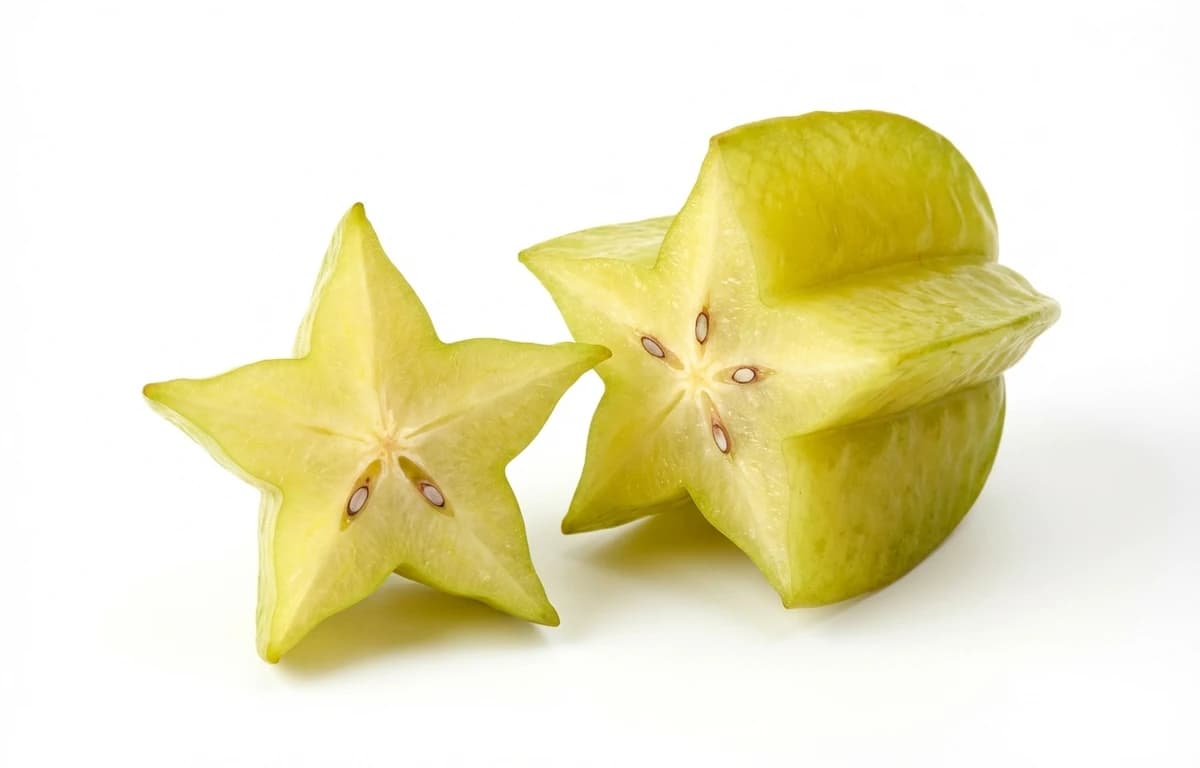
star fruit
Also known as: carambola, kamrakh
Loading...
Also known as: carambola, kamrakh
Per 100g
Nutrition data source: USDA FoodData Central
Common measurement equivalents in grams
A ripe star fruit will be bright yellow with slightly browned edges on the ridges. If it is green, it is still unripe and will be very tart.
No, the skin is thin, waxy, and completely edible. Simply wash the fruit thoroughly before slicing.
No. People with kidney problems should avoid star fruit because it contains high levels of oxalates and a neurotoxin called caramboxin which the kidneys may not be able to filter.
It has a sweet-tart flavor profile, often described as a cross between a pear, a grape, and a citrus fruit.
Yes, it works well in stews, curries, and seafood dishes, especially in Southeast Asian and Indian cuisines.
Wash the fruit, trim the very tips of the green/brown ridges if desired, and slice crosswise into stars. Remove any seeds found in the center.
Depending on the recipe, green apples, kiwi, or white grapes can provide a similar tartness and texture.
Yes, star fruit juices very well and is often combined with other tropical fruits like pineapple or orange.
No, compared to many other tropical fruits, star fruit is relatively low in sugar, making it a good choice for low-glycemic diets.
star fruit is a versatile ingredient found in cuisines around the world. With 31 calories per 100g and 1.04 grams of protein, it's a nutritious addition to many dishes.
Explore more ingredients in the fruit category with complete nutrition information.
View all fruit →