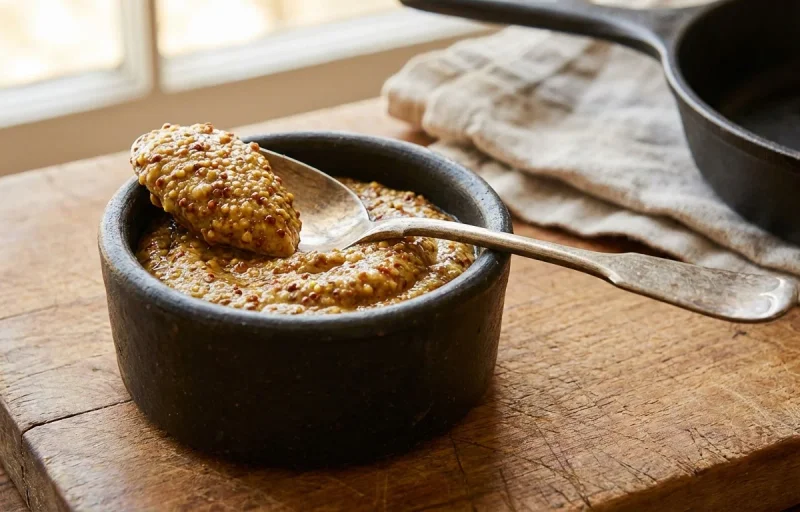
Condiment
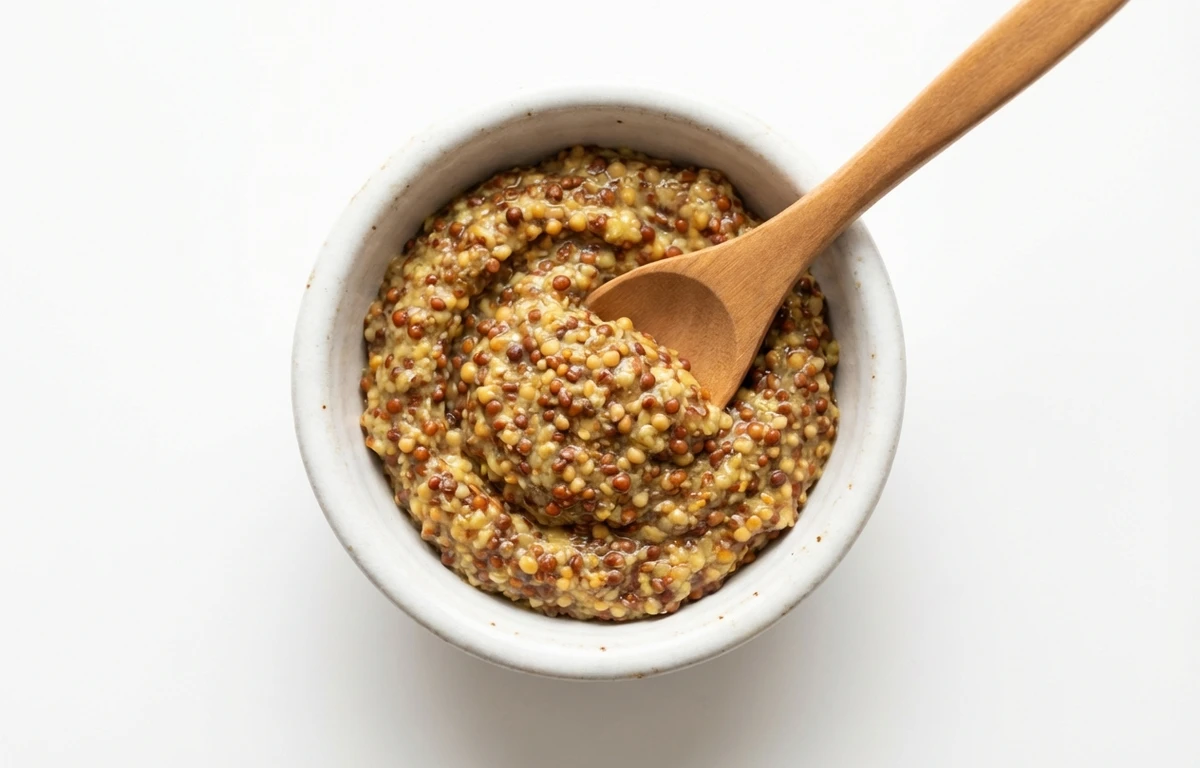
stone-ground mustard.
VegetarianVeganGluten-freeDairy-freeNut-freePeanut-freeSoy-freeEgg-freeShellfish-freeHoney-freeAlcohol-freeFermented
ALSO KNOWN AS
coarse ground mustardold fashioned mustard
SERVING
CALORIES
130
PROTEIN
6.5g
CARBS
8.2g
FAT
8.1g
FIBER
4.3g
NUTRITION PROFILE · per 100 g
Everything in this ingredient.
MACRONUTRIENTS
Calories130kcal—
Protein6.5g13%
Carbohydrates8.2g3%
Fiber4.3g15%
Sugar1.2g2%
Total fat8.1g10%
Saturated fat0.50g3%
Trans fat0g—
Cholesterol0mg0%
Water72.5g—
MINERALS
Sodium2450mg107%
Potassium150mg3%
Calcium70mg5%
Iron1.8mg10%
Magnesium45mg11%
Phosphorus110mg9%
Zinc0.80mg7%
Copper0.15mg17%
Manganese0.40mg17%
Selenium32µg58%
VITAMINS
Vitamin A4.0µg0%
Vitamin C0.50mg1%
Vitamin D0µg0%
Vitamin E1.2mg8%
Vitamin K0.50µg0%
Thiamin (B1)0.10mg8%
Riboflavin (B2)0.10mg8%
Niacin (B3)0.80mg5%
Pantothenic acid (B5)0.30mg6%
Vitamin B60.10mg6%
Folate (B9)10µg3%
Vitamin B120µg0%
%DV based on a 2,000 cal diet. Source: USDA FoodData Central. A dash in the %DV column means there’s no established Daily Value for that nutrient.
MEASUREMENT CONVERSIONS
How much is what.
1 cup250g
1 tablespoon15g
1 teaspoon5g
1 oz28.4g
1 lb453.6g
1 ml1.1g
1 liter1050g
HEALTH BENEFITS
Why eat it.
- ✓Contains glucosinolates which have antioxidant properties
- ✓Low in calories compared to oil-based condiments
- ✓Good source of selenium and manganese
- ✓May help boost metabolism in small amounts
- ✓Contains anti-inflammatory compounds
COOKING TIPS
In the kitchen.
- 1Whisk into vinaigrettes for a stable emulsion and textured mouthfeel
- 2Use as a rub for roasted meats to create a flavorful crust
- 3Add to pan sauces at the end of cooking to preserve the sharp flavor
STORAGE
Keep it fresh.
- Refrigerate after opening to maintain pungency and flavor
- Ensure the lid is tightly sealed to prevent drying out
- Store in a cool, dark place if the jar is still factory-sealed
FAQ
Frequently asked questions.
How long does stone-ground mustard last after opening?
When refrigerated, it typically maintains its best quality for 12 to 18 months, though it remains safe to eat longer.
What is the difference between stone-ground and Dijon mustard?
Stone-ground mustard uses whole seeds crushed between stones for a coarse texture, while Dijon is smooth and uses verjuice or white wine.
Can I freeze stone-ground mustard?
It is not recommended as freezing can cause the emulsion to break and significantly alter the texture.
What can I use as a substitute for stone-ground mustard?
Whole grain mustard is the best substitute. Dijon mustard can be used if texture is not a concern.
Is stone-ground mustard gluten-free?
Most brands are naturally gluten-free, but always check the label for malt vinegar or wheat-based thickeners.
Why does my mustard have liquid on top?
Natural separation occurs over time. Simply stir the liquid back into the mustard before using.
How do I identify a high-quality stone-ground mustard?
Look for visible whole or cracked mustard seeds and a short ingredient list without artificial thickeners or colors.
Is stone-ground mustard spicy?
It generally has a medium heat profile, more pungent than yellow mustard but often less sharp than hot English mustard.
Does stone-ground mustard contain sugar?
Standard stone-ground mustard contains very little sugar, though some 'sweet' varieties may add honey or brown sugar.
RECIPES
Cook with stone-ground mustard.
0 recipes · sorted by what’s quick