
Other
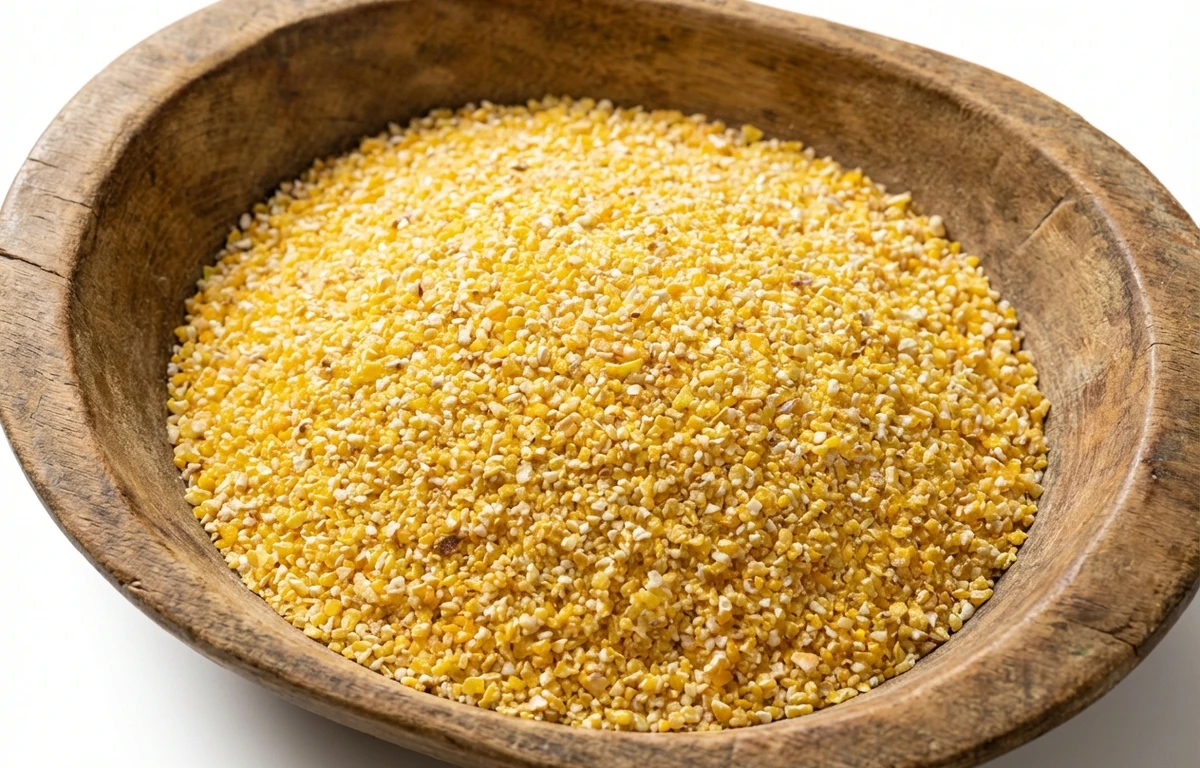
stone-ground yellow grits.
VegetarianVeganGluten-freeDairy-freeNut-freePeanut-freeSoy-freeEgg-freeShellfish-freeHoney-freeAlcohol-freeWhole grain
ALSO KNOWN AS
yellow grits
SERVING
CALORIES
371
PROTEIN
8.8g
CARBS
79.6g
FAT
1.2g
FIBER
1.6g
This ingredient is flagged as naturally gluten-free. Per 100 g, it provides 0.30 µg of vitamin K.
NUTRITION PROFILE · per 100 g
Everything in this ingredient.
MACRONUTRIENTS
Calories371kcal—
Protein8.8g18%
Carbohydrates79.6g29%
Fiber1.6g6%
Sugar0.64g1%
Total fat1.2g2%
Saturated fat0.16g1%
Cholesterol0mg0%
Water10g—
MINERALS
Sodium1.0mg0%
Potassium137mg3%
Calcium2.0mg0%
Iron1.0mg6%
Magnesium27mg6%
Phosphorus73mg6%
Zinc0.41mg4%
Copper0.08mg9%
Manganese0.11mg5%
Selenium17µg31%
VITAMINS
Vitamin A11µg1%
Vitamin C0mg0%
Vitamin K0.30µg0%
Thiamin (B1)0.13mg11%
Riboflavin (B2)0.04mg3%
Niacin (B3)1.2mg8%
Pantothenic acid (B5)0.49mg10%
Vitamin B60.15mg9%
Folate (B9)5.0µg1%
Vitamin B120µg0%
%DV based on a 2,000 cal diet. Source: USDA FoodData Central. A dash in the %DV column means there’s no established Daily Value for that nutrient.
MEASUREMENT CONVERSIONS
How much is what.
1 cup156g
1 tablespoon9.7g
1 teaspoon3.2g
1 ml0.6g
1 liter646.7g
HEALTH BENEFITS
Why eat it.
- ✓Provides complex carbohydrates for sustained energy release.
COOKING TIPS
In the kitchen.
- 1For a creamier texture, cook with milk, buttermilk, or a mix of stock and water instead of just water.
- 2Cook low and slow, stirring frequently, for about 20-45 minutes to prevent lumps and ensure a smooth consistency.
- 3Season generously as grits have a mild flavor. Salt, butter, and cheese are classic additions, but herbs and spices also work well.
- 4The typical ratio is 1 part grits to 4 parts liquid, but this can be adjusted for a thicker or thinner result.
STORAGE
Keep it fresh.
- Store in an airtight container in a cool, dark, and dry pantry for up to 6 months.
- For longer-term storage, place the airtight container in the refrigerator or freezer to prevent the natural oils in the germ from going rancid.
FAQ
Frequently asked questions.
How many calories and carbs are in stone-ground yellow grits?
A 100g serving of dry stone-ground yellow grits contains approximately 371 calories and 79.6g of carbohydrates. While high in carbs, these are complex carbohydrates that provide a steady release of energy throughout the day.
How do you cook stone-ground yellow grits?
Stone-ground grits require a longer cooking time than instant varieties, typically 30 to 45 minutes. Use a ratio of 4 parts liquid (water, milk, or broth) to 1 part grits, simmering on low heat and stirring frequently to achieve a creamy texture.
What is the difference between stone-ground grits and instant grits?
Stone-ground grits are less processed and retain the corn germ, offering more flavor, texture, and nutrients. Instant and quick grits are precooked and dehydrated or ground very fine, which saves time but results in a loss of nutritional value and a mushier consistency.
Are stone-ground yellow grits vegan?
The ingredient itself is 100% vegan as it is made solely from ground corn. To keep the prepared dish vegan, cook the grits with water, vegetable broth, or plant-based milk and avoid adding traditional dairy products like butter or cheese.
How should I store stone-ground yellow grits?
Because stone-ground grits retain the natural oils from the corn germ, they can go rancid if left at room temperature for too long. Store them in an airtight container in a cool, dark place, or ideally in the refrigerator or freezer to maintain freshness.
Are stone-ground yellow grits keto-friendly?
No, they are not suitable for a ketogenic diet. With nearly 80g of carbohydrates per 100g, they are a high-carb food that would likely exceed the daily carbohydrate limit required to maintain ketosis.



















