Loading...
Also known as: ahi tuna
Per 100g
Nutrition data source: USDA FoodData Central
Common measurement equivalents in grams
Yes, ahi tuna is highly nutritious, providing an excellent source of lean, high-quality protein and heart-healthy omega-3 fatty acids. It is also rich in Vitamin B12 for nerve health and selenium, a powerful antioxidant that supports the immune system.
Ahi tuna is a protein powerhouse, containing approximately 24.4 grams of protein per 100-gram serving. This makes it an ideal food for muscle building, repair, and maintaining satiety.
Ahi tuna is excellent for weight loss because it is very low in calories (108 per 100g) and contains almost no fat or carbohydrates. Its high protein content helps you feel full longer while supporting lean muscle mass.
Yes, ahi tuna is perfectly keto-friendly as it contains 0g of carbohydrates. It is a pure protein source that fits well into low-carb, ketogenic, and paleo dietary patterns.
Naturally, ahi tuna is 100% gluten-free. However, when eating it as sushi or in poke bowls, be mindful of added ingredients like soy sauce or tempura crunch, which often contain wheat.
While not an official FDA grade, 'sushi-grade' typically means the fish was flash-frozen at very low temperatures shortly after being caught. This process kills potential parasites, making the fish safe to consume raw.
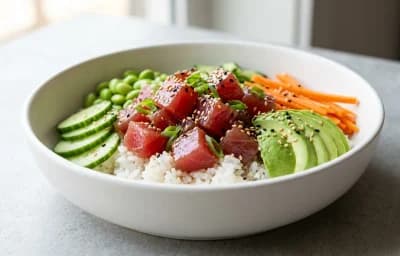
It can be served raw as sashimi, nigiri, or in poke bowls. If you prefer it cooked, it is best seared over high heat for about 1-2 minutes per side, leaving the center rare to preserve its tender texture and flavor.
sushi-grade ahi tuna is a versatile ingredient found in cuisines around the world. With 108 calories per 100g and 24.4 grams of protein, it's a nutritious addition to many dishes.
Explore more ingredients in the other category with complete nutrition information.
View all other →Discover 0 recipes featuring sushi-grade ahi tuna with step-by-step instructions.
Browse recipes →For optimal safety and flavor, sushi-grade tuna should be consumed the same day it is purchased. If necessary, you can store it in the coldest part of your refrigerator for up to 24 hours.
Fresh ahi tuna should have a vibrant, deep red color and a firm, moist texture without being slimy. It should have a clean, mild ocean scent; any strong 'fishy' or ammonia-like smell indicates it is no longer fresh.
Ahi (Yellowfin) tuna contains moderate levels of mercury compared to other fish. While it is safe for most healthy adults to enjoy 1-2 times per week, pregnant women and young children should limit their consumption.