
Fruit
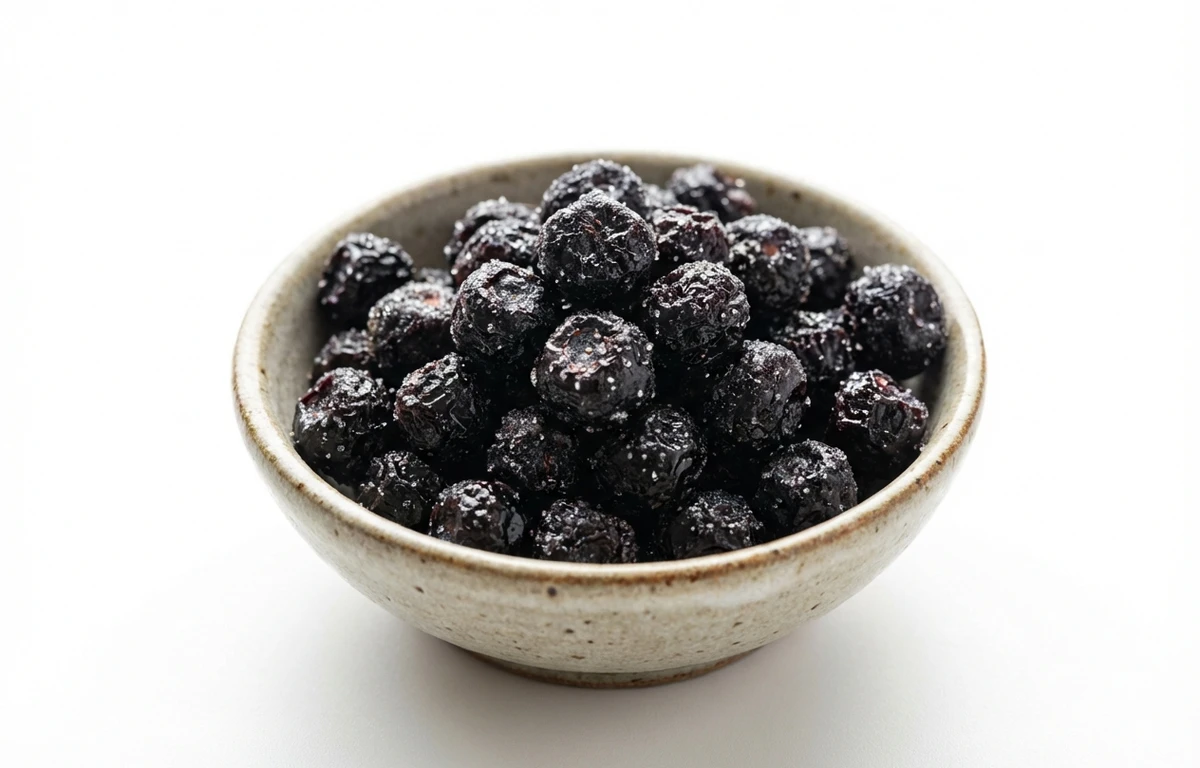
sweetened dried blueberries.
VegetarianVeganGluten-freeDairy-freeNut-freePeanut-freeSoy-freeEgg-freeShellfish-freeHoney-freeAlcohol-free
ALSO KNOWN AS
dried sweetened blueberries
SERVING
CALORIES
325
PROTEIN
1.5g
CARBS
82g
FAT
0.50g
FIBER
6.0g
NUTRITION PROFILE · per 100 g
Everything in this ingredient.
MACRONUTRIENTS
Calories325kcal—
Protein1.5g3%
Carbohydrates82g30%
Fiber6.0g21%
Sugar68g136%
Total fat0.50g1%
Saturated fat0.10g1%
Trans fat0g—
Cholesterol0mg0%
Water12g—
MINERALS
Sodium10mg0%
Potassium120mg3%
Calcium15mg1%
Iron0.80mg4%
Magnesium12mg3%
Phosphorus25mg2%
Zinc0.20mg2%
Copper0.10mg11%
Manganese0.30mg13%
Selenium0.50µg1%
VITAMINS
Vitamin A2.0µg0%
Vitamin C1.0mg1%
Vitamin D0µg0%
Vitamin E0.60mg4%
Vitamin K25µg21%
Thiamin (B1)0.02mg2%
Riboflavin (B2)0.05mg4%
Niacin (B3)0.50mg3%
Pantothenic acid (B5)0.15mg3%
Vitamin B60.05mg3%
Folate (B9)5.0µg1%
Vitamin B120µg0%
%DV based on a 2,000 cal diet. Source: USDA FoodData Central. A dash in the %DV column means there’s no established Daily Value for that nutrient.
MEASUREMENT CONVERSIONS
How much is what.
1 cup150g
1 tablespoon10g
1 oz28.4g
1 lb453.6g
HEALTH BENEFITS
Why eat it.
- ✓High concentration of anthocyanin antioxidants
- ✓Good source of dietary fiber for digestive health
- ✓Provides a quick and convenient energy boost
- ✓Contains Vitamin K which supports bone health
- ✓Supports cardiovascular health through polyphenol content
COOKING TIPS
In the kitchen.
- 1Soak in warm water, juice, or liqueur for 15 minutes to plump them before baking
- 2Toss with a tablespoon of flour before adding to muffin or cake batter to prevent sinking
- 3Add to savory salads or grain bowls to provide a sweet contrast to acidic dressings
STORAGE
Keep it fresh.
- Store in an airtight container in a cool, dark, and dry pantry
- Refrigerate after opening to maintain moisture and extend shelf life up to 12 months
- Can be frozen in a sealed bag for up to 2 years without significant quality loss
FAQ
Frequently asked questions.
How long do sweetened dried blueberries last?
They typically last 6-12 months in a cool, dry pantry. If refrigerated, they can stay fresh for up to a year.
Can I freeze dried blueberries?
Yes, they freeze very well. Use an airtight freezer bag to prevent freezer burn; they will remain good for up to 24 months.
What is a good substitute for sweetened dried blueberries?
Dried cranberries (craisins), dried currants, or raisins are the best alternatives in most recipes.
Are dried blueberries as healthy as fresh ones?
They contain similar antioxidants and fiber, but are much higher in calories and sugar per gram due to the drying process and added sweeteners.
How do I rehydrate dried blueberries for baking?
Place them in a bowl and cover with boiling water or fruit juice for 10-15 minutes, then drain and pat dry before using.
Why are they often coated in oil?
Many commercial brands add a tiny amount of sunflower or vegetable oil to prevent the berries from sticking together in the package.
Can I use these in place of fresh blueberries in pancakes?
Yes, but they will be much sweeter and have a chewy texture. It is recommended to rehydrate them slightly first so they don't absorb too much moisture from the batter.
How can I tell if they have gone bad?
Look for signs of mold, an off-smell (rancid oil smell), or if they have become excessively hard and brittle.



















