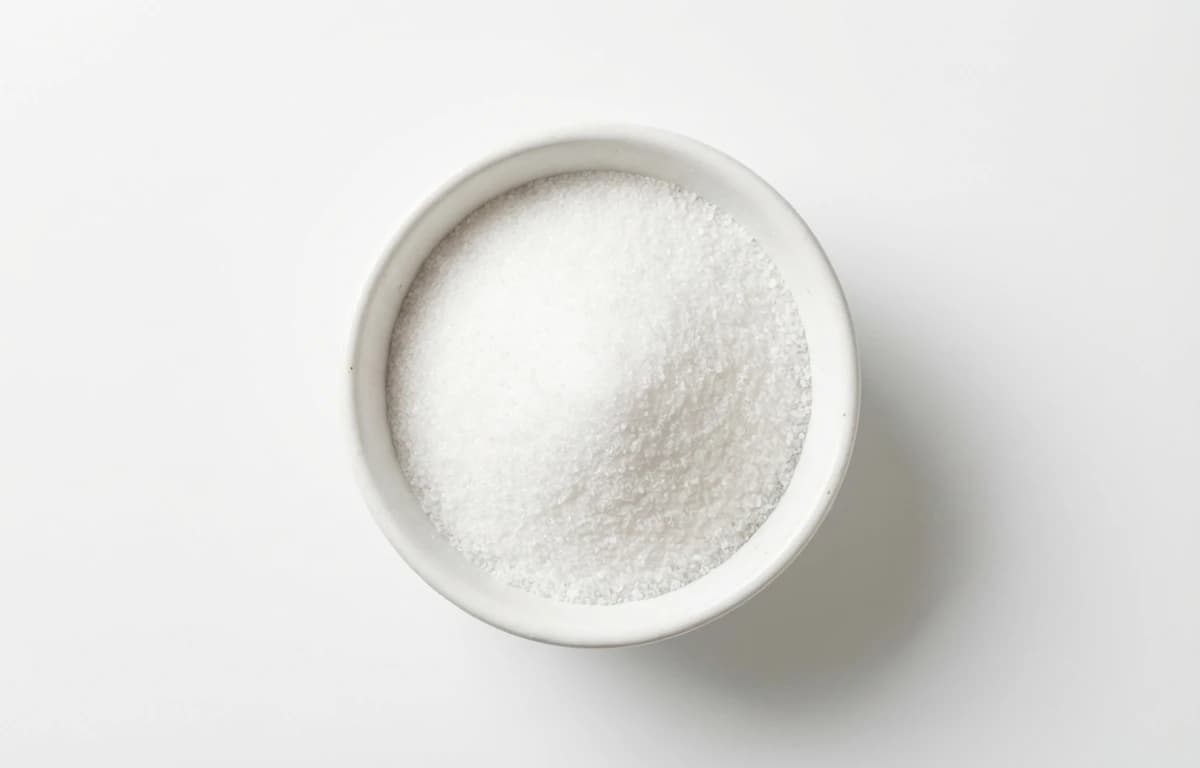
table salt
Also known as: common salt, iodized salt, sodium chloride
Loading...
Also known as: common salt, iodized salt, sodium chloride
Per 100g
Nutrition data source: USDA FoodData Central
Common measurement equivalents in grams
Pure table salt has an indefinite shelf life if kept dry, though iodized salt may lose its iodine potency over several years.
There is no need to freeze salt as it does not spoil; moisture is the primary concern for storage.
The best method is in a non-reactive, airtight container (glass or ceramic) in a dry pantry.
Look for fine, uniform grains. Choose iodized salt if you do not get enough iodine from other dietary sources.
Sea salt or kosher salt can be used, though grain sizes vary. For low-sodium diets, potassium chloride is a common substitute.
No preparation is needed; it is ready to use directly from the package.
It is essential in small amounts, but excessive intake is linked to high blood pressure and heart disease.
Salt is used in almost every savory dish, baked goods, and as a preservative for cured meats and pickles.
It seasons the food (like pasta) from the inside out and slightly increases the boiling point of the water.
table salt is a versatile ingredient found in cuisines around the world. With its calories per 100g and valuable grams of protein, it's a nutritious addition to many dishes.
Explore more ingredients in the condiment category with complete nutrition information.
View all condiment →