
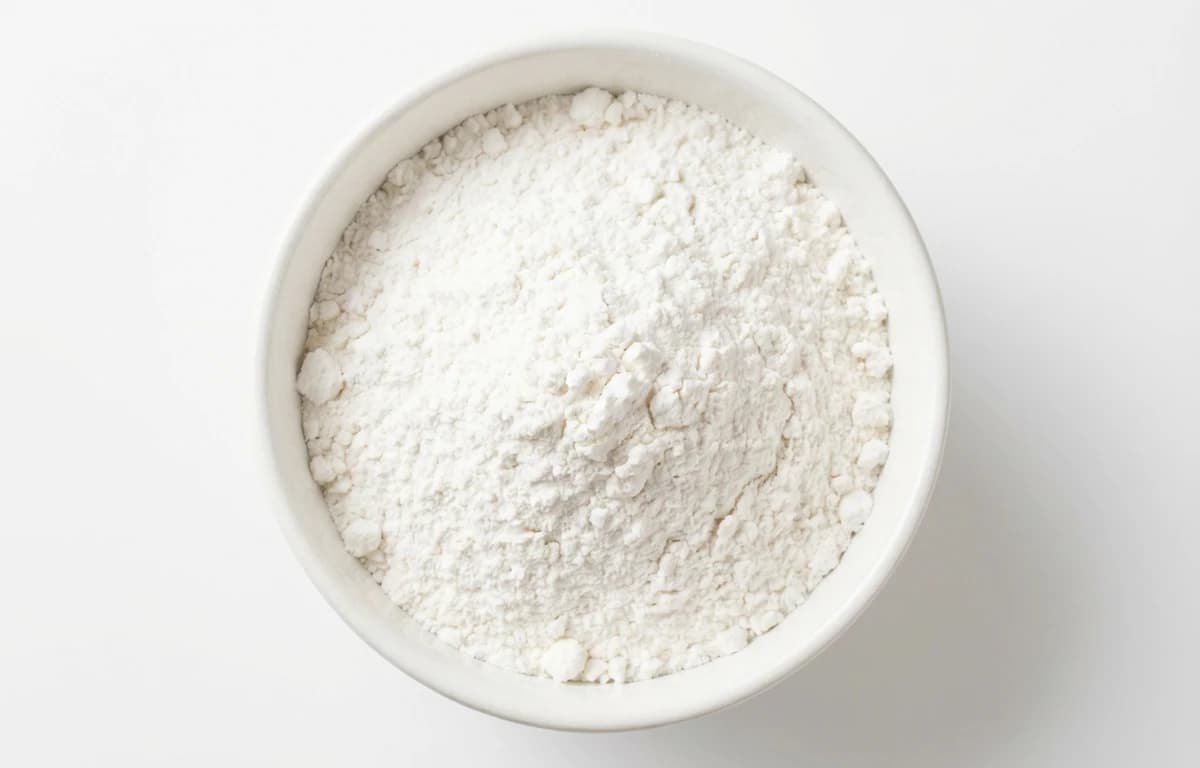
tapioca starch
Also known as: tapioca flour, tapioca meal, cassava starch
Loading...
Also known as: tapioca flour, tapioca meal, cassava starch
Per 100g
Nutrition data source: USDA FoodData Central
Common measurement equivalents in grams
Tapioca starch is a gluten-free carbohydrate source that is very easy to digest, making it ideal for those with sensitive stomachs. While it lacks significant vitamins and minerals, it can provide resistant starch when cooled, which supports gut health by acting as a prebiotic.
Tapioca starch is energy-dense, containing approximately 358 calories and 88.7 grams of carbohydrates per 100g. It contains almost no protein (0.2g) and zero fat, making it a concentrated source of pure starch.
Generally, no. Because it is calorie-dense and high in refined carbohydrates with very little fiber or protein, it does not promote satiety. It is more commonly used as a calorie-dense food source for individuals needing to gain weight.
Yes, tapioca starch is naturally gluten-free as it is derived from the cassava root. It is a staple ingredient in gluten-free baking, where it helps provide a chewy texture and improves the structure of breads and cakes.
No, tapioca starch is not keto-friendly. It consists almost entirely of carbohydrates and has a high glycemic index, which can cause a rapid spike in blood sugar and kick the body out of ketosis.
To thicken liquids, mix the starch with an equal amount of cold water to create a slurry before whisking it into hot sauces or soups. It thickens quickly at relatively low temperatures and creates a glossy, smooth finish that remains stable even when frozen.
Tapioca starch has a very neutral, slightly sweet flavor that does not mask or alter the taste of other ingredients. This makes it an excellent choice for both savory gravies and delicate fruit pie fillings.
tapioca starch is a versatile ingredient found in cuisines around the world. With 358 calories per 100g and 0.2 grams of protein, it's a nutritious addition to many dishes.
Explore more ingredients in the other category with complete nutrition information.
View all other →Discover 1 recipes featuring tapioca starch with step-by-step instructions.
Browse recipes →Yes, you can generally substitute them at a 1:1 ratio. However, tapioca starch provides a more translucent, glossy finish and a chewier texture, whereas cornstarch results in a more opaque, matte appearance and a slightly different mouthfeel.
Store tapioca starch in an airtight container in a cool, dry place away from direct sunlight. When kept away from moisture, it has an exceptionally long shelf life and can remain usable for 1 to 2 years.
In most commercial contexts, 'tapioca starch' and 'tapioca flour' are the same product. However, it is distinct from 'cassava flour,' which is made from the whole root and contains more fiber and nutrients than the extracted starch.