
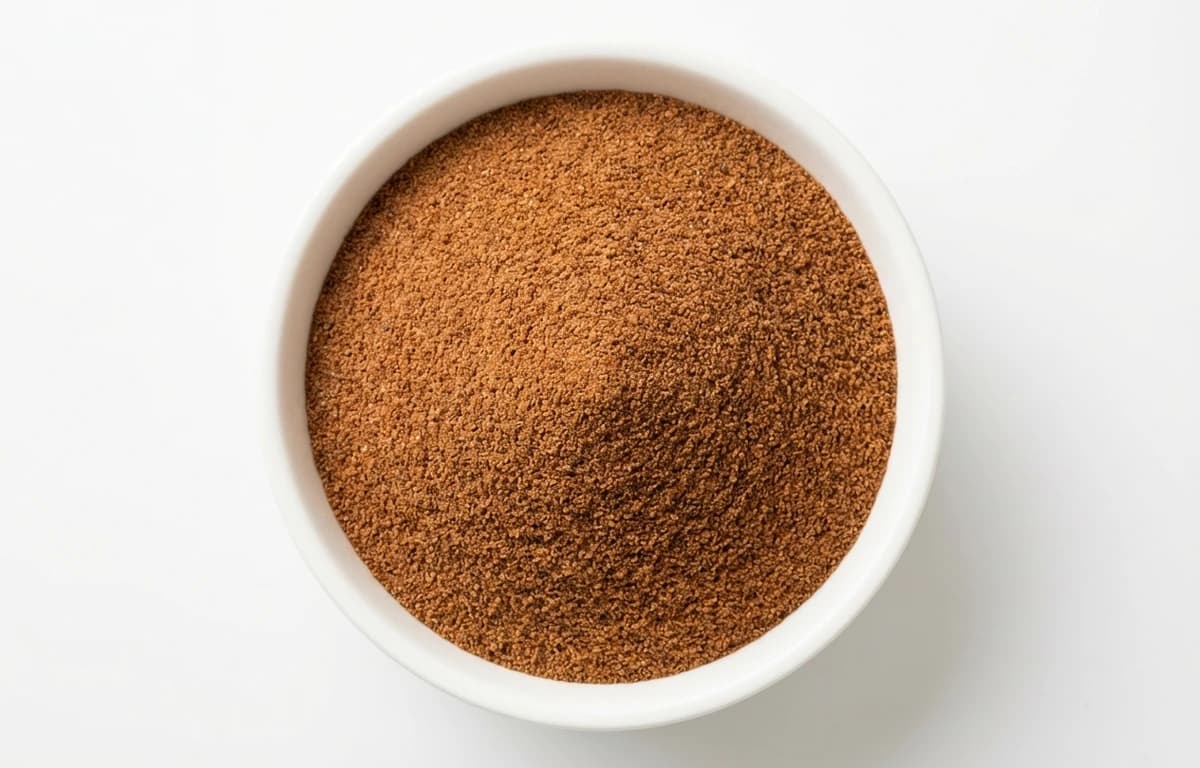
Teff Flour
Also known as:
Loading...
Also known as:
Per 100g
Nutrition data source: USDA FoodData Central
Common measurement equivalents in grams
Yes, teff is a naturally gluten-free ancient grain, making its flour safe for those with gluten sensitivities or Celiac disease.
It has a unique, mild, and earthy flavor with a subtle nutty undertone. Darker varieties tend to be more robust in flavor.
No, because it lacks gluten, it won't provide the same structure. It is best used in combination with other flours or in specific gluten-free recipes.
When stored in a cool, dry place in an airtight container, it typically lasts 6 to 12 months.
Yes, teff is famous for its high iron content, providing significantly more iron than most other cereal grains.
Ivory teff is milder and more delicate in flavor, while brown teff has a deeper, more earthy and nutty taste.
It works well in pancakes, muffins, and cookies. For yeast breads, it must be mixed with high-protein or gluten-containing flours to rise properly.
Yes, like most flours, teff flour should be cooked or baked before consumption to ensure digestibility and safety.
Teff Flour is a versatile ingredient found in cuisines around the world. With 366 calories per 100g and 13.3 grams of protein, it's a nutritious addition to many dishes.
Explore more ingredients in the grain category with complete nutrition information.
View all grain →