
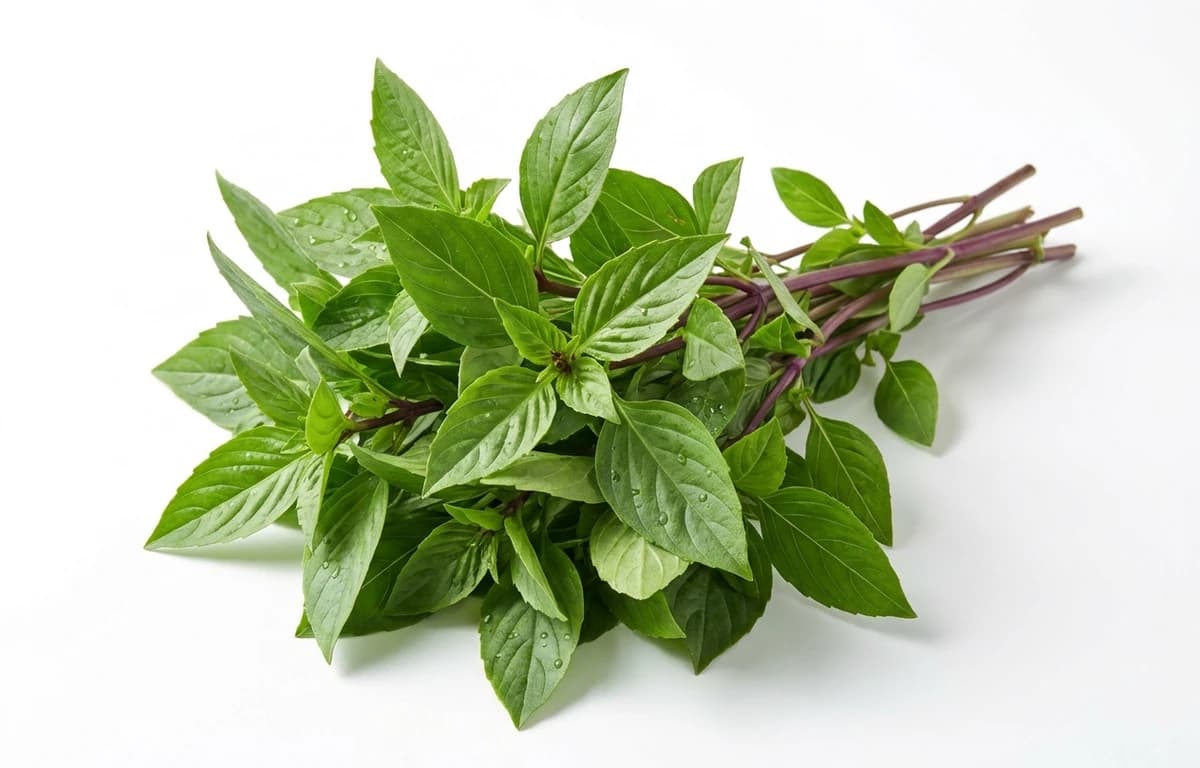
Thai Basil
Also known as: Horapha, Sweet Thai Basil, Asian Basil, Ocimum basilicum var. thyrsiflora
Loading...
Also known as: Horapha, Sweet Thai Basil, Asian Basil, Ocimum basilicum var. thyrsiflora
Per 100g
Nutrition data source: USDA FoodData Central
Common measurement equivalents in grams
When stored in a glass of water at room temperature, it lasts 4-5 days. In the fridge, it typically lasts 2-3 days before turning black.
Yes, but it will lose its texture. It is best frozen by blending with a little oil and freezing in ice cube trays.
Holy basil is the closest. If unavailable, use Italian sweet basil with a few sprigs of fresh mint to mimic the anise notes.
Thai basil has purple stems, narrower serrated leaves, and a distinct licorice or anise-like scent compared to the peppery scent of Italian basil.
Yes, it is commonly eaten raw as a garnish in soups like Pho or in fresh spring rolls.
It is a staple in Thai Green Curry, Red Curry, Pad Kra Pao (basil stir-fry), and Vietnamese Pho.
Yes, Thai basil loses most of its unique anise-like aroma when dried; fresh is highly recommended for authentic flavor.
Swish the sprigs in a bowl of cold water to remove grit, then pat dry very gently with a paper towel.
No, it is very low in calories, providing only about 23 calories per 100 grams, making it a nutrient-dense flavoring agent.
Thai Basil is a versatile ingredient found in cuisines around the world. With 23 calories per 100g and 3.15 grams of protein, it's a nutritious addition to many dishes.
Explore more ingredients in the herb category with complete nutrition information.
View all herb →