
Other
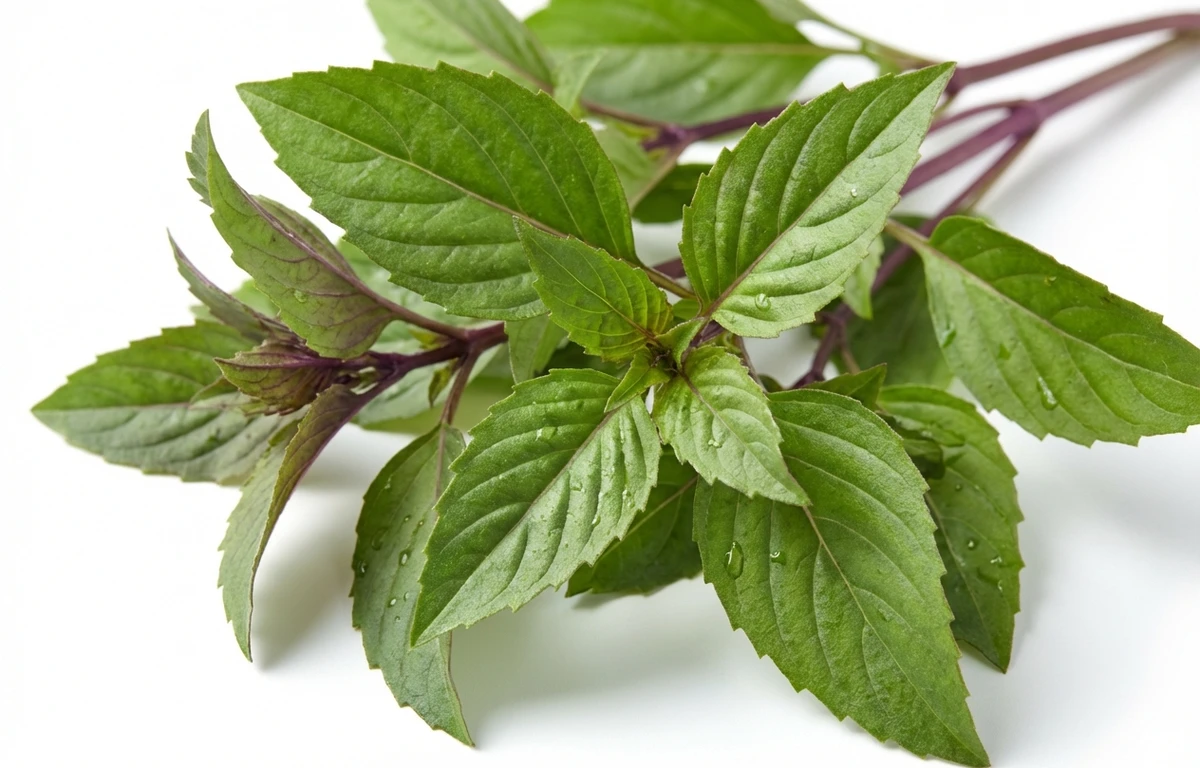
thai basil leaves.
VegetarianVeganGluten-freeDairy-freeNut-freePeanut-freeSoy-freeEgg-freeShellfish-freeHoney-freeAlcohol-freeHalalKosher
ALSO KNOWN AS
horaphasweet thai basilbai horaphaasian basiloriental basil
SERVING
CALORIES
29
PROTEIN
3.1g
CARBS
2.6g
FAT
0.64g
FIBER
1.6g
This ingredient is flagged as naturally gluten-free. Per 100 g, it provides 415 µg of vitamin K.
NUTRITION PROFILE · per 100 g
Everything in this ingredient.
MACRONUTRIENTS
Calories29kcal—
Protein3.1g6%
Carbohydrates2.6g1%
Fiber1.6g6%
Sugar0.30g1%
Total fat0.64g1%
Saturated fat0.04g0%
Trans fat0g—
Cholesterol0mg0%
Water92.2g—
MINERALS
Sodium4.0mg0%
Potassium295mg6%
Calcium177mg14%
Iron3.2mg18%
Magnesium64mg15%
Phosphorus56mg4%
Zinc0.81mg7%
Copper0.39mg43%
Manganese1.1mg50%
Selenium0.30µg1%
VITAMINS
Vitamin A264µg29%
Vitamin C18mg20%
Vitamin D0µg0%
Vitamin E0.80mg5%
Vitamin K415µg346%
Thiamin (B1)0.03mg3%
Riboflavin (B2)0.08mg6%
Niacin (B3)0.90mg6%
Pantothenic acid (B5)0.21mg4%
Vitamin B60.16mg9%
Folate (B9)68µg17%
Vitamin B120µg0%
%DV based on a 2,000 cal diet. Source: USDA FoodData Central. A dash in the %DV column means there’s no established Daily Value for that nutrient.
MEASUREMENT CONVERSIONS
How much is what.
1 cup24g
1 tablespoon1.5g
1 teaspoon0.5g
1 oz28.4g
1 lb453.6g
1 ml0.2g
1 liter150g
1 piece0.5g
HEALTH BENEFITS
Why eat it.
- ✓Possesses natural antibacterial and antimicrobial properties
- ✓Supports digestive health and can help alleviate bloating
COOKING TIPS
In the kitchen.
- 1Add at the very end of cooking to preserve its delicate anise-like aroma and flavor
- 2Use whole leaves in stir-fries and curries for a more authentic texture and visual appeal
- 3Bruise the leaves slightly before adding to cold drinks or salads to release essential oils
STORAGE
Keep it fresh.
- Store like a bouquet: trim stems and place in a glass of water at room temperature
- If refrigerating, wrap loosely in a damp paper towel and place in a plastic bag
- Avoid washing until right before use to prevent premature wilting and browning
FAQ
Frequently asked questions.
How long does Thai basil last?
When stored in a glass of water at room temperature, it lasts 5-7 days. In the fridge, it typically lasts 3-5 days.
Can I freeze Thai basil leaves?
Raw leaves turn black when frozen. It is best to freeze them by blending with a little oil or water into a paste and using ice cube trays.
What is the best substitute for Thai basil?
A mix of Italian sweet basil and a few sprigs of fresh mint is the closest substitute to mimic the licorice notes.
How do I identify fresh Thai basil?
Look for sturdy purple stems, narrow serrated leaves, and a distinct licorice or anise scent. Avoid leaves with black spots.
Is Thai basil the same as Holy basil?
No. Thai basil (Horapha) has a licorice flavor and purple stems, while Holy basil (Krapow) is spicier, peppery, and has hairy stems.
Do I need to remove the stems?
The leaves are the primary part used. While tender top stems are edible, the thicker purple stems are usually discarded as they are woody.
Is Thai basil healthy?
Yes, it is very low in calories and exceptionally high in Vitamin K, Vitamin A, and various phytonutrients.
Can Thai basil be eaten raw?
Absolutely. It is commonly served raw as a garnish for Pho, in fresh spring rolls, or in herb salads.
Why does Thai basil turn black?
It is sensitive to cold temperatures (chilling injury) and oxidation. Bruising the leaves also causes them to darken quickly.
What dishes use Thai basil?
It is essential in Thai Green and Red curries, Pho, Pad Thai, and various Southeast Asian stir-fries.



















