
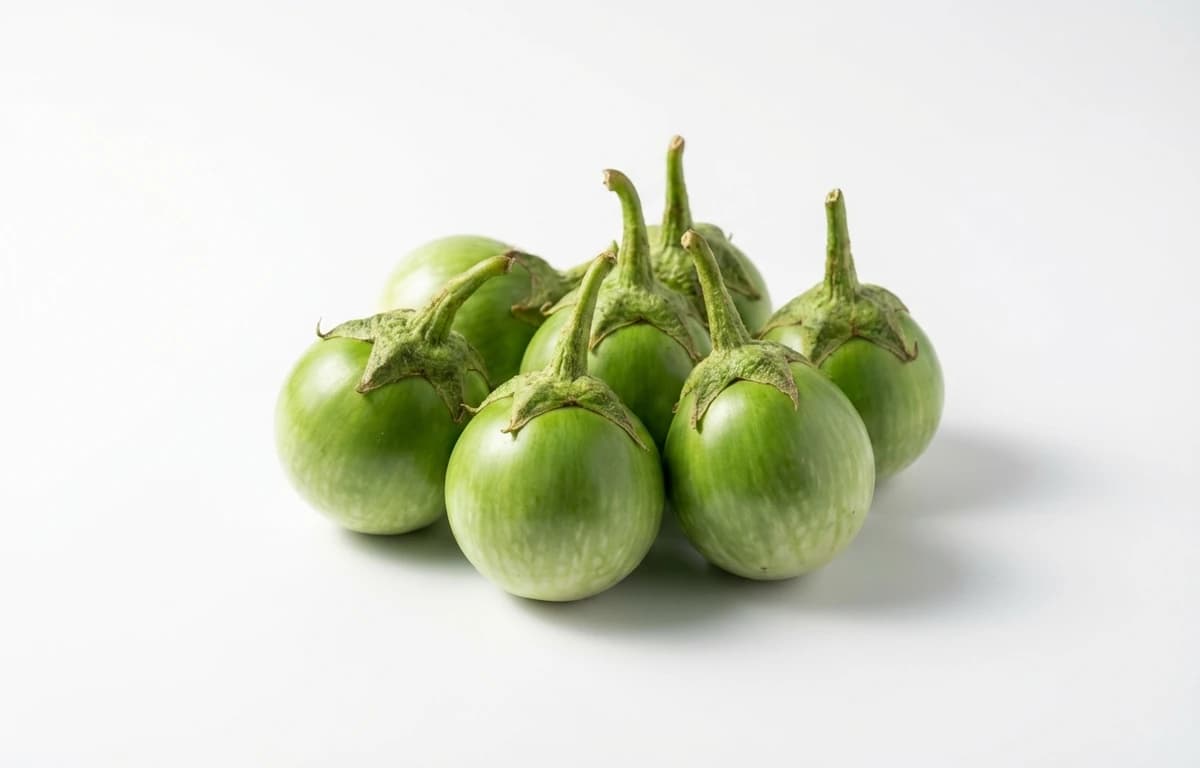
thai eggplant
Also known as: Ma Khuea Pro, Thai Green Eggplant, Round Thai Eggplant, Kermit Eggplant, Thai Round Eggplant
Loading...
Also known as: Ma Khuea Pro, Thai Green Eggplant, Round Thai Eggplant, Kermit Eggplant, Thai Round Eggplant
Per 100g
Nutrition data source: USDA FoodData Central
Common measurement equivalents in grams
Thai eggplant typically lasts 3 to 5 days in the refrigerator. After this, the seeds may turn brown and the flesh can become excessively bitter.
Yes, Thai eggplants are often eaten raw in Thailand, usually served with spicy dips (Nam Prik) or sliced into salads for their crunchy texture.
The best substitute is the Japanese or Chinese eggplant, though they are softer. For a similar crunch, you can use green beans or slightly underripe globe eggplant.
Look for firm, heavy fruits with smooth, shiny skin and bright green stems. Avoid any that have soft spots, bruising, or yellowing skin.
Bitterness usually increases as the eggplant matures. Older eggplants with dark seeds are more bitter. Soaking in salt water before cooking can help remove some of this bitterness.
No, the skin is very thin and edible. It is actually preferred to keep the skin on as it helps the eggplant hold its shape during cooking.
It is not recommended to freeze them raw as the texture becomes mushy. If you must freeze them, blanch or fully cook them first.
They are most famous for their use in Thai Green Curry (Gaeng Keow Wan) and Red Curry, as well as in stir-fries and spicy salads.
thai eggplant is a versatile ingredient found in cuisines around the world. With 25 calories per 100g and 1 grams of protein, it's a nutritious addition to many dishes.
Explore more ingredients in the protein category with complete nutrition information.
View all protein →Discover 2 recipes featuring thai eggplant with step-by-step instructions.
Browse recipes →Yes, it is very low in calories and fat while providing a good amount of fiber, potassium, and various antioxidants.