
Loading...
Also known as: thick sliced bacon, thick cut pork bacon, thick cut rashers, thick cut smoked bacon
Per 100g
Nutrition data source: USDA FoodData Central
Common measurement equivalents in grams
Unopened vacuum-sealed bacon lasts until the use-by date. Once opened, it should be consumed within 5 to 7 days.
Yes, it freezes very well. For convenience, freeze individual slices between layers of parchment paper so you can defrost only what you need.
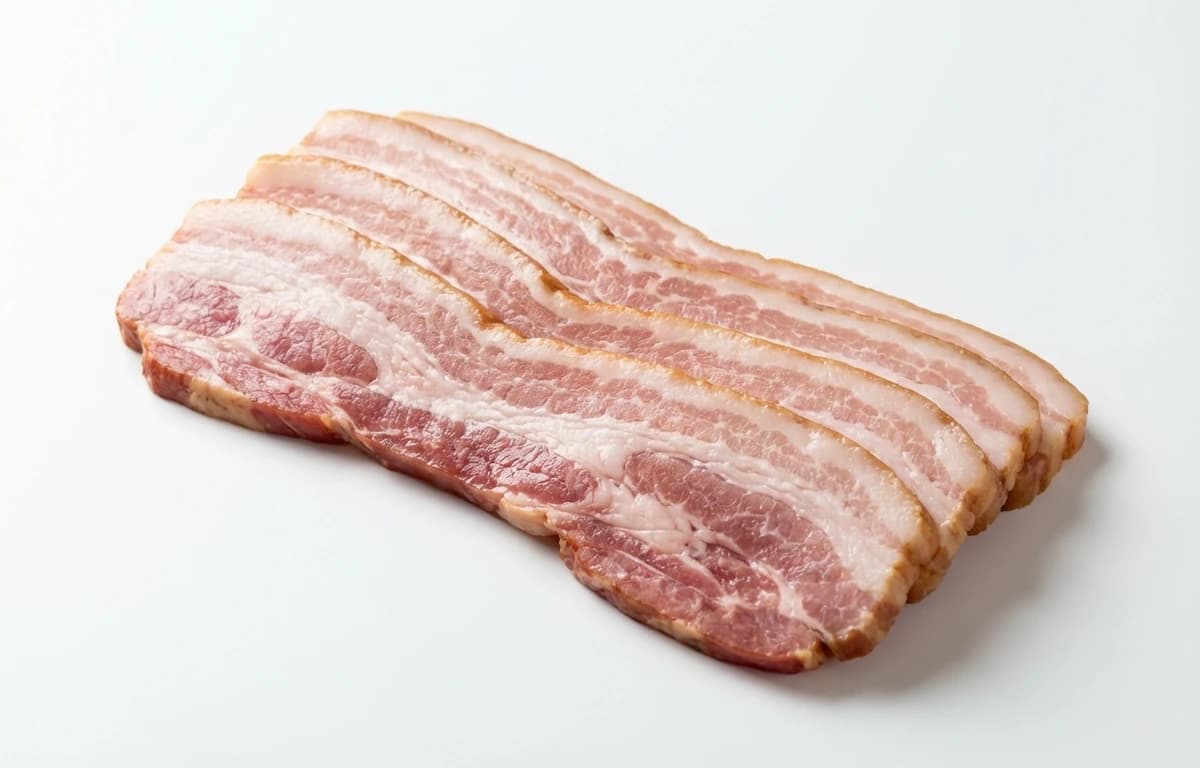
Look for a good ratio of pink meat to white fat. Avoid bacon that looks greyish or has excessive liquid in the package.
Pancetta is the closest pork substitute. For non-pork options, try turkey bacon, beef bacon, or smoked tempeh for a vegan alternative.
No, you should never wash bacon. It increases the risk of cross-contamination and prevents the bacon from crisping properly.
Thick-cut bacon is typically sliced between 1/8 and 1/4 inch thick, whereas standard bacon is about 1/16 inch thick.
Yes, because it is cured with salt, it is very high in sodium. It should be consumed in moderation, especially by those watching their salt intake.
Starting in a cold pan helps, but for perfectly flat slices, use a bacon press or bake it in the oven between two baking sheets.
It is excellent for BLTs, dicing into carbonara, wrapping around scallops, or serving as a hearty breakfast side.
thick-cut bacon is a versatile ingredient found in cuisines around the world. With 458 calories per 100g and 12.6 grams of protein, it's a nutritious addition to many dishes.
Explore more ingredients in the protein category with complete nutrition information.
View all protein →Discover 10 recipes featuring thick-cut bacon with step-by-step instructions.
Browse recipes →Explore more ingredients similar to thick-cut bacon.
The most-searched ingredients on CraftMyMeals.
Most commercial bacon contains sodium nitrite as a preservative. If you wish to avoid them, look for labels specifically marked 'Uncured' or 'Nitrate-Free'.