
Grain
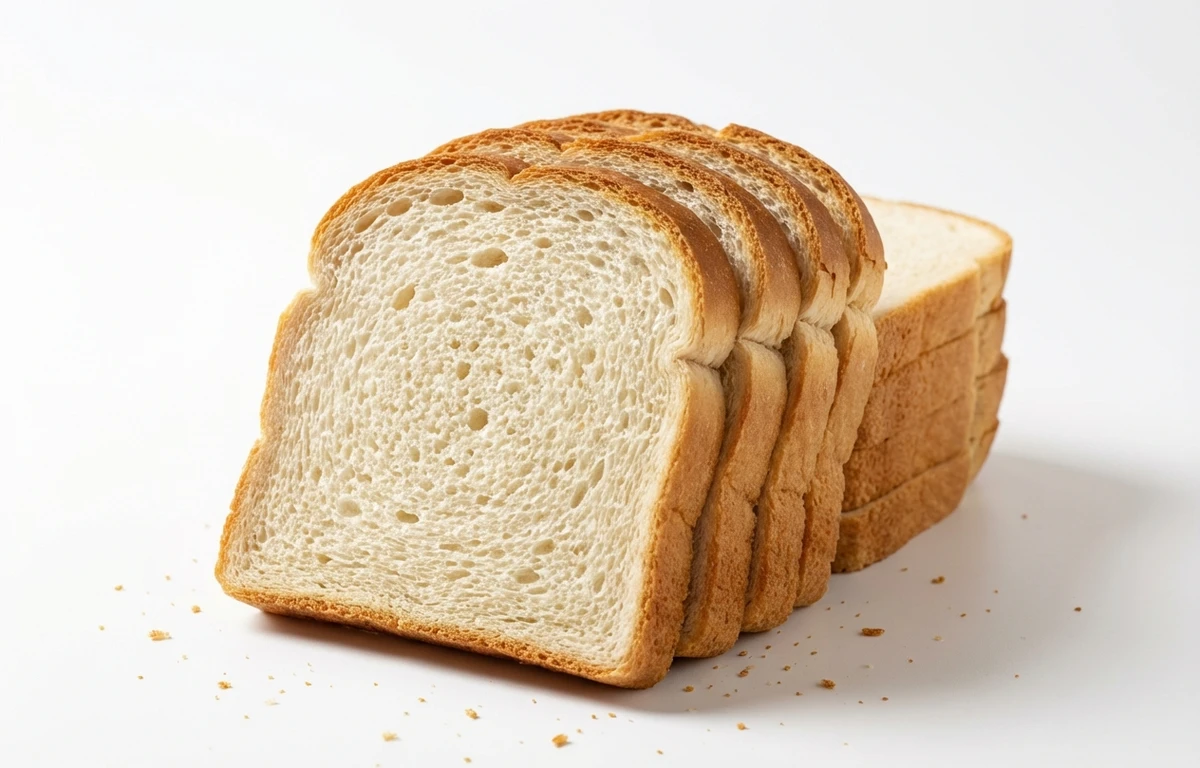
thick-cut white bread.
VegetarianVeganGluten-freeDairy-freeNut-freePeanut-freeEgg-freeShellfish-freeHoney-freeAlcohol-freeFermented
ALSO KNOWN AS
thick white bread
SERVING
CALORIES
265
PROTEIN
9.5g
CARBS
49g
FAT
3.5g
FIBER
2.7g
NUTRITION PROFILE · per 100 g
Everything in this ingredient.
MACRONUTRIENTS
Calories265kcal—
Protein9.5g19%
Carbohydrates49g18%
Fiber2.7g10%
Sugar5.0g10%
Total fat3.5g4%
Saturated fat0.80g4%
Trans fat0.03g—
Cholesterol0mg0%
Water35g—
MINERALS
Sodium500mg22%
Potassium120mg3%
Calcium120mg9%
Iron3.5mg19%
Magnesium26mg6%
Phosphorus103mg8%
Zinc0.95mg9%
Copper0.15mg17%
Manganese0.63mg27%
Selenium16.1µg29%
VITAMINS
Vitamin E0.38mg3%
Vitamin K7.7µg6%
Thiamin (B1)0.51mg43%
Riboflavin (B2)0.26mg20%
Niacin (B3)4.5mg28%
Pantothenic acid (B5)0.46mg9%
Vitamin B60.08mg5%
Folate (B9)127µg32%
Vitamin B120µg0%
%DV based on a 2,000 cal diet. Source: USDA FoodData Central. A dash in the %DV column means there’s no established Daily Value for that nutrient.
HEALTH BENEFITS
Why eat it.
- ✓Offers a readily available source of carbohydrates for quick energy.
- ✓Often enriched with B vitamins (such as folic acid, niacin, and thiamine) and iron, contributing to daily nutrient intake.
- ✓Typically low in fat and cholesterol, fitting into dietary patterns that limit these nutrients.
- ✓Its soft texture can be easy to chew and digest, which may be suitable for individuals with specific dietary needs or sensitivities.
COOKING TIPS
In the kitchen.
- 1Its thickness makes it ideal for French toast, as it can absorb a significant amount of custard without becoming soggy.
- 2Perfect for making sturdy grilled cheese sandwiches that develop a crispy, golden-brown crust while the inside remains soft.
- 3Toast slices and cut them into large cubes to make flavorful, absorbent croutons for soups and salads.
- 4Use as a substantial base for open-faced sandwiches, bruschetta, or savory bread puddings like stratas.
STORAGE
Keep it fresh.
- Store at room temperature in a cool, dry place like a bread box or pantry for 3-5 days. Avoid refrigeration, which can cause it to go stale faster.
- For long-term storage, place slices in a freezer-safe bag, removing as much air as possible. It can be frozen for up to 3 months.
FAQ
Frequently asked questions.
Is thick-cut white bread healthy?
Thick-cut white bread provides a quick source of energy and is often enriched with iron and B vitamins like folic acid. However, it is lower in fiber than whole-grain options and has a higher glycemic index, so it is best enjoyed in moderation as part of a balanced diet.
How many calories and carbs are in thick-cut white bread?
Per 100g, thick-cut white bread contains approximately 265 calories and 49g of carbohydrates. Because the slices are thicker than standard bread, a single slice will typically have a higher caloric and carbohydrate count than a regular slice.
Is thick-cut white bread vegan?
Most commercial white breads are vegan as they are made from flour, water, yeast, and salt. However, some brands may add milk, butter, or honey for flavor and texture, so it is important to check the ingredient label.
Is thick-cut white bread keto-friendly?
No, thick-cut white bread is not keto-friendly. It contains about 49g of carbohydrates per 100g, and a single thick slice can often exceed the daily net carb limit allowed on a strict ketogenic diet.
What is thick-cut white bread best used for in cooking?
Its sturdy, absorbent nature makes it the gold standard for French toast, bread pudding, and Texas toast. It is also excellent for toasted sandwiches like grilled cheese, as it provides a crunchy exterior while remaining soft inside.
Can I freeze thick-cut white bread?
Yes, thick-cut white bread freezes exceptionally well for up to three months. To prevent slices from sticking together, you can place parchment paper between them or simply ensure the bag is tightly sealed to prevent freezer burn.
How should I store thick-cut white bread to keep it fresh?
Store it in a cool, dry place in its original packaging or a bread box. Avoid the refrigerator, as the cold temperature can actually accelerate the staling process through starch retrogradation, making the bread tough.
Is thick-cut white bread easy to digest?
Yes, because it is low in fiber and has a soft texture, white bread is generally easier on the digestive system than high-fiber whole grain breads. This makes it a common choice for individuals on low-residue diets or those with sensitive stomachs.
Is thick-cut white bread gluten-free?
No, standard thick-cut white bread is made from wheat flour and contains gluten. Those with celiac disease or gluten intolerance should look for specific gluten-free bread alternatives made from rice, almond, or potato flour.
How can I tell if my thick-cut white bread has gone bad?
Check for visible spots of green, white, or black mold, which indicate spoilage. Additionally, if the bread has a sour or off-putting fermented smell, or if it has become extremely hard and dry, it should be discarded.



















