
grain product
Thick-Sliced White Bread.
VegetarianVeganGluten-freeDairy-freeNut-freePeanut-freeSoy-freeEgg-freeShellfish-freeHoney-freeAlcohol-freeFermented
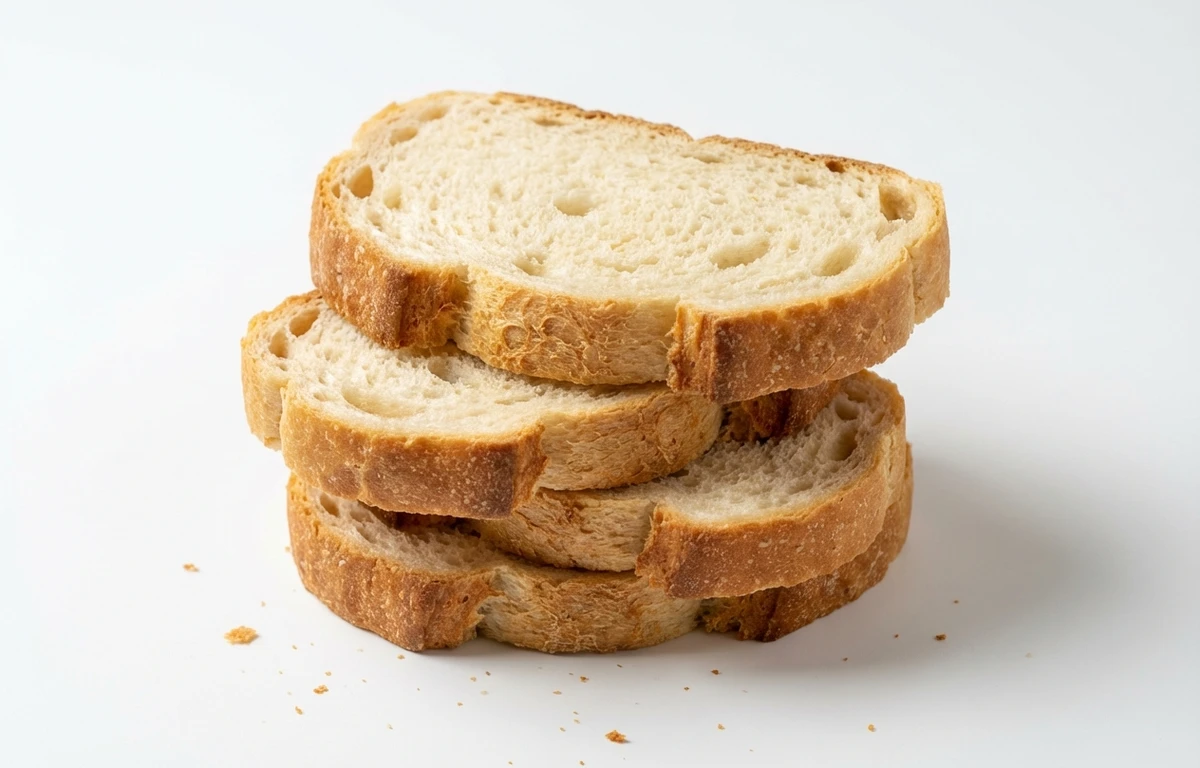
SERVING
CALORIES
265
PROTEIN
9.0g
CARBS
49g
FAT
3.2g
FIBER
2.7g
NUTRITION PROFILE · per 100 g
Everything in this ingredient.
MACRONUTRIENTS
Calories265kcal—
Protein9.0g18%
Carbohydrates49g18%
Fiber2.7g10%
Sugar5.0g10%
Total fat3.2g4%
Saturated fat0.70g3%
Trans fat0g—
Cholesterol0mg0%
Water37g—
MINERALS
Sodium490mg21%
Potassium100mg2%
Calcium100mg8%
Iron3.0mg17%
Magnesium25mg6%
Phosphorus100mg8%
Zinc0.70mg6%
Copper0.10mg11%
Manganese0.40mg17%
Selenium20µg36%
VITAMINS
Vitamin E0.10mg1%
Vitamin K1.0µg1%
Thiamin (B1)0.30mg25%
Riboflavin (B2)0.20mg15%
Niacin (B3)3.0mg19%
Pantothenic acid (B5)0.30mg6%
Vitamin B60.10mg6%
Folate (B9)100µg25%
%DV based on a 2,000 cal diet. Source: USDA FoodData Central. A dash in the %DV column means there’s no established Daily Value for that nutrient.
MEASUREMENT CONVERSIONS
How much is what.
1 oz3.5g
1 lb0.2g
HEALTH BENEFITS
Why eat it.
- ✓Provides quick energy due to high carbohydrate content.
- ✓Often fortified with essential vitamins and minerals like iron and B vitamins.
- ✓Versatile ingredient for various meals and snacks.
COOKING TIPS
In the kitchen.
- 1Toast slices for a crispy texture, ideal for breakfast or as a side.
- 2Use as a base for sandwiches, French toast, or bread pudding.
- 3Can be cubed and baked to make croutons for salads or soups.
STORAGE
Keep it fresh.
- Store at room temperature in an airtight bag to prevent drying out.
- Refrigerate to extend shelf life, though it may alter texture.
- Freeze for long-term storage, thaw at room temperature or toast directly.
FAQ
Frequently asked questions.
Is thick-sliced white bread healthy?
Thick-sliced white bread provides quick energy through its high carbohydrate content and is often fortified with iron and B vitamins. However, it is lower in fiber than whole-grain options, so it is best enjoyed in moderation as part of a balanced diet.
How many calories and carbs are in thick-sliced white bread?
Per 100g, this bread contains approximately 265 calories and 49g of carbohydrates. Because the slices are thicker than standard bread, a single slice will typically have a higher caloric and carb count than a regular slice.
Is thick-sliced white bread vegan?
Most commercial white breads are vegan as they are made from flour, water, yeast, and salt. However, some brands may add milk, butter, or honey for flavor, so it is important to check the ingredient label.
Is thick-sliced white bread keto-friendly?
No, it is not keto-friendly. With 49g of carbohydrates per 100g, even a single thick slice can exceed the daily carb limit for those following a strict ketogenic diet.
What are the best culinary uses for thick-sliced white bread?
Its sturdy structure makes it perfect for French toast, bread pudding, and Texas toast. It is also excellent for sandwiches with heavy or wet fillings, as it is less likely to become soggy compared to thin-sliced bread.
Can I use thick-sliced white bread for French toast?
Yes, thick-sliced white bread is the ideal choice for French toast. The extra thickness allows the bread to soak up the custard mixture thoroughly without falling apart, resulting in a fluffy interior and crisp exterior.
How should I store thick-sliced white bread to keep it fresh?
Store it at room temperature in a cool, dry place in its original packaging or a bread box. Avoid the refrigerator, as the cold temperature can cause the starch to recrystallize, making the bread go stale faster.
Can I freeze thick-sliced white bread?
Yes, it freezes very well for up to 3 months. For best results, ensure the bag is tightly sealed; you can toast the slices directly from the freezer without needing to thaw them first.
Is thick-sliced white bread gluten-free?
No, standard white bread is made from wheat flour and contains gluten. People with celiac disease or gluten intolerance should seek out specific gluten-free bread alternatives.
How can I tell if thick-sliced white bread has gone bad?
Check for visible spots of mold, which can be green, black, or white. Additionally, if the bread has a sour or off-putting fermented smell, or if it has become extremely hard and dry, it should be discarded.



















