
Loading...
Per 100g
Nutrition data source: USDA FoodData Central
Common measurement equivalents in grams
When stored in a cool, dry place in an airtight container, dry egg noodles can last for 12 to 24 months.
No, they are not vegan because they contain eggs as a primary ingredient.
Yes, you can freeze cooked egg noodles for up to 3 months. It is best to freeze them slightly undercooked to prevent mushiness when reheating.
Angel hair pasta, thin linguine, or rice vermicelli (for a gluten-free option) are the best substitutes.
Boil them in plenty of water and check for doneness a minute before the package instructions suggest; they should be 'al dente'.
Yes, they are typically made from wheat flour and contain gluten.
One cup of cooked egg noodles contains approximately 210-220 calories.
They contain more protein and certain vitamins due to the egg content, but they also have higher cholesterol than standard water-based pasta.
Look for signs of pantry pests (weevils), any discoloration, or a stale/rancid smell from the egg fats.
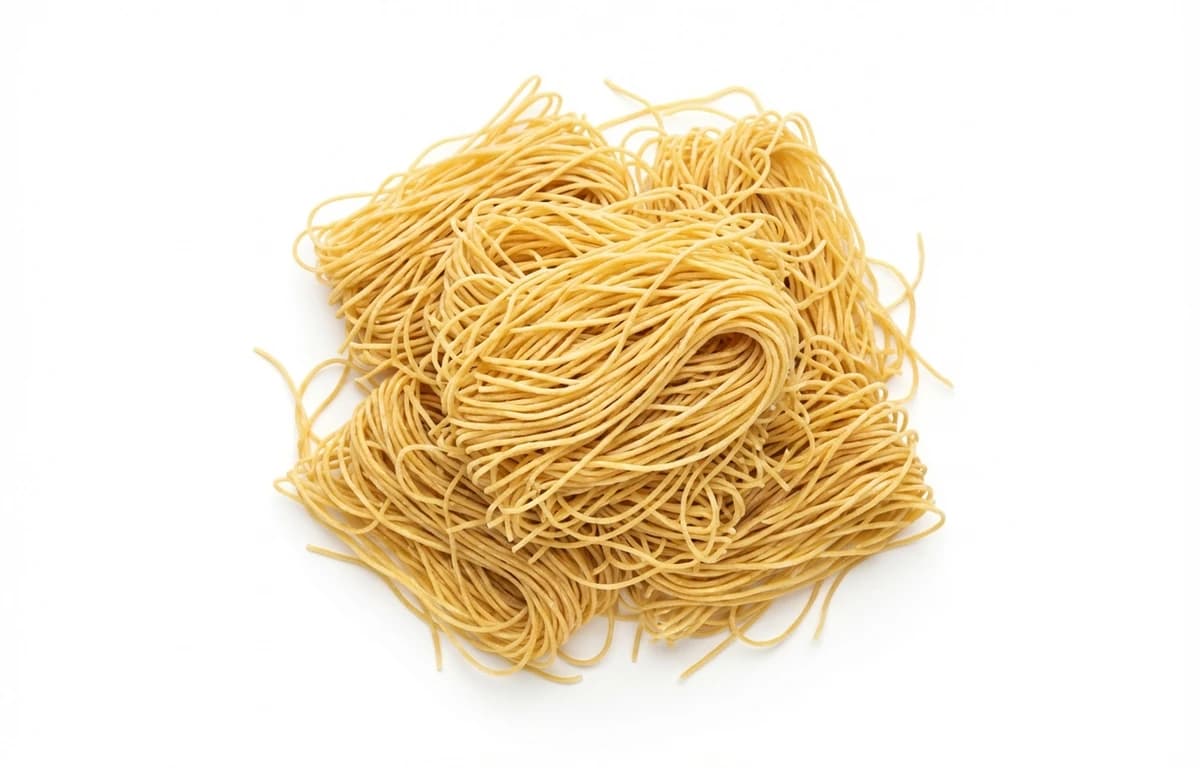
Thin Egg Noodles is a versatile ingredient found in cuisines around the world. With 384 calories per 100g and 14.2 grams of protein, it's a nutritious addition to many dishes.
Explore more ingredients in the grain category with complete nutrition information.
View all grain →Discover 1 recipes featuring thin egg noodles with step-by-step instructions.
Browse recipes →