
Nut Seed
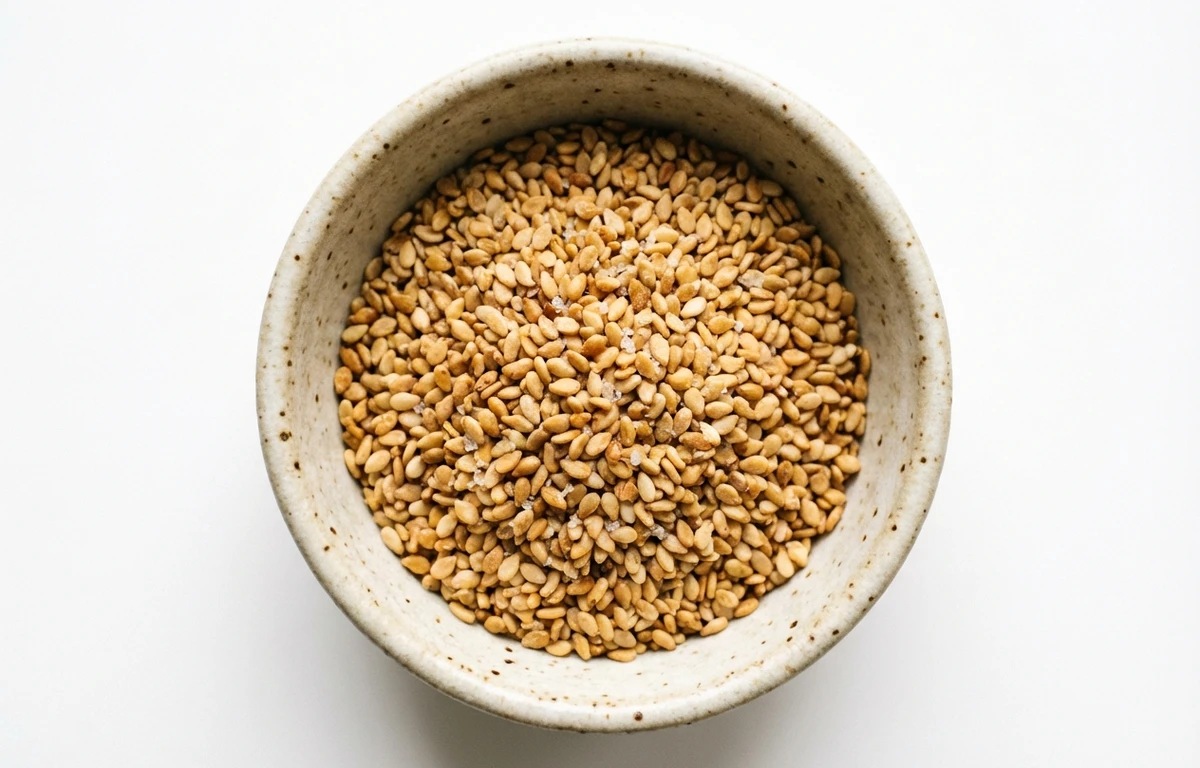
toasted salted sesame seed kernels.
VegetarianVeganGluten-freeDairy-freeNut-freePeanut-freeSoy-freeEgg-freeShellfish-freeHoney-freeAlcohol-free
ALSO KNOWN AS
salted sesame seed kernels
SERVING
CALORIES
567
PROTEIN
17g
CARBS
26g
FAT
48g
FIBER
16.9g
NUTRITION PROFILE · per 100 g
Everything in this ingredient.
MACRONUTRIENTS
Calories567kcal—
Protein17g34%
Carbohydrates26g9%
Fiber16.9g60%
Sugar0.48g1%
Total fat48g62%
Saturated fat6.7g34%
Cholesterol0mg0%
Water5.0g—
MINERALS
Sodium588mg26%
Potassium406mg9%
Calcium131mg10%
Iron7.8mg43%
Magnesium346mg82%
Phosphorus774mg62%
Zinc10.2mg93%
Copper1.5mg162%
Manganese1.4mg62%
Selenium34.4µg63%
VITAMINS
Vitamin A3.0µg0%
Vitamin C0mg0%
Vitamin D0µg0%
Vitamin E0.25mg2%
Vitamin K0µg0%
Thiamin (B1)1.2mg101%
Riboflavin (B2)0.47mg36%
Niacin (B3)5.4mg34%
Pantothenic acid (B5)0.68mg14%
Vitamin B60.15mg9%
Folate (B9)96µg24%
Vitamin B120µg0%
%DV based on a 2,000 cal diet. Source: USDA FoodData Central. A dash in the %DV column means there’s no established Daily Value for that nutrient.
MEASUREMENT CONVERSIONS
How much is what.
1 cup128g
1 tablespoon8g
1 teaspoon2.7g
1 ml0.5g
1 liter533.3g
HEALTH BENEFITS
Why eat it.
- ✓Rich source of healthy fats, including monounsaturated and polyunsaturated fats, which support heart health.
- ✓Excellent source of minerals such as copper, manganese, magnesium, and calcium, crucial for bone health and enzyme function.
- ✓Contains unique antioxidants called lignans (sesamin and sesamolin) that may help reduce inflammation and oxidative stress.
- ✓Good source of dietary fiber, which aids in digestion, promotes satiety, and helps regulate blood sugar levels.
COOKING TIPS
In the kitchen.
- 1Use as a finishing garnish on salads, stir-fries, noodle dishes, and soups to add a crunchy texture and nutty flavor.
- 2Incorporate into a crust or coating for fish, chicken, or tofu before baking or pan-frying.
- 3Sprinkle generously over roasted vegetables, avocado toast, or rice bowls for added flavor and visual appeal.
- 4Blend into homemade dressings, sauces, or dips to provide depth and a savory, nutty essence.
STORAGE
Keep it fresh.
- Store in an airtight container in a cool, dark pantry for up to 6 months to maintain freshness.
- For longer-term storage (up to a year), refrigerate or freeze to prevent the natural oils from becoming rancid.
FAQ
Frequently asked questions.
Are toasted salted sesame seeds healthy?
Yes, they are highly nutritious, providing a rich source of healthy monounsaturated and polyunsaturated fats that support heart health. They are also packed with essential minerals like calcium, magnesium, and manganese, though the salt content means they should be consumed in moderation.
How much protein and fiber are in these sesame seeds?
A 100g serving contains approximately 16.96g of protein and is a good source of dietary fiber. This combination is excellent for supporting muscle maintenance, aiding digestion, and promoting a feeling of fullness.
Are toasted salted sesame seeds keto-friendly?
Yes, they are keto-friendly because they are high in healthy fats (48g per 100g) and have a moderate carbohydrate count. They make an excellent low-carb garnish for salads, meats, and keto-friendly snacks.
Are toasted salted sesame seeds vegan and gluten-free?
Yes, sesame seeds are naturally vegan and gluten-free. They are a great plant-based way to add crunch, protein, and minerals to a variety of dietary patterns without using animal products or wheat.
What do toasted salted sesame seeds taste like?
Toasting the seeds brings out a deep, nutty, and slightly smoky flavor that is much more intense than raw seeds. The addition of salt enhances this savoriness, making them a perfect savory topping for many dishes.
How should I use toasted salted sesame seeds in cooking?
They are best used as a finishing touch for stir-fries, sushi, avocado toast, and salads. You can also use them to crust fish or chicken, or sprinkle them over roasted vegetables to add a salty, nutty crunch.
How should I store toasted salted sesame seeds?
Store them in an airtight container in a cool, dark place like a pantry to prevent the oils from becoming rancid. For maximum shelf life, you can store them in the refrigerator or freezer to keep the oils stable for longer.
How long do toasted salted sesame seeds last?
In a sealed container in the pantry, they typically stay fresh for 3 to 6 months. If stored in the refrigerator or freezer, they can last up to a year, though you should check for any 'off' or paint-like smells which indicate the oils have spoiled.
Do toasted salted sesame seeds provide any specific health benefits?
They contain unique antioxidants called lignans, specifically sesamin and sesamolin, which may help reduce inflammation and oxidative stress. Their high mineral content also makes them beneficial for bone health and enzyme function.
Can I substitute toasted salted sesame seeds for raw ones in a recipe?
You can, but you must account for the extra flavor and salt. Because they are already toasted, they shouldn't be cooked further at high heat, and you should reduce the added salt in your recipe to avoid over-seasoning.



















