Vegetable10 recipes
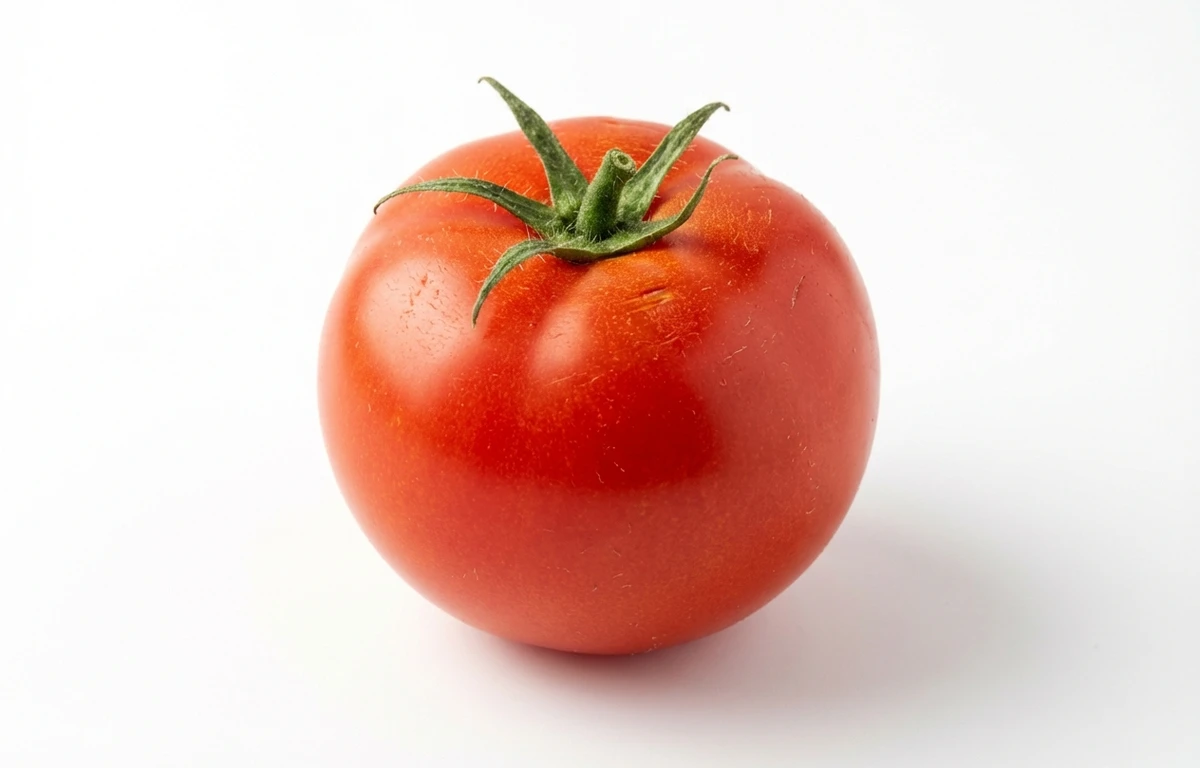
tomato.
VegetarianVeganGluten-freeDairy-freeNut-freePeanut-freeSoy-freeEgg-freeShellfish-freeHoney-freeAlcohol-freeHalalKosher
ALSO KNOWN AS
Medium TomatoSmall Tomatotomatoraw tomatojitomatetomatMedium Tomatoestamatarkamatistomatepomodorolove applered tomato
SERVING
CALORIES
18
PROTEIN
0.90g
CARBS
3.9g
FAT
0.20g
FIBER
1.2g
NUTRITION PROFILE · per 100 g
Everything in this ingredient.
MACRONUTRIENTS
Calories18kcal—
Protein0.90g2%
Carbohydrates3.9g1%
Fiber1.2g4%
Sugar2.6g5%
Total fat0.20g0%
Saturated fat0.03g0%
Trans fat0g—
Cholesterol0mg0%
Water94.5g—
MINERALS
Sodium5.0mg0%
Potassium237mg5%
Calcium10mg1%
Iron0.30mg2%
Magnesium11mg3%
Phosphorus24mg2%
Zinc0.17mg2%
Copper0.06mg7%
Manganese0.11mg5%
Selenium0µg0%
VITAMINS
Vitamin A42µg5%
Vitamin C13.7mg15%
Vitamin D0µg0%
Vitamin E0.54mg4%
Vitamin K7.9µg7%
Thiamin (B1)0.04mg3%
Riboflavin (B2)0.02mg2%
Niacin (B3)0.59mg4%
Pantothenic acid (B5)0.09mg2%
Vitamin B60.08mg5%
Folate (B9)15µg4%
Vitamin B120µg0%
%DV based on a 2,000 cal diet. Source: USDA FoodData Central. A dash in the %DV column means there’s no established Daily Value for that nutrient.
MEASUREMENT CONVERSIONS
How much is what.
1 cup149g
1 tablespoon10g
1 oz28.4g
1 lb453.6g
1 liter1000g
1 piece123g
HEALTH BENEFITS
Why eat it.
- ✓Rich source of Lycopene, a powerful antioxidant for heart health.
- ✓High Vitamin C content supports immune system function.
- ✓Contains potassium which helps maintain healthy blood pressure.
- ✓Supports skin health and protection against UV damage.
- ✓Good source of Vitamin K and calcium for bone health.
COOKING TIPS
In the kitchen.
- 1Add a pinch of salt while cooking to help release their natural juices.
- 2Cooking tomatoes increases the bioavailability of the antioxidant lycopene.
- 3If using in a salad, salt them 10 minutes before serving to enhance flavor.
STORAGE
Keep it fresh.
- Store at room temperature away from direct sunlight to maintain flavor.
- Only refrigerate if fully ripe and you need to extend life by 2-3 days.
- Store stem-side down to prevent moisture loss and bruising.
FAQ
Frequently asked questions.
How long do tomatoes last at room temperature?
Fresh, ripe tomatoes typically last 3 to 7 days at room temperature.
Can you freeze fresh tomatoes?
Yes, you can freeze them whole or chopped, but the texture will become mushy; they are best used for sauces or soups after freezing.
How do I pick the best tomato?
Look for tomatoes that are heavy for their size, have a bright color, and yield slightly to pressure without being soft.
What is a good substitute for fresh tomatoes in cooking?
Canned tomatoes, tomato paste diluted with water, or red bell peppers can work depending on the recipe.
Do I need to peel tomatoes before cooking?
It is not necessary, but for smooth sauces, you can blanch them in boiling water for 30 seconds to easily slip the skins off.
Are tomatoes a fruit or a vegetable?
Botanically they are a fruit (a berry), but for culinary and nutritional purposes, they are classified as a vegetable.
How can I ripen green tomatoes quickly?
Place them in a paper bag with a banana or an apple; the ethylene gas will speed up the ripening process.
Why shouldn't I store tomatoes in the fridge?
Cold temperatures can break down the cell structure and dampen the flavor-producing enzymes, leading to a mealy texture.
Are tomatoes high in sugar?
No, they are relatively low in sugar, containing about 2.6g per 100g serving.
RECIPES
Cook with tomato.
10 recipes · sorted by what’s quick
.webp)