
Vegetable10 recipes
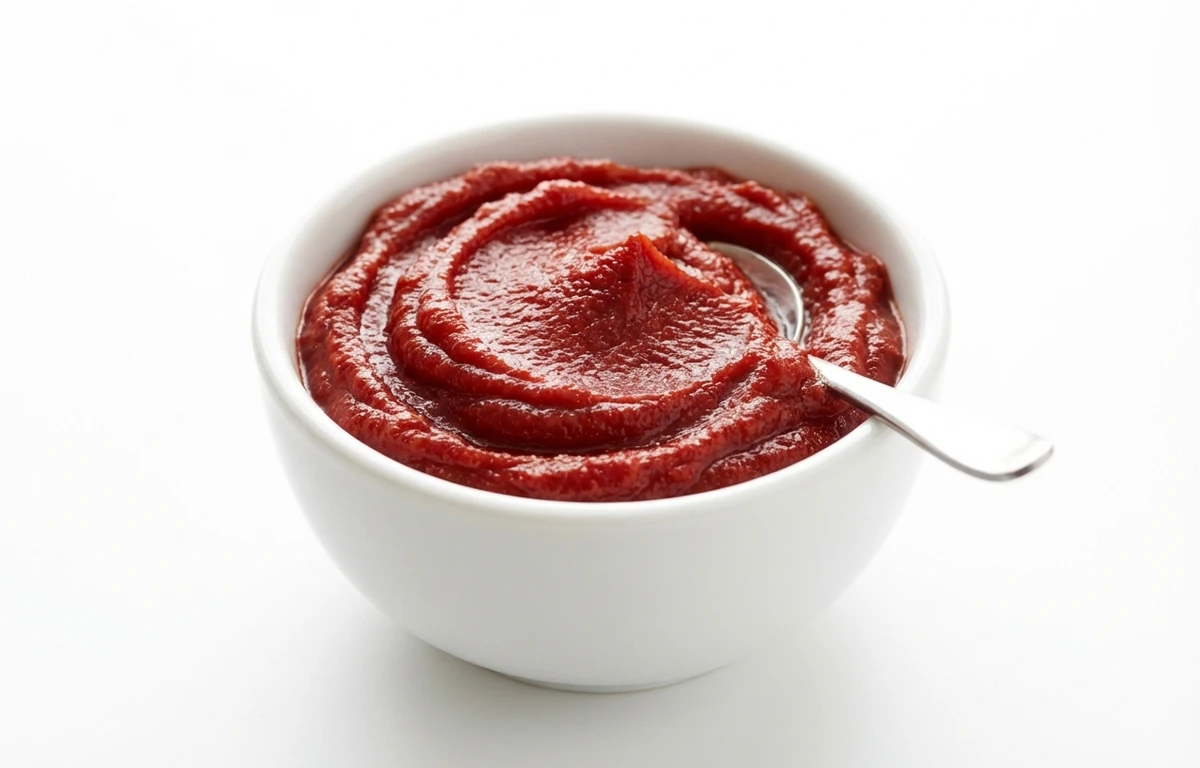
tomato paste.
VegetarianVeganGluten-freeDairy-freeNut-freePeanut-freeSoy-freeEgg-freeShellfish-freeHoney-freeAlcohol-free
ALSO KNOWN AS
tamatar pasteconcentrated tomato
SERVING
CALORIES
82
PROTEIN
3.6g
CARBS
18.7g
FAT
0.49g
FIBER
4.3g
This ingredient is flagged as naturally gluten-free.
NUTRITION PROFILE · per 100 g
Everything in this ingredient.
MACRONUTRIENTS
Calories82kcal—
Protein3.6g7%
Carbohydrates18.7g7%
Fiber4.3g15%
Sugar11.6g23%
Total fat0.49g1%
Saturated fat0.07g0%
Cholesterol0mg0%
Water72.9g—
MINERALS
Sodium322mg14%
Potassium1010mg21%
Calcium29mg2%
Iron2.3mg13%
Magnesium49.6mg12%
Phosphorus91.2mg7%
Zinc0.51mg5%
Copper0.30mg33%
Manganese0.33mg14%
VITAMINS
Vitamin A45µg5%
Vitamin C21.9mg24%
Vitamin D0µg0%
Thiamin (B1)0.05mg4%
Riboflavin (B2)0.15mg12%
Niacin (B3)2.1mg13%
Vitamin B60.22mg13%
%DV based on a 2,000 cal diet. Source: USDA FoodData Central. A dash in the %DV column means there’s no established Daily Value for that nutrient.
MEASUREMENT CONVERSIONS
How much is what.
1 cup259.2g
1 tablespoon16g
1 teaspoon5.4g
1 oz28g
1 lb448g
1 ml1.1g
1 liter1080g
HEALTH BENEFITS
Why eat it.
- ✓The processing and cooking of tomatoes increases the bioavailability of lycopene, making tomato paste a more potent source than fresh tomatoes.
COOKING TIPS
In the kitchen.
- 1To deepen its flavor and remove any raw or metallic taste, sauté the tomato paste in oil for 1-2 minutes until it darkens to a brick-red color before adding other ingredients.
- 2Use as a base to add concentrated umami and rich tomato flavor to stews, soups, braises, and pasta sauces without adding excess liquid.
- 3Whisk a small amount into marinades or vinaigrettes to add body, color, and a subtle sweetness.
- 4Combine with spices and a little water to create a quick, flavorful coating for roasted vegetables or proteins.
STORAGE
Keep it fresh.
- Store unopened cans or tubes in a cool, dark pantry for up to 18 months.
- After opening, transfer leftover paste to a glass jar, cover the surface with a thin layer of olive oil to prevent mold, and refrigerate for up to two weeks.
- For long-term storage, portion leftover paste into an ice cube tray, freeze until solid, then transfer the cubes to a freezer-safe bag for up to 3 months.
FAQ
Frequently asked questions.
How many calories and carbs are in tomato paste?
Per 100g, tomato paste contains approximately 82 calories and 18.7g of carbohydrates. Because it is highly concentrated, a typical serving of one tablespoon contains only about 13 calories and 3g of carbs.
Is tomato paste keto-friendly?
Yes, tomato paste can be used on a keto diet in moderation. While it has 18.7g of carbs per 100g, most recipes only call for small amounts (1-2 tablespoons), which adds negligible carbs to a full meal. Always check labels for added sugars.
Is tomato paste vegan and gluten-free?
Pure tomato paste is naturally both vegan and gluten-free, as it is made simply by reducing tomatoes. However, always check the ingredient list for flavored varieties that might include additives or thickeners.
How do you cook with tomato paste for the best flavor?
To unlock its full potential, sauté tomato paste with oil and aromatics (like onions or garlic) for 1-2 minutes until it turns a deep brick red. This 'blooming' process caramelizes the natural sugars and removes the raw, metallic taste.
Can I substitute tomato sauce for tomato paste?
You can, but you must adjust the ratio. Use 3 tablespoons of tomato sauce for every 1 tablespoon of paste required, and reduce other liquids in the recipe to compensate for the extra moisture in the sauce.
How long does tomato paste last after opening?
Canned tomato paste lasts about 5 to 7 days in the refrigerator once opened. If you use tomato paste sold in a squeeze tube, it can stay fresh in the fridge for up to 45 days because it is less exposed to air.
What is the best way to store leftover tomato paste?
The best method is to freeze it. Portion out tablespoon-sized dollops onto a tray, freeze until solid, and then transfer them to a freezer-safe bag; they will stay fresh for up to 6 months and can be added directly to hot pans.
How do I know if tomato paste has spoiled?
Check for any visible mold on the surface or around the lid. If the paste has developed a sour, fermented smell or the color has turned from a vibrant deep red to a dark, brownish-black, it should be discarded.
RECIPES
Cook with tomato paste.
10 recipes · sorted by what’s quick



















