Other1 recipes
tonic water.
VegetarianVeganGluten-freeDairy-freeNut-freePeanut-freeSoy-freeEgg-freeShellfish-freeHoney-freeAlcohol-free
ALSO KNOWN AS
quinine water
SERVING
CALORIES
34
PROTEIN
0g
CARBS
8.8g
FAT
0g
FIBER
0g
This ingredient is flagged as naturally gluten-free. Per 100 g, it provides 0 µg of vitamin K.
NUTRITION PROFILE · per 100 g
Everything in this ingredient.
MACRONUTRIENTS
Calories34kcal—
Protein0g0%
Carbohydrates8.8g3%
Fiber0g0%
Sugar8.8g18%
Total fat0g0%
Saturated fat0g0%
Trans fat0g—
Cholesterol0mg0%
Water91.1g—
MINERALS
Sodium12mg1%
Potassium0mg0%
Calcium1.0mg0%
Iron0.01mg0%
Magnesium0mg0%
Phosphorus0mg0%
Zinc0.10mg1%
Copper0.01mg1%
Manganese0mg0%
Selenium0µg0%
VITAMINS
Vitamin A0µg0%
Vitamin C0mg0%
Vitamin D0µg0%
Vitamin E0mg0%
Vitamin K0µg0%
Thiamin (B1)0mg0%
Riboflavin (B2)0mg0%
Niacin (B3)0mg0%
Pantothenic acid (B5)0mg0%
Vitamin B60mg0%
Folate (B9)0µg0%
Vitamin B120µg0%
%DV based on a 2,000 cal diet. Source: USDA FoodData Central. A dash in the %DV column means there’s no established Daily Value for that nutrient.
MEASUREMENT CONVERSIONS
How much is what.
1 cup249.6g
1 tablespoon15.6g
1 teaspoon5.2g
1 oz29.6g
1 lb473.1g
1 ml1g
1 liter1040g
HEALTH BENEFITS
Why eat it.
- ✓Contributes to daily fluid intake, aiding in hydration.
- ✓The bitter flavor from quinine can act as a palate cleanser and may stimulate appetite before a meal.
- ✓Diet and light versions offer a low-calorie or zero-calorie alternative for mixing beverages.
COOKING TIPS
In the kitchen.
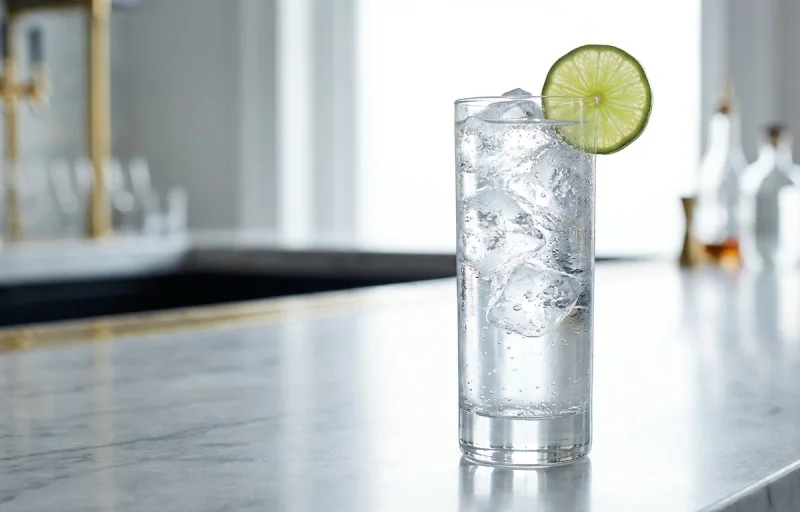
- 1Serve well-chilled over ice to enhance its crisp, refreshing quality. A wedge of lime or lemon is a classic garnish.
- 2Use as a primary mixer for spirits, most famously gin to create a Gin and Tonic, but also pairs well with vodka or white rum.
- 3Incorporate into non-alcoholic mocktails by mixing with fruit juices, syrups, and fresh herbs like mint or rosemary.
- 4The carbonation can be used to create a light, airy batter for frying, similar to using club soda or beer.
STORAGE
Keep it fresh.
- Store unopened bottles in a cool, dark place such as a pantry, away from direct sunlight and heat sources.
- Once opened, reseal the cap tightly and refrigerate to preserve carbonation. It is best consumed within 3-5 days.
FAQ
Frequently asked questions.
Is tonic water healthy?
Tonic water is generally considered a mixer rather than a health drink due to its sugar content, providing about 34 calories per 100g. While it aids in hydration and contains quinine, it is best consumed in moderation. For a healthier alternative, look for 'diet' or 'slimline' versions which are calorie-free.
How much sugar and carbs are in tonic water?
Standard tonic water contains approximately 8.8g of carbohydrates per 100g, which is almost entirely sugar. This is comparable to the sugar content in many sodas, though the bitterness of the quinine often masks the sweetness. Always check the label as sugar content can vary significantly between brands.
Is tonic water keto-friendly?
Regular tonic water is not keto-friendly because it contains significant amounts of sugar and carbohydrates. However, diet tonic water made with non-nutritive sweeteners is zero-carb and can be included in a ketogenic diet. Always verify the ingredient list for hidden sugars.
Is tonic water vegan and gluten-free?
Yes, tonic water is naturally vegan and gluten-free. It is typically made from carbonated water, sugar, citric acid, and natural flavors like quinine, none of which are derived from animal products or gluten-containing grains.
What does tonic water taste like?
Tonic water has a distinct bittersweet flavor profile. It combines the sharp, dry bitterness of quinine with a moderate amount of sweetness and a touch of citrus acidity. This unique balance makes it a popular palate cleanser and a staple mixer for spirits.
Can I substitute tonic water with club soda or seltzer?
While they are all carbonated, they are not direct substitutes. Club soda and seltzer are neutral in flavor, whereas tonic water is bitter and sweet. Using club soda instead of tonic water will result in a drink that lacks the characteristic 'bite' and sweetness provided by quinine and sugar.
How should I store tonic water?
Unopened tonic water should be stored in a cool, dry place away from direct sunlight. Once opened, it must be kept in the refrigerator with the cap tightly sealed to preserve carbonation. For the best experience, consume opened tonic water within 2 to 3 days.
Does tonic water expire or go bad?
Unopened tonic water has a long shelf life and is usually safe to drink past its 'best by' date, though it may lose carbonation over time. If the liquid appears cloudy or the bottle is damaged, it should be discarded. Once opened, it will eventually go flat but remains safe to consume for several days if refrigerated.
Why does tonic water glow under a blacklight?
Tonic water glows a bright fluorescent blue under ultraviolet (UV) light because of the quinine it contains. Quinine is a fluorescent chemical that absorbs UV light and re-emits it as visible blue light. This is a natural property of the ingredient and does not affect its safety or flavor.
RECIPES
Cook with tonic water.
1 recipes · sorted by what’s quick