
Grain
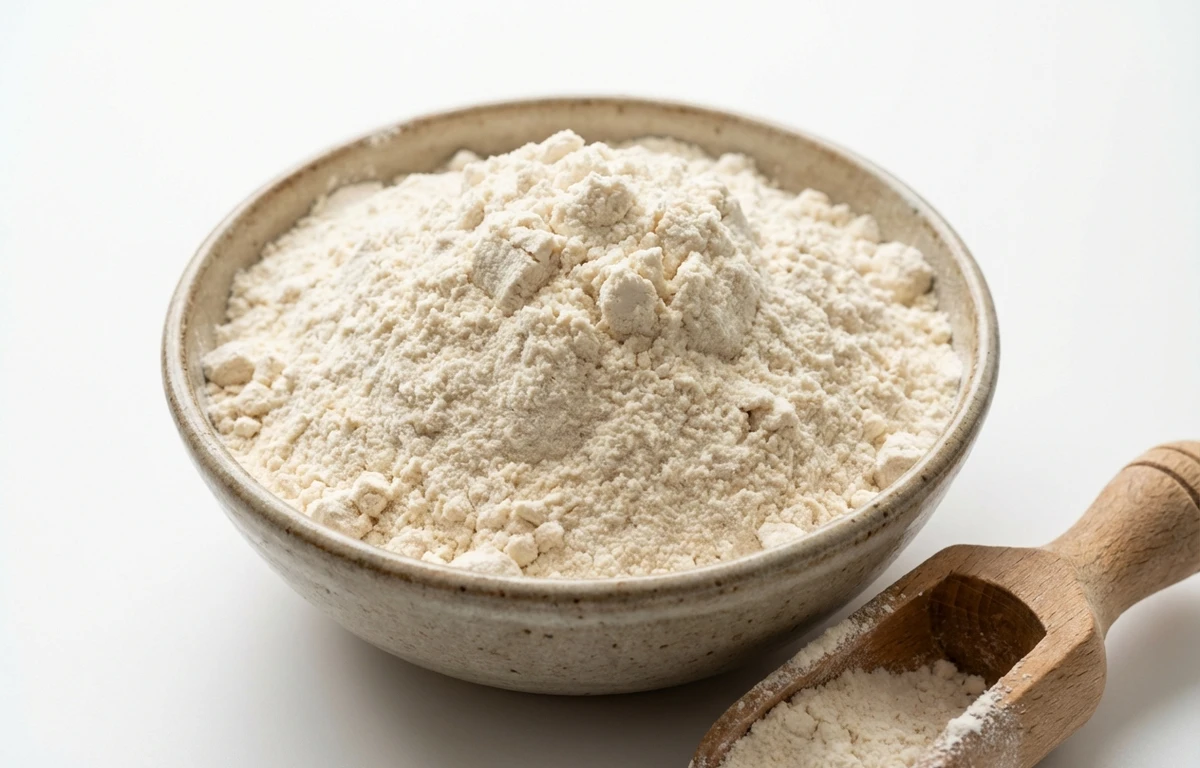
unbleached all-purpose wheat flour.
VegetarianVeganGluten-freeDairy-freeNut-freePeanut-freeSoy-freeEgg-freeShellfish-freeHoney-freeAlcohol-free
SERVING
CALORIES
364
PROTEIN
10.3g
CARBS
76.3g
FAT
1.0g
FIBER
2.7g
NUTRITION PROFILE · per 100 g
Everything in this ingredient.
MACRONUTRIENTS
Calories364kcal—
Protein10.3g21%
Carbohydrates76.3g28%
Fiber2.7g10%
Sugar0.30g1%
Total fat1.0g1%
Saturated fat0.15g1%
Trans fat0g—
Cholesterol0mg0%
Water11.9g—
MINERALS
Sodium2.0mg0%
Potassium107mg2%
Calcium15mg1%
Iron4.6mg26%
Magnesium22mg5%
Phosphorus108mg9%
Zinc0.70mg6%
Copper0.14mg16%
Manganese0.68mg30%
Selenium33.9µg62%
VITAMINS
Vitamin A0µg0%
Vitamin C0mg0%
Vitamin D0µg0%
Vitamin E0.06mg0%
Vitamin K0.30µg0%
Thiamin (B1)0.70mg58%
Riboflavin (B2)0.40mg31%
Niacin (B3)5.9mg37%
Pantothenic acid (B5)0.43mg9%
Vitamin B60.04mg2%
Folate (B9)154µg39%
Vitamin B120µg0%
%DV based on a 2,000 cal diet. Source: USDA FoodData Central. A dash in the %DV column means there’s no established Daily Value for that nutrient.
MEASUREMENT CONVERSIONS
How much is what.
1 cup125g
1 tablespoon7.8g
1 teaspoon2.6g
1 ml0.5g
1 liter520g
HEALTH BENEFITS
Why eat it.
- ✓Provides a quick source of energy from carbohydrates.
- ✓Often enriched with essential nutrients like iron, folic acid, and other B vitamins.
- ✓Contains protein necessary for building and repairing body tissues.
- ✓Unbleached flour is aged naturally and is free from the chemical bleaching agents used in bleached flour.
COOKING TIPS
In the kitchen.
- 1For accurate measurement in baking, spoon flour into the measuring cup and level it off with a straight edge rather than scooping directly from the bag.
- 2Sift flour with other dry ingredients to aerate it and ensure even distribution, resulting in a lighter texture in baked goods.
- 3To avoid tough or dense results in cakes and quick breads, mix the flour into wet ingredients until just combined; overmixing develops too much gluten.
- 4It is a versatile thickening agent for sauces, gravies, and stews; create a slurry with cold water before adding to hot liquids to prevent lumps.
STORAGE
Keep it fresh.
- Store in a cool, dry, dark place in an airtight container to prevent absorption of moisture and odors.
- For long-term storage (6-12 months), transfer to a freezer-safe bag or container and store in the freezer to maintain freshness.
FAQ
Frequently asked questions.
Is unbleached all-purpose wheat flour healthy?
Unbleached all-purpose flour is a good source of energy from carbohydrates and is often enriched with iron and B vitamins like folic acid. While it is lower in fiber than whole wheat flour, it is aged naturally and lacks the chemical bleaching agents found in bleached varieties.
How many calories and carbs are in unbleached all-purpose flour?
A 100g serving contains approximately 364 calories and 76.3g of carbohydrates. It is a high-carbohydrate food that provides quick energy, making it a staple in many energy-dense recipes.
Is unbleached all-purpose flour gluten-free?
No, unbleached all-purpose flour is made from wheat and contains gluten. It is not suitable for individuals with celiac disease or gluten sensitivities.
What is the difference between bleached and unbleached flour?
Unbleached flour is aged naturally over time, resulting in a slightly off-white color and a denser texture. Bleached flour is treated with chemicals like benzoyl peroxide to whiten it quickly and soften the grain's protein.
Is unbleached all-purpose flour vegan?
Yes, unbleached all-purpose flour is vegan. It is a plant-based product derived entirely from wheat and does not involve animal products in its processing.
Can I use unbleached all-purpose flour for bread making?
Yes, you can use it for bread, though it has a moderate protein content of about 10.3%. While it works well for most home baking, specialized bread flour has higher protein levels which create a chewier, more structured loaf.
Is unbleached all-purpose flour keto-friendly?
No, it is not keto-friendly. With over 76g of carbohydrates per 100g, it is too high in carbs for a ketogenic diet, which typically requires low-carb alternatives like almond or coconut flour.
How should I store unbleached all-purpose flour?
Store flour in a cool, dry place in an airtight container to protect it from moisture, odors, and pests. For long-term storage, it can be kept in the refrigerator or freezer to extend its shelf life.
How long does unbleached all-purpose flour last?
When stored in a cool, dry pantry, it typically lasts 6 to 12 months. If stored in the freezer, it can remain fresh for up to two years.
How do I know if my flour has gone bad?
Fresh flour should have a neutral, mild smell. If it develops a sour, musty, or oily odor, it has likely gone rancid and should be discarded. Also, check for the presence of small flour beetles or weevils.



















