
Meat
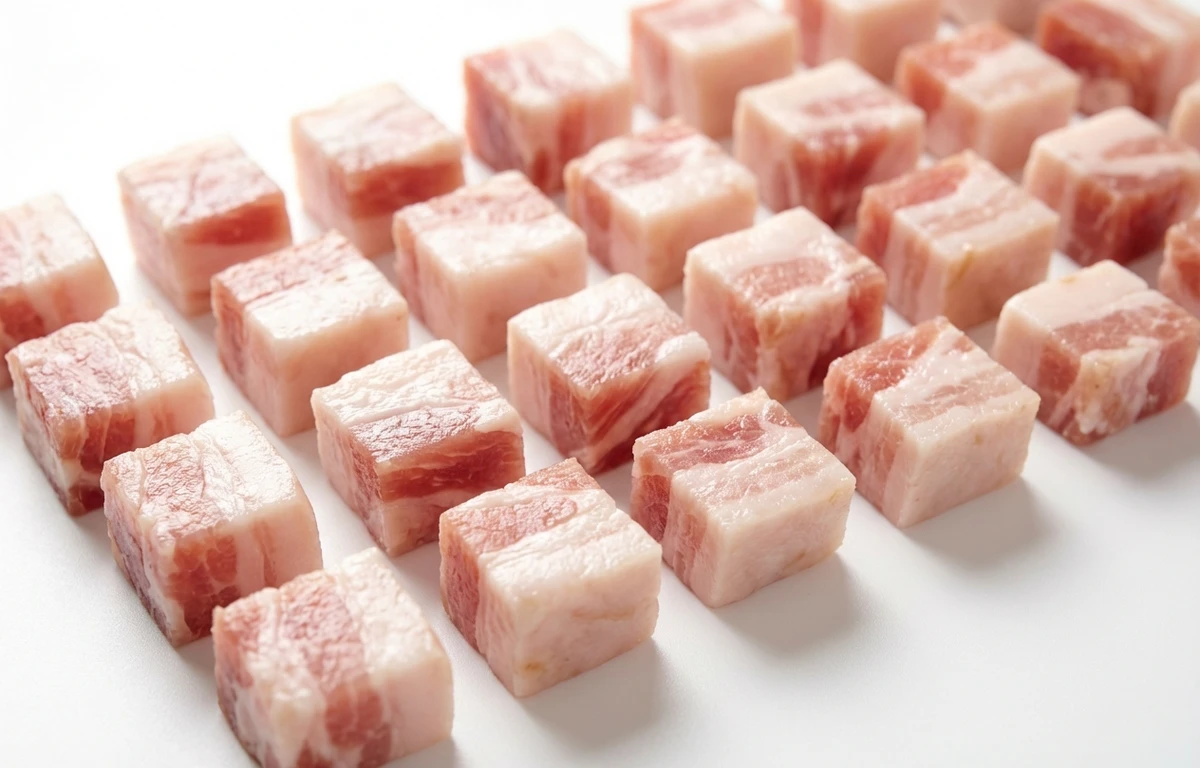
uncooked cured pork fat.
VegetarianVeganGluten-freeDairy-freeNut-freePeanut-freeSoy-freeEgg-freeShellfish-freeHoney-freeAlcohol-freeHalalKosher
ALSO KNOWN AS
cured pork fat
SERVING
CALORIES
579
PROTEIN
5.7g
CARBS
0.09g
FAT
61.4g
FIBER
0g
This ingredient is flagged as naturally gluten-free. Per 100 g, it provides 0 µg of vitamin K.
NUTRITION PROFILE · per 100 g
Everything in this ingredient.
MACRONUTRIENTS
Calories579kcal—
Protein5.7g11%
Carbohydrates0.09g0%
Fiber0g0%
Sugar0g0%
Total fat61.4g79%
Saturated fat22.5g113%
Cholesterol68mg23%
Water31.1g—
MINERALS
Sodium505mg22%
Potassium105mg2%
Calcium5.0mg0%
Iron0.39mg2%
Magnesium6.0mg1%
Phosphorus98mg8%
Zinc0.80mg7%
Copper0.04mg4%
Manganese0.01mg0%
Selenium4.7µg9%
VITAMINS
Vitamin A0µg0%
Vitamin C0mg0%
Vitamin D0.20µg1%
Vitamin E0mg0%
Vitamin K0µg0%
Thiamin (B1)0.24mg20%
Riboflavin (B2)0.07mg5%
Niacin (B3)1.8mg11%
Pantothenic acid (B5)0.23mg5%
Vitamin B60.03mg2%
Folate (B9)1.0µg0%
Vitamin B120.33µg14%
%DV based on a 2,000 cal diet. Source: USDA FoodData Central. A dash in the %DV column means there’s no established Daily Value for that nutrient.
MEASUREMENT CONVERSIONS
How much is what.
1 cup205g
1 tablespoon12.8g
1 teaspoon4.3g
1 oz28.4g
1 lb453.6g
1 ml0.9g
1 liter866g
HEALTH BENEFITS
Why eat it.
- ✓A concentrated source of energy due to its high caloric density.
- ✓Rich in monounsaturated fats, primarily oleic acid, which can support heart health when consumed in moderation as part of a balanced diet.
- ✓Contains some fat-soluble vitamins, such as Vitamin D, and choline, which is important for brain health and cell function.
COOKING TIPS
In the kitchen.
- 1Slice paper-thin and serve on warm, crusty bread, allowing the fat to melt slightly to release its flavor.
- 2Dice into small pieces (lardons) and render slowly over low heat to add a rich, savory flavor base to soups, stews, and vegetable dishes.
- 3Use as a barding agent by wrapping it around lean roasts of meat or poultry to keep them moist and flavorful during cooking.
- 4Render the fat completely to create high-quality lard, which has a high smoke point and is excellent for frying or for use in pastries to create a flaky texture.
STORAGE
Keep it fresh.
- Wrap tightly in butcher paper or plastic wrap and store in the coldest part of the refrigerator (typically below 40°F or 4°C) for several weeks to months.
- For long-term storage, vacuum-seal the cured fat and freeze it, where it can last for up to a year.



















