
Meat
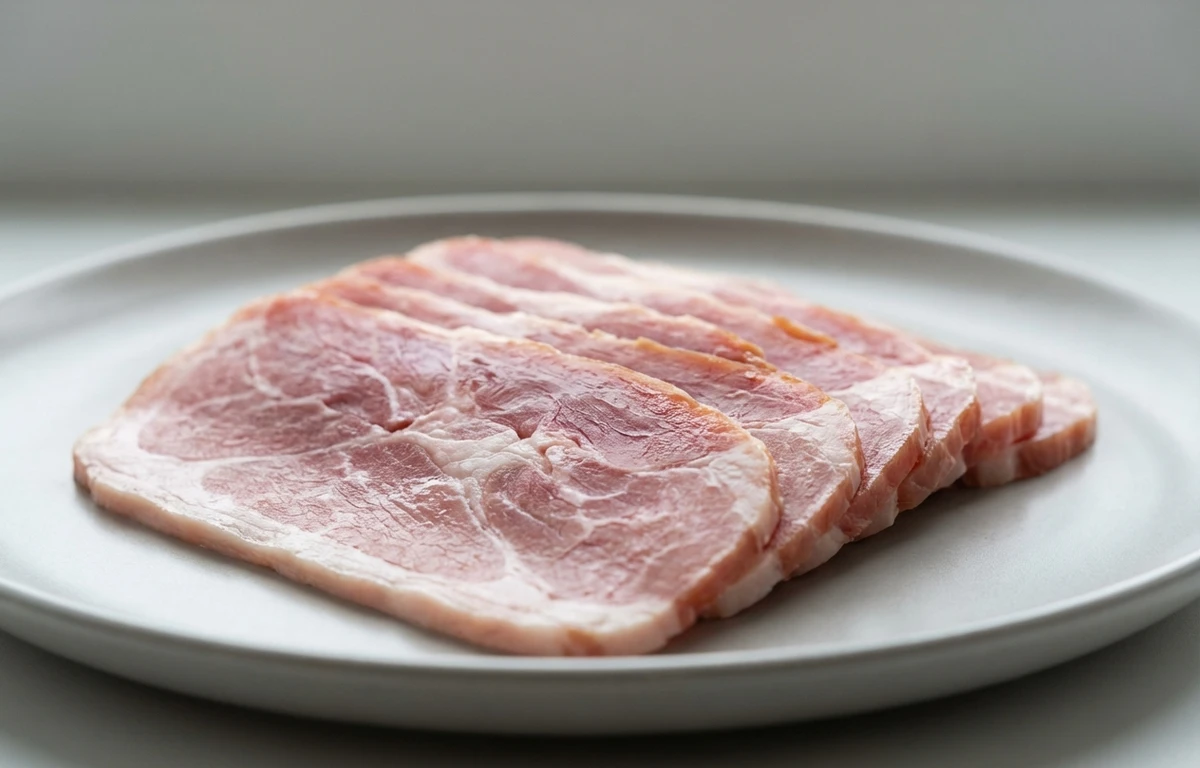
uncooked ham.
VegetarianVeganGluten-freeDairy-freeNut-freePeanut-freeSoy-freeEgg-freeShellfish-freeHoney-freeAlcohol-freeHalalKosher
ALSO KNOWN AS
cured pork
SERVING
CALORIES
110
PROTEIN
17.3g
CARBS
1.4g
FAT
4.0g
FIBER
0g
This ingredient is flagged as naturally gluten-free. Per 100 g, it provides 0 µg of vitamin K.
NUTRITION PROFILE · per 100 g
Everything in this ingredient.
MACRONUTRIENTS
Calories110kcal—
Protein17.3g35%
Carbohydrates1.4g1%
Fiber0g0%
Sugar1.4g3%
Total fat4.0g5%
Saturated fat1.4g7%
Trans fat0.04g—
Cholesterol50mg17%
Water74g—
MINERALS
Sodium1141mg50%
Potassium317mg7%
Calcium8.0mg1%
Iron0.86mg5%
Magnesium19mg5%
Phosphorus265mg21%
Zinc1.8mg16%
Copper0.10mg11%
Manganese0.02mg1%
Selenium35.1µg64%
VITAMINS
Vitamin A13µg1%
Vitamin C0mg0%
Vitamin D0.60µg3%
Vitamin E0.21mg1%
Vitamin K0µg0%
Thiamin (B1)0.40mg33%
Riboflavin (B2)0.19mg15%
Niacin (B3)5.5mg34%
Pantothenic acid (B5)0.73mg15%
Vitamin B60.41mg24%
Folate (B9)2.0µg1%
Vitamin B120.47µg20%
%DV based on a 2,000 cal diet. Source: USDA FoodData Central. A dash in the %DV column means there’s no established Daily Value for that nutrient.
MEASUREMENT CONVERSIONS
How much is what.
1 cup150g
1 oz28.4g
1 lb453.6g
1 piece120g
HEALTH BENEFITS
Why eat it.
- ✓Rich source of high-quality, complete protein essential for muscle building and repair.
- ✓Excellent source of B vitamins, especially thiamine (B1) and niacin (B3), which are vital for energy metabolism.
COOKING TIPS
In the kitchen.
- 1Always cook an uncooked ham to a minimum internal temperature of 145°F (63°C), followed by a 3-minute rest period, to ensure it is safe to eat.
- 2To reduce the high sodium content, you can soak the ham in cold water for 4 to 12 hours before cooking, changing the water every few hours.
- 3Score the fat cap in a diamond pattern before baking. This allows the fat to render and helps any glaze penetrate the meat.
- 4Apply sweet glazes, such as those made with brown sugar or honey, only during the last 20-30 minutes of cooking to prevent them from burning.
STORAGE
Keep it fresh.
- Store uncooked ham in its original vacuum-sealed packaging in the refrigerator at 40°F (4°C) or below until the 'use-by' date.
- For longer storage, freeze uncooked ham for up to 6 months. Wrap it tightly in plastic wrap and then a layer of aluminum foil to prevent freezer burn.
- Once the package is opened, wrap the ham tightly and refrigerate, consuming it within 3 to 5 days.
FAQ
Frequently asked questions.
Is uncooked ham healthy?
Uncooked ham is a lean source of high-quality protein and essential B vitamins like thiamine and niacin. While it provides beneficial minerals like selenium and zinc, it is often high in sodium due to the curing process, so it should be consumed in moderation as part of a balanced diet.
How much protein and calories are in uncooked ham?
A 100g serving of uncooked ham contains approximately 110 calories and 17.34g of protein. It is a low-calorie, high-protein food with only about 3.97g of fat and 1.45g of carbohydrates, making it very nutrient-dense.
Can you freeze uncooked ham?
Yes, you can freeze uncooked ham to extend its shelf life. For best quality, wrap it tightly in freezer-safe foil or plastic and use it within 4 to 6 months, though it remains safe to eat indefinitely if kept constantly frozen at 0°F (-18°C).
Is uncooked ham gluten-free?
Pure ham is naturally gluten-free; however, many commercially processed hams may contain gluten in the flavorings, modified starches, or glazes used during the curing process. Always check the ingredient label for wheat-based additives if you have a gluten sensitivity.
How do you know if uncooked ham has gone bad?
Signs of spoilage include a sour or ammonia-like smell, a slimy or sticky texture on the surface, and visible gray or green discoloration. If the packaging is bloated or the meat feels unusually soft and mushy, it should be discarded immediately.



















