
Meat
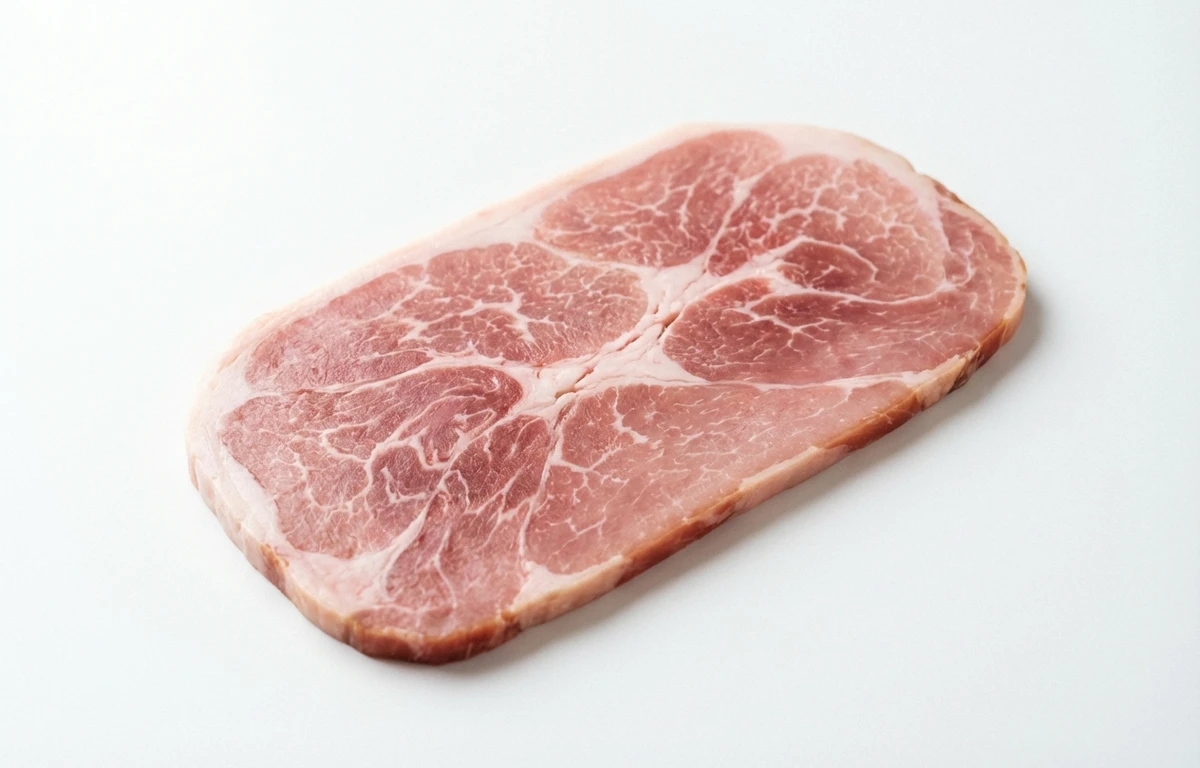
uncooked ham slice.
VegetarianVeganGluten-freeDairy-freeNut-freePeanut-freeSoy-freeEgg-freeShellfish-freeHoney-freeAlcohol-freeHalalKosher
ALSO KNOWN AS
cured pork
SERVING
CALORIES
159
PROTEIN
22.8g
CARBS
0.17g
FAT
7.4g
FIBER
0g
This ingredient is flagged as naturally gluten-free. Per 100 g, it provides 0 µg of vitamin K.
NUTRITION PROFILE · per 100 g
Everything in this ingredient.
MACRONUTRIENTS
Calories159kcal—
Protein22.8g46%
Carbohydrates0.17g0%
Fiber0g0%
Sugar0.04g0%
Total fat7.4g9%
Saturated fat2.2g11%
Trans fat0.05g—
Cholesterol63mg21%
Water67.2g—
MINERALS
Sodium839mg36%
Potassium289mg6%
Calcium9.0mg1%
Iron1.1mg6%
Magnesium19mg5%
Phosphorus248mg20%
Zinc2.2mg20%
Copper0.10mg11%
Manganese0.02mg1%
Selenium43.7µg79%
VITAMINS
Vitamin A12µg1%
Vitamin C0mg0%
Vitamin E0.25mg2%
Vitamin K0µg0%
Thiamin (B1)0.24mg20%
Riboflavin (B2)0.23mg18%
Niacin (B3)6.2mg39%
Pantothenic acid (B5)0.41mg8%
Vitamin B60.34mg20%
Folate (B9)1.0µg0%
Vitamin B120.57µg24%
%DV based on a 2,000 cal diet. Source: USDA FoodData Central. A dash in the %DV column means there’s no established Daily Value for that nutrient.
MEASUREMENT CONVERSIONS
How much is what.
1 oz28.4g
1 lb453.6g
1 piece70g
HEALTH BENEFITS
Why eat it.
- ✓Rich source of high-quality protein, essential for muscle building and repair.
- ✓Provides significant amounts of B vitamins, especially thiamine (B1) and niacin (B3), which are crucial for energy metabolism.
COOKING TIPS
In the kitchen.
- 1Pan-fry slices over medium heat for 2-4 minutes per side until heated through and lightly caramelized. Avoid high heat to prevent them from becoming tough.
- 2For baking, place the slice in a shallow pan, add a small amount of liquid like water or stock to prevent drying, and heat at 325°F (163°C) until the internal temperature reaches 145°F (63°C).
- 3Dice uncooked ham and add it to dishes like scrambled eggs, omelets, soups, or casseroles for a boost of savory flavor and protein.
- 4To reduce saltiness, you can briefly soak the ham slice in cold water for about 15-30 minutes before cooking, then pat it dry.
STORAGE
Keep it fresh.
- Refrigerate uncooked ham slices immediately in their original packaging or an airtight container at 40°F (4°C) or below. Use within 3-5 days.
- For longer storage, freeze slices by wrapping them tightly in plastic wrap and then placing them in a freezer bag. They maintain best quality for 1-2 months.
FAQ
Frequently asked questions.
Is an uncooked ham slice keto-friendly?
Yes, it is very keto-friendly as it contains only 0.17g of carbohydrates per 100g. It provides a good balance of protein and moderate fat (7.4g), making it ideal for low-carb and ketogenic lifestyles.
How do you cook an uncooked ham slice?
The most popular method is pan-searing over medium-high heat for 3-5 minutes per side until browned. You can also bake them in the oven at 350°F (175°C) for about 15-20 minutes or grill them for a smoky flavor.
Is an uncooked ham slice gluten-free?
While pure pork is naturally gluten-free, some ham slices may contain additives, flavorings, or glazes that include gluten. Always check the ingredient label for wheat-based thickeners or malt-based flavorings if you have a gluten sensitivity.
How long does an uncooked ham slice last in the refrigerator?
Unopened, vacuum-sealed ham slices can last up to 2 weeks in the fridge, but once opened, they should be cooked and consumed within 3 to 5 days. Always check the 'use-by' date on the packaging for safety.
How can I tell if an uncooked ham slice has gone bad?
Signs of spoilage include a sour or ammonia-like smell, a slimy or sticky texture on the surface, and a greyish or greenish tint to the meat. If any of these signs are present, the ham should be discarded immediately.



















