
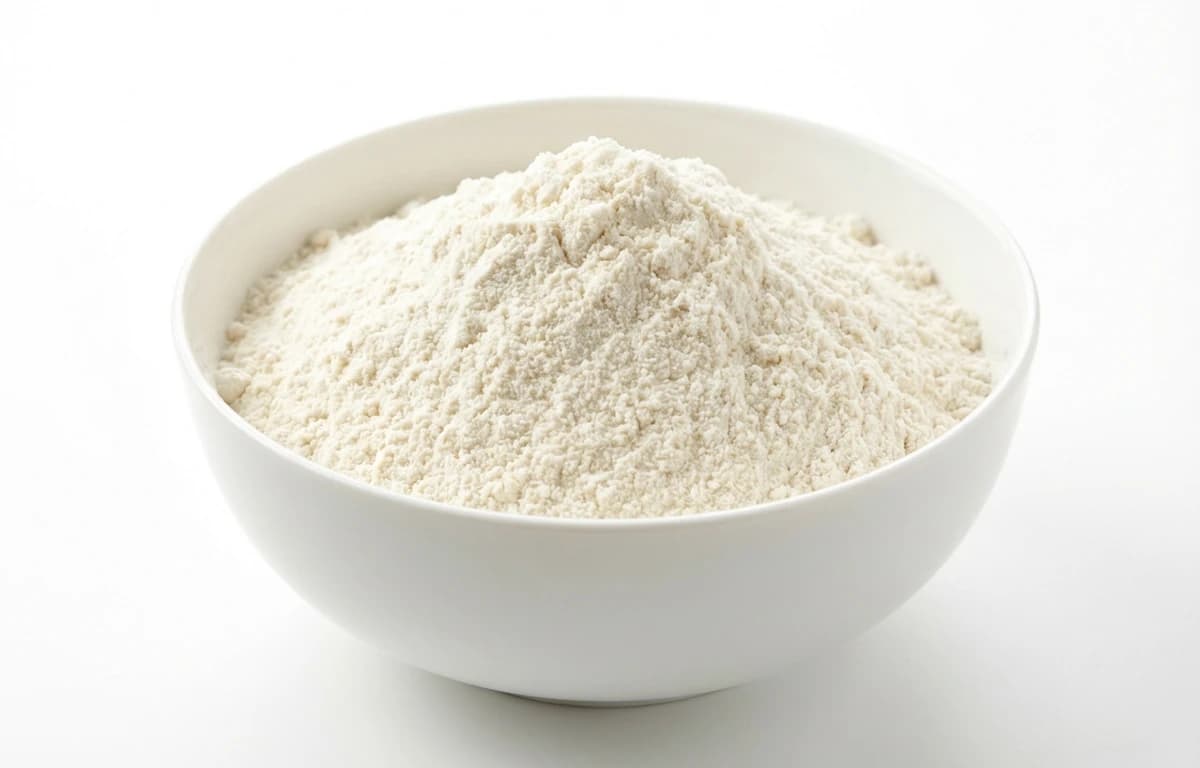
Loading...
Also known as:
Per 100g
Nutrition data source: USDA FoodData Central
Common measurement equivalents in grams
Unenriched all-purpose flour is a good source of quick energy due to its high carbohydrate content and is naturally low in fat and cholesterol. However, because it is refined and not enriched, it lacks the added vitamins and minerals found in enriched varieties and the fiber found in whole wheat.
Per 100g, this flour contains approximately 364 calories, 10.33g of protein, 76.31g of carbohydrates, and 0.98g of fat. It is primarily composed of simple carbohydrates, making it a dense energy source.
No, this flour is made from wheat and contains gluten. It is not suitable for individuals with celiac disease or gluten intolerance.
Enriched flour has specific nutrients like iron and B vitamins added back after the refining process, whereas unenriched flour does not. Unenriched flour is often preferred by those who want a product with fewer additives, though it is lower in micronutrients.
Yes, unenriched all-purpose white wheat flour is 100% plant-based and contains no animal products, making it suitable for both vegan and vegetarian diets.
No, it is not keto-friendly. With over 76g of carbohydrates per 100g, it is a high-carb ingredient that is generally avoided on low-carb and ketogenic diets.
Store the flour in a cool, dry place inside an airtight container to protect it from moisture, odors, and pests. For long-term storage, it can be kept in the refrigerator or freezer to maintain freshness.
unenriched all-purpose white wheat flour is a versatile ingredient found in cuisines around the world. With 364 calories per 100g and 10.33 grams of protein, it's a nutritious addition to many dishes.
Explore more ingredients in the grain category with complete nutrition information.
View all grain →Discover 0 recipes featuring unenriched all-purpose white wheat flour with step-by-step instructions.
Browse recipes →Explore more ingredients similar to unenriched all-purpose white wheat flour.
The most-searched ingredients on CraftMyMeals.
When stored in a pantry, it typically stays fresh for 6 to 12 months. If stored in the freezer, its shelf life can be extended up to two years.
Yes, it is a very versatile thickener for sauces, gravies, and stews. It is commonly used to make a roux by whisking it into melted fat over medium heat.
Generally, yes. Because the fibrous bran and germ have been removed, it is lower in fiber, which can make it easier to digest for individuals with sensitive stomachs or those on a low-residue diet.