Grain
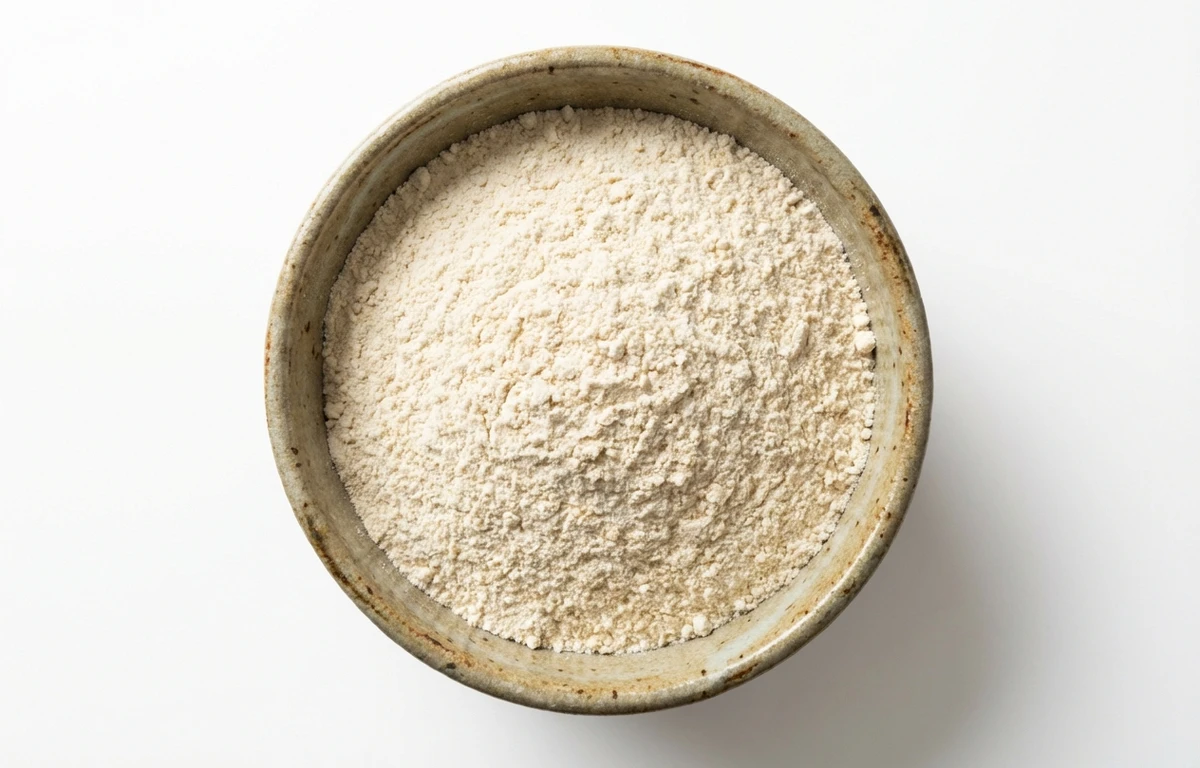
unenriched white masa corn flour.
VegetarianVeganGluten-freeDairy-freeNut-freePeanut-freeSoy-freeEgg-freeShellfish-freeHoney-freeAlcohol-free
SERVING
CALORIES
363
PROTEIN
8.5g
CARBS
76.6g
FAT
3.7g
FIBER
6.4g
NUTRITION PROFILE · per 100 g
Everything in this ingredient.
MACRONUTRIENTS
Calories363kcal—
Protein8.5g17%
Carbohydrates76.6g28%
Fiber6.4g23%
Sugar1.6g3%
Total fat3.7g5%
Saturated fat0.53g3%
Cholesterol0mg0%
Water9.8g—
MINERALS
Sodium5.0mg0%
Potassium262mg6%
Calcium138mg11%
Iron1.5mg8%
Magnesium93mg22%
Phosphorus231mg18%
Zinc1.8mg16%
Copper0.21mg23%
Manganese0.38mg17%
Selenium10.5µg19%
VITAMINS
Vitamin A0µg0%
Vitamin C0mg0%
Vitamin D0µg0%
Vitamin E0.12mg1%
Vitamin K0µg0%
Thiamin (B1)0.22mg18%
Riboflavin (B2)0.10mg8%
Niacin (B3)1.6mg10%
Pantothenic acid (B5)0.19mg4%
Vitamin B60.48mg28%
Folate (B9)29µg7%
Vitamin B120µg0%
%DV based on a 2,000 cal diet. Source: USDA FoodData Central. A dash in the %DV column means there’s no established Daily Value for that nutrient.
MEASUREMENT CONVERSIONS
How much is what.
1 cup114g
1 tablespoon7.1g
1 teaspoon2.4g
1 ml0.5g
1 liter475g
HEALTH BENEFITS
Why eat it.
- ✓Increases Niacin (Vitamin B3) bioavailability due to the nixtamalization process, which helps prevent the deficiency disease pellagra.
- ✓Naturally gluten-free, making it a suitable grain alternative for individuals with celiac disease or non-celiac gluten sensitivity.
- ✓The alkaline treatment process reduces phytic acid, which can improve the body's absorption of minerals like zinc and iron.
- ✓Significantly reduces mycotoxins, such as aflatoxins, which can be present in raw corn and are harmful to human health.
COOKING TIPS
In the kitchen.
- 1To make dough for tortillas or tamales, gradually mix masa flour with warm water and a pinch of salt until a soft, pliable dough forms. A common ratio is about 2 parts flour to 1.5-2 parts water.
- 2Always let the prepared masa dough rest, covered, for at least 15-30 minutes. This allows the flour to fully hydrate, resulting in a smoother texture that is less likely to crack.
- 3Use as a gluten-free thickener for soups, stews, and chili. Create a slurry by mixing a small amount of masa flour with cold water before whisking it into the hot liquid to prevent lumps.
- 4When making tortillas, cook them on a hot, dry comal or cast-iron skillet. Don't use oil. Flip the tortilla after about 30-60 seconds, and again after another minute; it should puff up on the second flip.
STORAGE
Keep it fresh.
- Store in a cool, dark, and dry place like a pantry in an airtight container to protect it from moisture, pests, and odors.
- For long-term storage (beyond 6 months), place the flour in a sealed, freezer-safe bag and store it in the refrigerator or freezer to maintain freshness and prevent rancidity.
FAQ
Frequently asked questions.
Is unenriched white masa corn flour healthy?
Yes, it is a nutritious grain option. The nixtamalization process used to make it increases the bioavailability of niacin (Vitamin B3) and reduces phytic acid, which helps your body better absorb minerals like zinc and iron.
How many calories and carbohydrates are in white masa flour?
A 100g serving contains approximately 363 calories and 76.59g of carbohydrates. It also provides about 8.46g of protein and 3.69g of fat, making it a high-energy, carbohydrate-dense food.
Is white masa corn flour gluten-free?
Yes, white masa corn flour is naturally gluten-free as it is made entirely from corn. It is a safe and popular alternative for individuals with celiac disease or non-celiac gluten sensitivity.
What does 'unenriched' mean in this context?
Unenriched means that no synthetic vitamins or minerals, such as folic acid or iron, were added to the flour after processing. It contains only the nutrients naturally present in the corn after the nixtamalization process.
Is white masa corn flour keto-friendly?
No, it is not keto-friendly. Because it contains over 76g of carbohydrates per 100g, it is a high-carb ingredient that is generally avoided on low-carb and ketogenic diets.
Can I substitute regular cornmeal for masa corn flour?
No, they are not interchangeable. Masa flour is made from corn treated with lime (nixtamalization), which gives it unique binding properties and flavor; regular cornmeal will not form a cohesive dough for tortillas or tamales.
What are the primary uses for white masa corn flour?
It is most commonly used to make corn tortillas, tamales, pupusas, and gorditas. It can also be used as a thickener for soups like chili or stews, or to make the traditional beverage atole.
What does white masa corn flour taste like?
It has a distinct, earthy, and slightly nutty flavor with a subtle mineral undertone resulting from the alkaline soaking process. It is generally milder and less sweet than yellow masa flour.
How should I store white masa corn flour to keep it fresh?
Store it in an airtight container in a cool, dry place. Because it contains natural oils that can go rancid, you can extend its shelf life by storing it in the refrigerator or freezer for up to a year.
Does white masa corn flour contain any toxins?
The nixtamalization process used to create masa significantly reduces mycotoxins, such as aflatoxins, which can naturally occur in raw corn. This makes masa flour safer for human consumption than untreated corn products.