
Meat
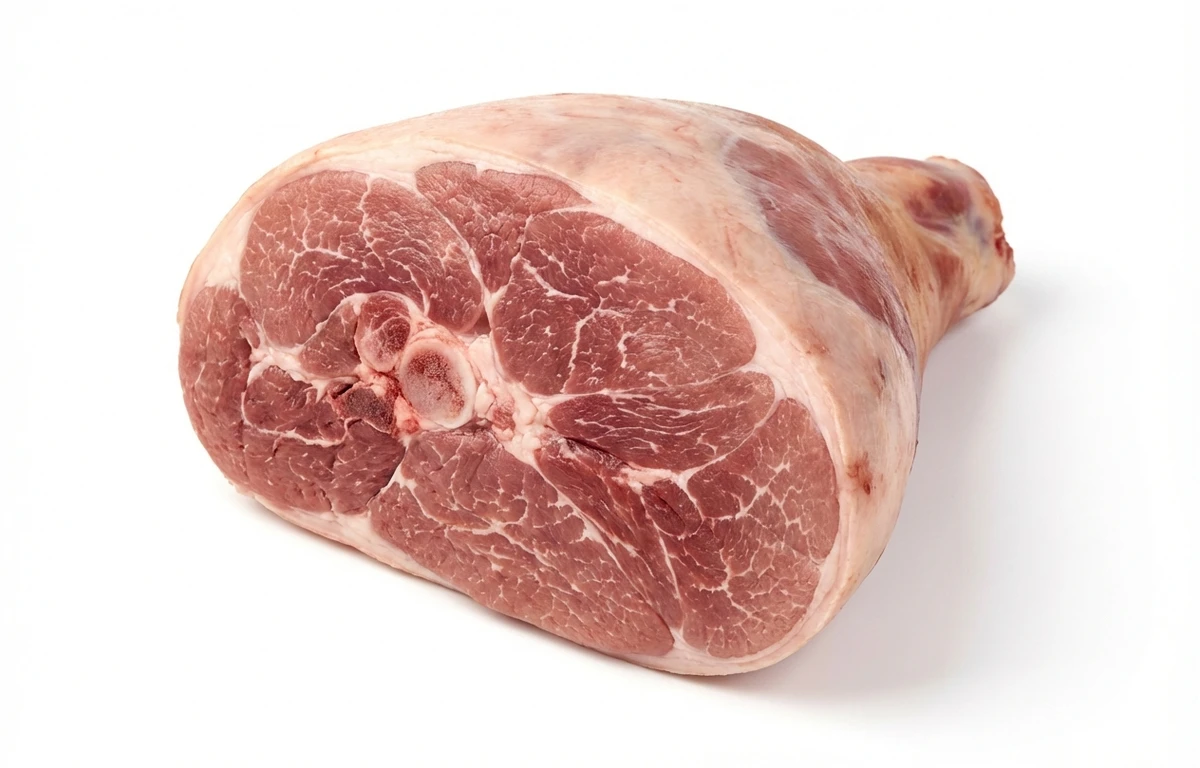
unheated ham rump.
VegetarianVeganGluten-freeDairy-freeNut-freePeanut-freeSoy-freeEgg-freeShellfish-freeHoney-freeAlcohol-freeHalalKosher
ALSO KNOWN AS
raw cured ham rumpuncooked ham leggammon rump
SERVING
CALORIES
163
PROTEIN
21.2g
CARBS
1.1g
FAT
8.4g
FIBER
0g
This ingredient is flagged as naturally gluten-free. Per 100 g, it provides 0 µg of vitamin K.
NUTRITION PROFILE · per 100 g
Everything in this ingredient.
MACRONUTRIENTS
Calories163kcal—
Protein21.2g42%
Carbohydrates1.1g0%
Fiber0g0%
Sugar1.0g2%
Total fat8.4g11%
Saturated fat2.9g14%
Trans fat0g—
Cholesterol55mg18%
Water65.4g—
MINERALS
Sodium1150mg50%
Potassium320mg7%
Calcium8.0mg1%
Iron1.1mg6%
Magnesium20mg5%
Phosphorus210mg17%
Zinc2.4mg22%
Copper0.08mg9%
Manganese0.02mg1%
Selenium28.5µg52%
VITAMINS
Vitamin A0µg0%
Vitamin C0mg0%
Vitamin D0.80µg4%
Vitamin E0.20mg1%
Vitamin K0µg0%
Thiamin (B1)0.65mg54%
Riboflavin (B2)0.22mg17%
Niacin (B3)5.2mg33%
Pantothenic acid (B5)0.60mg12%
Vitamin B60.40mg24%
Folate (B9)4.0µg1%
Vitamin B120.70µg29%
%DV based on a 2,000 cal diet. Source: USDA FoodData Central. A dash in the %DV column means there’s no established Daily Value for that nutrient.
MEASUREMENT CONVERSIONS
How much is what.
1 oz28.4g
1 lb453.6g
HEALTH BENEFITS
Why eat it.
- ✓High quality complete protein source
- ✓Rich in Thiamin (Vitamin B1) for energy metabolism
- ✓Contains Vitamin B12 for nerve health
COOKING TIPS
In the kitchen.
- 1Must be cooked to a minimum internal temperature of 145°F (63°C) followed by a 3-minute rest
- 2If the ham is very salty, soak in cold water for 1-2 hours before cooking to leach out excess sodium
- 3Score the fat layer in a diamond pattern to allow heat to penetrate and fat to render
STORAGE
Keep it fresh.
- Store in the coldest part of the refrigerator at or below 40°F (4°C)
- Keep in original vacuum-sealed packaging until ready to use
- Freeze in airtight wrap for up to 2 months for long-term storage
FAQ
Frequently asked questions.
How long does unheated ham rump last in the fridge?
If vacuum-sealed, it can last until the 'use-by' date. Once opened, it should be cooked within 3 to 5 days.
Can I freeze unheated ham rump?
Yes, you can freeze it for 1-2 months. While it remains safe longer, the quality and texture may begin to degrade after that.
What is the difference between ham rump and other cuts?
The rump is the upper part of the leg. It is generally leaner than the shank but may contain more connective tissue.
Does unheated ham rump need to be washed?
No, washing raw meat is not recommended as it can spread bacteria. If it is too salty, you can soak it, but do so carefully.
How do I know if the ham has gone bad?
Look for a slimy texture, a sour or off smell, or any grey/greenish discoloration on the meat.



















