
Loading...
Per 100g
Nutrition data source: USDA FoodData Central
Common measurement equivalents in grams
Yes, unroasted tahini is highly nutritious, offering a dense source of heart-healthy monounsaturated and polyunsaturated fats. It is rich in essential minerals like calcium, magnesium, and iron, and contains antioxidants like sesamin that help protect cells from oxidative damage.
A 100g serving of unroasted tahini contains approximately 595 calories and 17.4g of protein. While it is calorie-dense due to its 53.7g of healthy fats, it serves as an excellent plant-based protein source for various diets.
Yes, unroasted tahini is keto-friendly. With roughly 21.2g of carbohydrates per 100g—much of which is dietary fiber—a standard one-to-two tablespoon serving fits easily into a low-carb or ketogenic lifestyle.
Pure unroasted tahini is naturally both vegan and gluten-free, as it is made entirely from ground sesame seeds. It is a popular dairy-free alternative for creating creamy textures in sauces, dressings, and dips.
Unroasted tahini is made from raw seeds, resulting in a milder, more neutral flavor and a lighter color. Roasted tahini has a deeper, nuttier, and slightly more bitter taste; unroasted is often preferred by those following raw food diets to preserve heat-sensitive nutrients.
It is a staple for making hummus and baba ganoush, but its mild flavor also makes it perfect for salad dressings, smoothies, and even baking. You can use it as a nut-free substitute for peanut or almond butter in many recipes.
Yes, it is an exceptional plant-based source of calcium, which is crucial for maintaining bone density. This makes it a valuable dietary addition for vegans or individuals who are lactose intolerant.
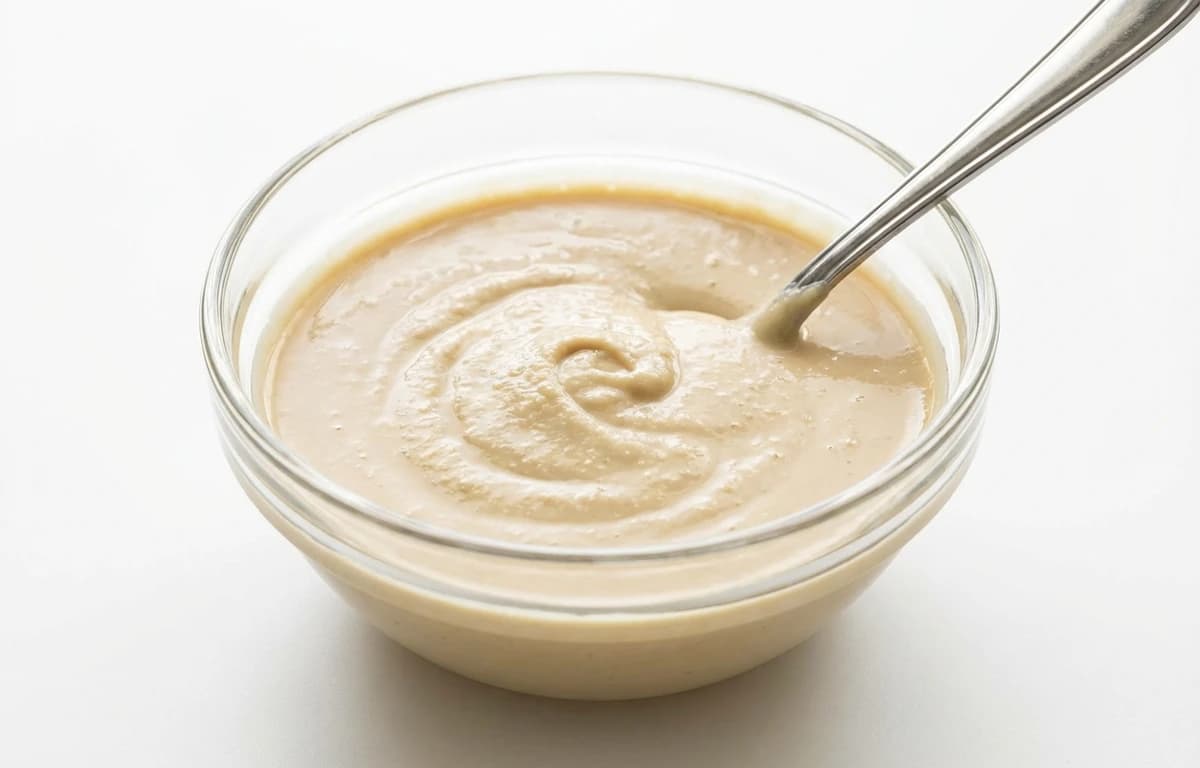
unroasted sesame tahini is a versatile ingredient found in cuisines around the world. With 595 calories per 100g and 17.4 grams of protein, it's a nutritious addition to many dishes.
Explore more ingredients in the nut seed category with complete nutrition information.
View all nut seed →Discover 8 recipes featuring unroasted sesame tahini with step-by-step instructions.
Browse recipes →Store it in a cool, dry place like a pantry, or in the refrigerator to extend its shelf life and prevent the oils from going rancid. Unopened, it can last over a year; once opened, it is best consumed within 6 to 12 months.
Oil separation is a natural occurrence in natural seed butters and indicates a lack of chemical emulsifiers. It is perfectly safe to eat; simply stir the oil back into the sesame paste before using to restore its creamy consistency.
While high in calories, the combination of protein and fiber in tahini helps promote satiety and keeps you feeling full longer. When used in moderation as a replacement for processed fats or sugary spreads, it can be a beneficial part of a weight management plan.