
Dairy3 recipes
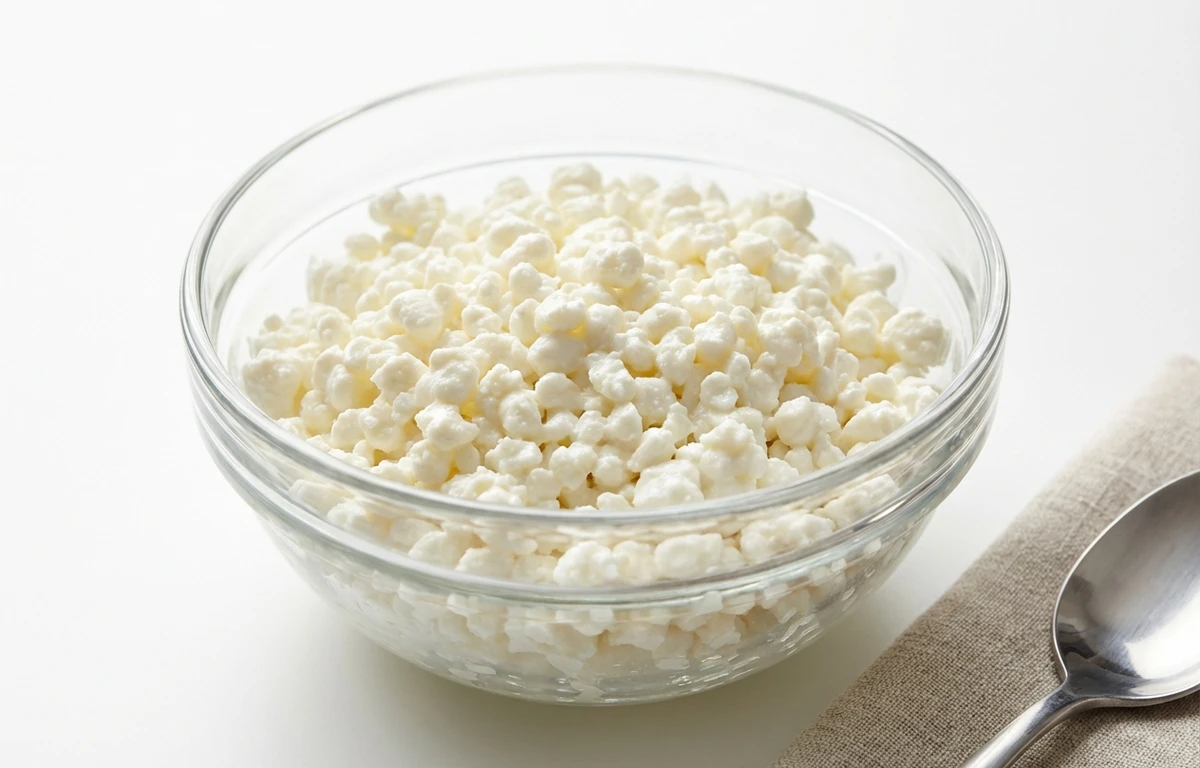
unsalted lowfat cottage cheese.
VegetarianVeganGluten-freeDairy-freeNut-freePeanut-freeSoy-freeEgg-freeShellfish-freeHoney-freeAlcohol-freeFermented
SERVING
CALORIES
72
PROTEIN
12.4g
CARBS
2.7g
FAT
1.0g
FIBER
0g
NUTRITION PROFILE · per 100 g
Everything in this ingredient.
MACRONUTRIENTS
Calories72kcal—
Protein12.4g25%
Carbohydrates2.7g1%
Fiber0g0%
Sugar2.7g5%
Total fat1.0g1%
Saturated fat0.63g3%
Cholesterol4.0mg1%
Water83.5g—
MINERALS
Sodium13mg1%
Potassium86mg2%
Calcium61mg5%
Iron0.14mg1%
Magnesium5.0mg1%
Phosphorus134mg11%
Zinc0.38mg3%
Copper0.03mg3%
Selenium8.4µg15%
VITAMINS
Vitamin A11µg1%
Vitamin C0mg0%
Vitamin D0µg0%
Vitamin E0.01mg0%
Vitamin K0.10µg0%
Thiamin (B1)0.02mg2%
Riboflavin (B2)0.16mg12%
Niacin (B3)0.13mg1%
Vitamin B60.07mg4%
Folate (B9)12µg3%
Vitamin B120.63µg26%
%DV based on a 2,000 cal diet. Source: USDA FoodData Central. A dash in the %DV column means there’s no established Daily Value for that nutrient.
MEASUREMENT CONVERSIONS
How much is what.
1 cup226g
1 tablespoon14.1g
1 teaspoon4.7g
1 ml0.9g
1 liter941.7g
HEALTH BENEFITS
Why eat it.
- ✓High in casein protein, which digests slowly, promoting satiety and muscle maintenance.
- ✓Excellent source of calcium and phosphorus, essential for strong bones and teeth.
- ✓The unsalted, low-fat nature supports heart health and weight management goals.
- ✓Contains probiotics which can contribute to a healthy gut microbiome.
COOKING TIPS
In the kitchen.
- 1Blend with herbs, spices, or a little fruit to create a smooth, high-protein dip, spread, or smoothie base.
- 2Use as a substitute for ricotta cheese in recipes like lasagna, stuffed shells, or cannoli filling for a lower-fat option.
- 3Stir into scrambled eggs or oatmeal near the end of cooking to add creaminess and boost protein content.
- 4Incorporate into pancake or waffle batter to increase protein and create a more tender, moist texture.
STORAGE
Keep it fresh.
- Store in the refrigerator at or below 40°F (4°C) in a tightly sealed container.
- Consume within 7-10 days after opening. Discard if it develops a sour smell, watery texture, or mold.
FAQ
Frequently asked questions.
Is unsalted lowfat cottage cheese healthy?
Yes, it is a highly nutritious dairy product. It provides 12.4g of protein per 100g while remaining low in calories and fat, and it is an excellent source of calcium and phosphorus for bone health.
How much protein is in unsalted lowfat cottage cheese?
A 100g serving contains approximately 12.4g of protein. It is particularly high in casein protein, which digests slowly to provide a steady release of amino acids for muscle maintenance.
Is unsalted lowfat cottage cheese good for weight loss?
It is an excellent food for weight management because it is low in calories (72 per 100g) and high in protein, which promotes satiety. The unsalted nature also helps reduce water retention compared to standard varieties.
Is unsalted lowfat cottage cheese keto-friendly?
It can be included in a keto diet in moderation, as it contains only 2.7g of carbohydrates per 100g. However, since it is low-fat, those on keto may need to balance it with other high-fat food sources.
Is this cottage cheese lactose-free?
No, unsalted lowfat cottage cheese is a dairy product and naturally contains lactose. Individuals with lactose intolerance should look for versions specifically labeled 'lactose-free'.
What does unsalted lowfat cottage cheese taste like?
It has a very mild, slightly tangy flavor and a creamy, curdled texture. Because it lacks added salt, it tastes much more neutral than regular cottage cheese, making it easy to use in both sweet and savory dishes.
How can I use unsalted lowfat cottage cheese in recipes?
It can be eaten fresh with fruit, blended into smoothies for creaminess, or used as a high-protein substitute for ricotta in lasagna. It also works well when mixed into pancake batter or used as a base for healthy dips.
How long does unsalted lowfat cottage cheese last?
Once opened, it should be kept refrigerated and typically stays fresh for 5 to 7 days. Always check for signs of spoilage, such as a sour smell, visible mold, or a slimy texture, before consuming.
Can I freeze unsalted lowfat cottage cheese?
You can freeze it for up to 3 months, but the texture will become grainy and the liquid may separate upon thawing. It is best used in cooked or baked recipes after freezing rather than being eaten fresh.
Why should I choose the unsalted version over regular cottage cheese?
The unsalted version is better for heart health and blood pressure management as it significantly reduces sodium intake. It also offers a blank slate for flavoring, allowing you to control the salt levels in your own cooking.
RECIPES
Cook with unsalted lowfat cottage cheese.
3 recipes · sorted by what’s quick



















