
Other1 recipes
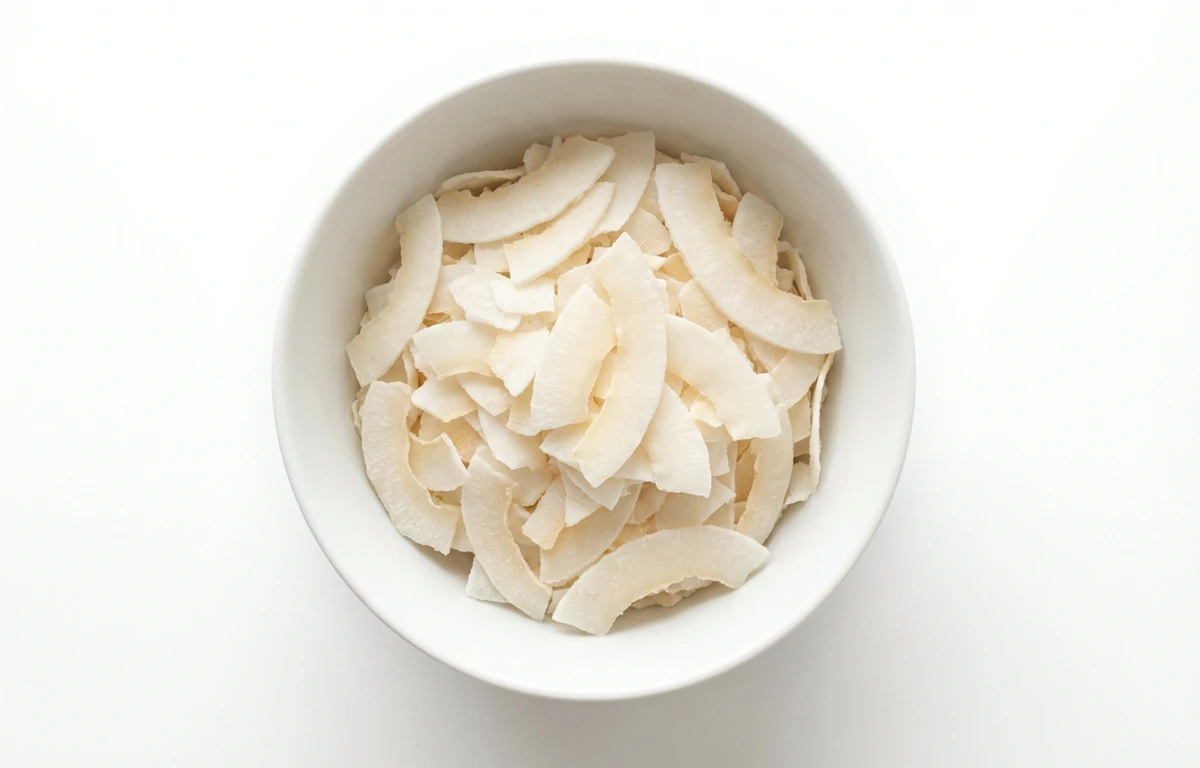
unsweetened coconut flakes.
VegetarianVeganGluten-freeDairy-freeNut-freePeanut-freeSoy-freeEgg-freeShellfish-freeHoney-freeAlcohol-free
SERVING
CALORIES
660
PROTEIN
6.9g
CARBS
23.7g
FAT
64.5g
FIBER
16.3g
This ingredient is flagged as naturally gluten-free. Per 100 g, it provides 0.50 µg of vitamin K.
NUTRITION PROFILE · per 100 g
Everything in this ingredient.
MACRONUTRIENTS
Calories660kcal—
Protein6.9g14%
Carbohydrates23.7g9%
Fiber16.3g58%
Sugar7.3g15%
Total fat64.5g83%
Saturated fat57.2g286%
Cholesterol0mg0%
MINERALS
Sodium37mg2%
Potassium572mg12%
Calcium26mg2%
Iron2.4mg14%
Magnesium32mg8%
Phosphorus113mg9%
Zinc1.1mg10%
Copper0.40mg44%
Manganese1.5mg65%
Selenium10µg18%
VITAMINS
Vitamin A0µg0%
Vitamin C3.3mg4%
Vitamin D0µg0%
Vitamin E0.27mg2%
Vitamin K0.50µg0%
Thiamin (B1)0.07mg6%
Riboflavin (B2)0.02mg2%
Niacin (B3)0.50mg3%
Pantothenic acid (B5)0.30mg6%
Vitamin B60.05mg3%
Folate (B9)26µg7%
Vitamin B120µg0%
%DV based on a 2,000 cal diet. Source: USDA FoodData Central. A dash in the %DV column means there’s no established Daily Value for that nutrient.
MEASUREMENT CONVERSIONS
How much is what.
1 cup90g
1 tablespoon7g
1 teaspoon2g
1 ml0.5g
1 liter466.7g
HEALTH BENEFITS
Why eat it.
- ✓Rich in dietary fiber, which supports digestive health and promotes feelings of fullness.
- ✓A good source of medium-chain triglycerides (MCTs), a type of saturated fat that is easily absorbed and used for energy.
- ✓Contains lauric acid, which has demonstrated antimicrobial and antiviral properties in studies.
COOKING TIPS
In the kitchen.
- 1Toast flakes in a dry skillet over medium-low heat for 3-5 minutes, stirring frequently, until golden and fragrant to enhance their nutty flavor.
- 2Use as a topping for yogurt, oatmeal, smoothie bowls, salads, and curries to add texture and flavor.
- 3Incorporate into homemade granola, energy balls, or baked goods like cookies and muffins.
- 4Can be rehydrated by soaking in warm water or milk for about 20 minutes for use in recipes requiring a softer texture.
STORAGE
Keep it fresh.
- Store in an airtight container in a cool, dark, and dry place like a pantry for up to 6 months.
- For longer-term storage (up to one year), keep in the refrigerator or freezer to prevent the natural oils from becoming rancid.
FAQ
Frequently asked questions.
Are unsweetened coconut flakes keto-friendly?
Yes, they are excellent for a keto diet. With 64.5g of fat and a significant portion of their 23.7g of carbs coming from fiber, they provide the healthy fats needed for ketosis while remaining relatively low in net carbohydrates.
How do I toast coconut flakes?
To toast them, spread the flakes in a single layer in a dry skillet over medium-low heat or in an oven at 325°F (160°C). Stir frequently for 3-5 minutes until they become golden brown and fragrant, as they can burn very quickly.
What is the difference between coconut flakes and shredded coconut?
The main difference is the size and texture; flakes are larger, flat pieces, while shredded coconut is grated into smaller, thin strips. Flakes are often preferred for snacking or as a decorative topping, whereas shredded coconut is more common in baking batters.
How do I know if coconut flakes have spoiled?
Spoiled coconut flakes will develop a yellow or brownish tint and may feel oily or sticky. The most reliable sign is a sour or soapy 'rancid' smell, which indicates the natural fats have oxidized.
What are the best ways to use them in recipes?
They are incredibly versatile and can be added to granola, smoothie bowls, or yogurt for crunch. They also work well in savory dishes like coconut shrimp, curries, or as a crust for baked fish and chicken.
Do unsweetened coconut flakes contain a lot of sugar?
Unsweetened coconut flakes contain no added sugars, only the natural sugars found in the fruit. This makes them a much healthier alternative to 'sweetened' varieties, which often contain significant amounts of processed sugar and corn starch.
RECIPES
Cook with unsweetened coconut flakes.
1 recipes · sorted by what’s quick



















