
Loading...
Per 100g
Nutrition data source: USDA FoodData Central
Common measurement equivalents in grams
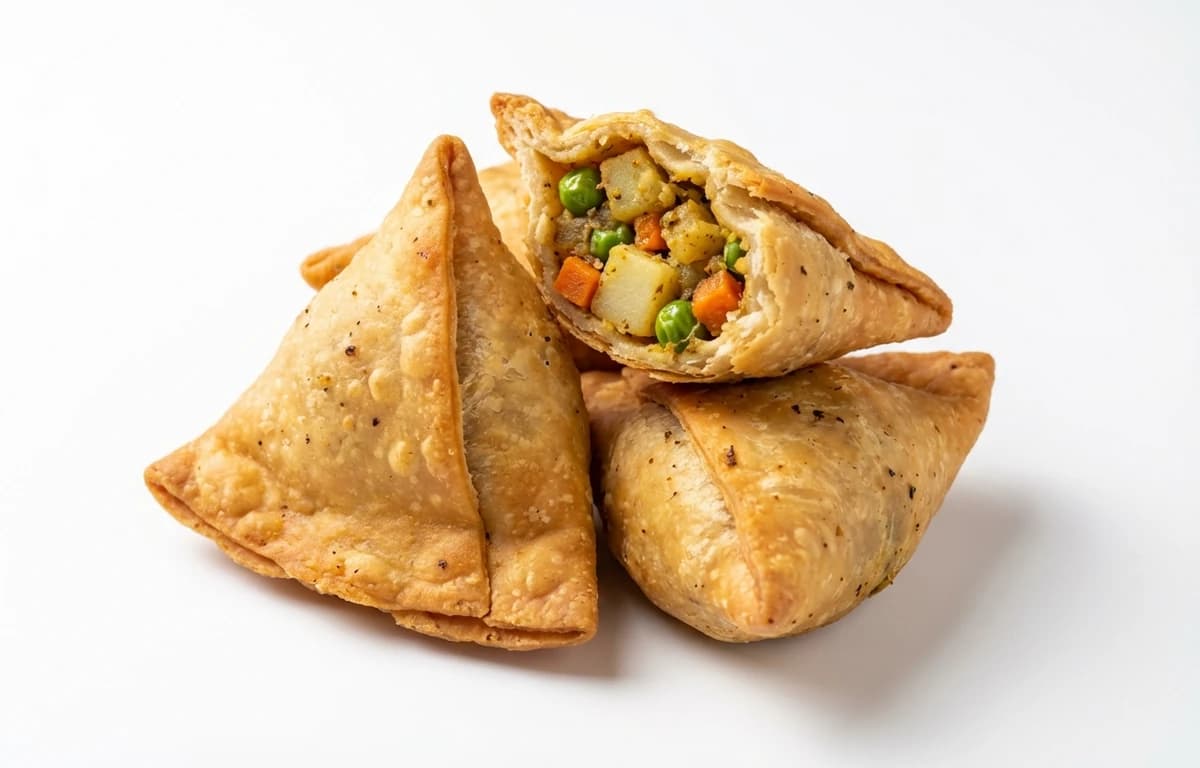
Vegetable samosas are a flavorful snack but are best enjoyed in moderation because they are typically deep-fried and high in fat. While they provide energy and some fiber from vegetables like potatoes and peas, the frying process significantly increases the calorie density.
A 100g serving of vegetable samosas contains approximately 280 calories and 35g of carbohydrates. They also provide about 18g of fat and 7g of protein, making them a high-energy food source.
Most traditional vegetable samosas are vegan as the crust is made from wheat flour and oil, and the filling is plant-based. However, some recipes may use ghee (clarified butter) in the pastry, so it is important to check the specific ingredients.
Standard vegetable samosas are not gluten-free because the outer pastry is made from wheat flour. To make them gluten-free, the crust must be substituted with alternative flours such as rice flour or a gluten-free all-purpose blend.
To maintain a crispy texture, reheat samosas in an oven or air fryer at 350°F (175°C) for 5-10 minutes. Avoid using a microwave, as it tends to make the pastry soft and soggy.
Yes, baking is a healthier alternative that significantly reduces the fat content. Brush the pastry lightly with oil and bake at 400°F (200°C) until the crust is golden brown and crispy.
Cooked vegetable samosas can be stored in an airtight container in the refrigerator for 3 to 4 days. Ensure they have cooled to room temperature before refrigerating to prevent moisture buildup.
Vegetable Samosas is a versatile ingredient found in cuisines around the world. With 280 calories per 100g and 7 grams of protein, it's a nutritious addition to many dishes.
Explore more ingredients in the processed category with complete nutrition information.
View all processed →Discover 1 recipes featuring vegetable samosas with step-by-step instructions.
Browse recipes →Vegetable samosas freeze very well for up to 3 months. For best results, freeze them in a single layer on a baking sheet before transferring them to a freezer-safe bag to prevent them from sticking together.
Due to their high fat (18g per 100g) and calorie content, they are generally not recommended for weight loss. If included in a weight-loss diet, they should be portion-controlled or prepared using healthier methods like air-frying.
The filling typically consists of spiced mashed potatoes and green peas. Common spices include cumin, coriander, turmeric, and ginger, which provide anti-inflammatory properties and a savory flavor profile.