
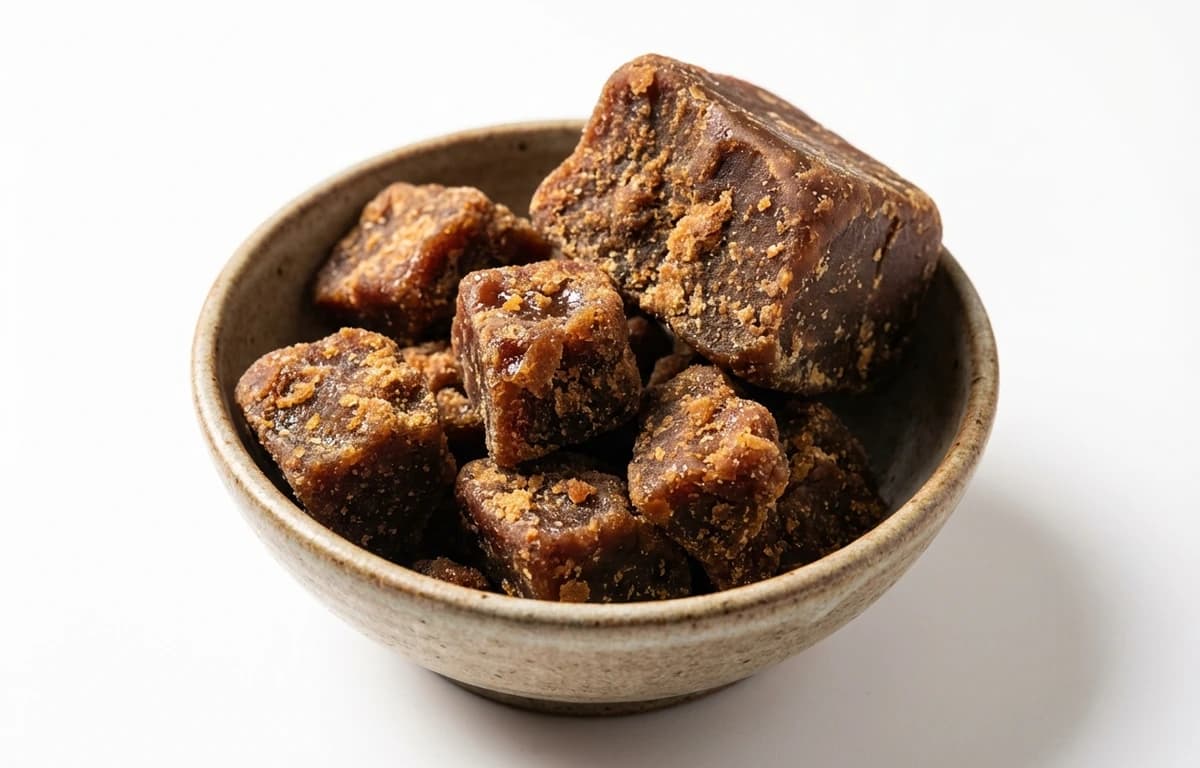
vellam
Also known as:
Loading...
Also known as:
Per 100g
Nutrition data source: USDA FoodData Central
Yes, vellam is considered healthier because it is unrefined and retains essential minerals like iron, magnesium, and potassium that are stripped from white sugar. It also contains antioxidants and phenols that help combat oxidative stress.
Vellam contains approximately 383 calories and 97.3g of carbohydrates per 100g. While it is more nutrient-dense than refined sugar, it remains a high-calorie sweetener that should be consumed in moderation.
While vellam provides a slightly slower energy release than white sugar, it still has a high glycemic index and can significantly raise blood sugar levels. Diabetics should consult their doctor and consume it only in very limited quantities.
Yes, vellam is naturally vegan as it is a plant-based product made from sugarcane juice or palm sap. It is also naturally gluten-free, making it safe for individuals with celiac disease or gluten intolerance.
Vellam has a rich, complex flavor that is much deeper than white sugar. It is often described as having earthy, caramel, or molasses-like notes with a slightly smoky undertone.
Vellam is typically sold in hard blocks or rounds. To use it, you should grate or crush it into smaller pieces; many cooks dissolve it in a little warm water and strain the syrup to remove any natural impurities or grit before adding it to a dish.
In traditional medicine, vellam is believed to stimulate digestive enzymes and help cleanse the respiratory and digestive tracts. It is often consumed in small amounts after a meal to prevent indigestion and constipation.
vellam is a versatile ingredient found in cuisines around the world. With 383 calories per 100g and 0.4 grams of protein, it's a nutritious addition to many dishes.
Explore more ingredients in the sweetener category with complete nutrition information.
View all sweetener →Vellam should be stored in an airtight container in a cool, dry place. It is highly hygroscopic, meaning it absorbs moisture from the air, which can make it sticky or prone to mold if not sealed properly.
Fresh vellam should have a sweet, earthy aroma and a firm texture. If it develops a fermented or sour smell, shows visible mold growth, or tastes excessively salty, it has likely spoiled and should be discarded.
Vellam is not a weight-loss food as it is high in sugar and calories. However, because it provides a more stable energy release and contains minerals, it is a better alternative to refined sugar when used sparingly as part of a balanced diet.