Nuts Seeds3 recipes
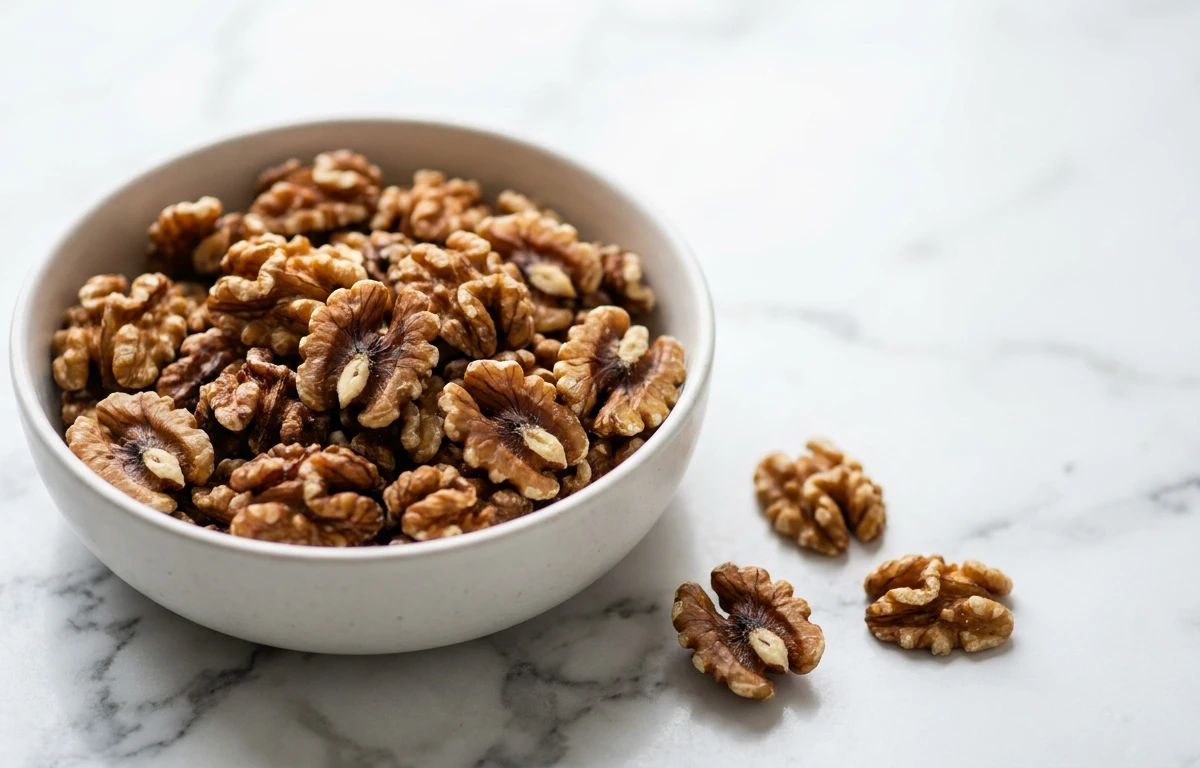
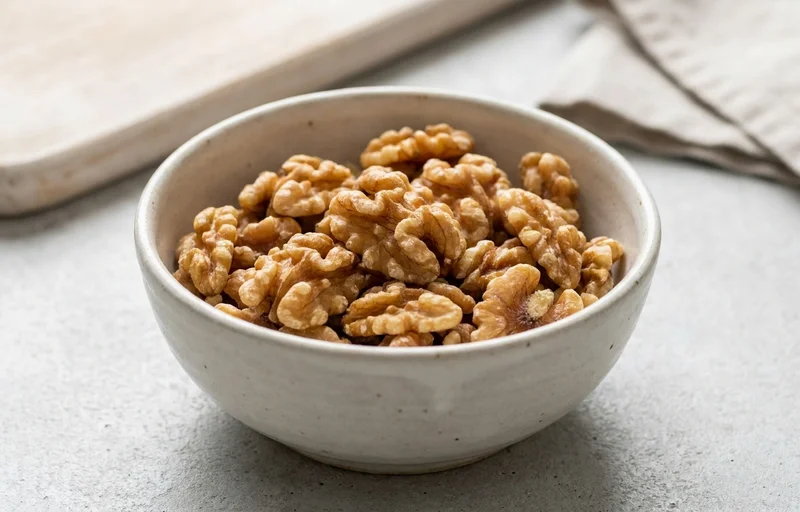
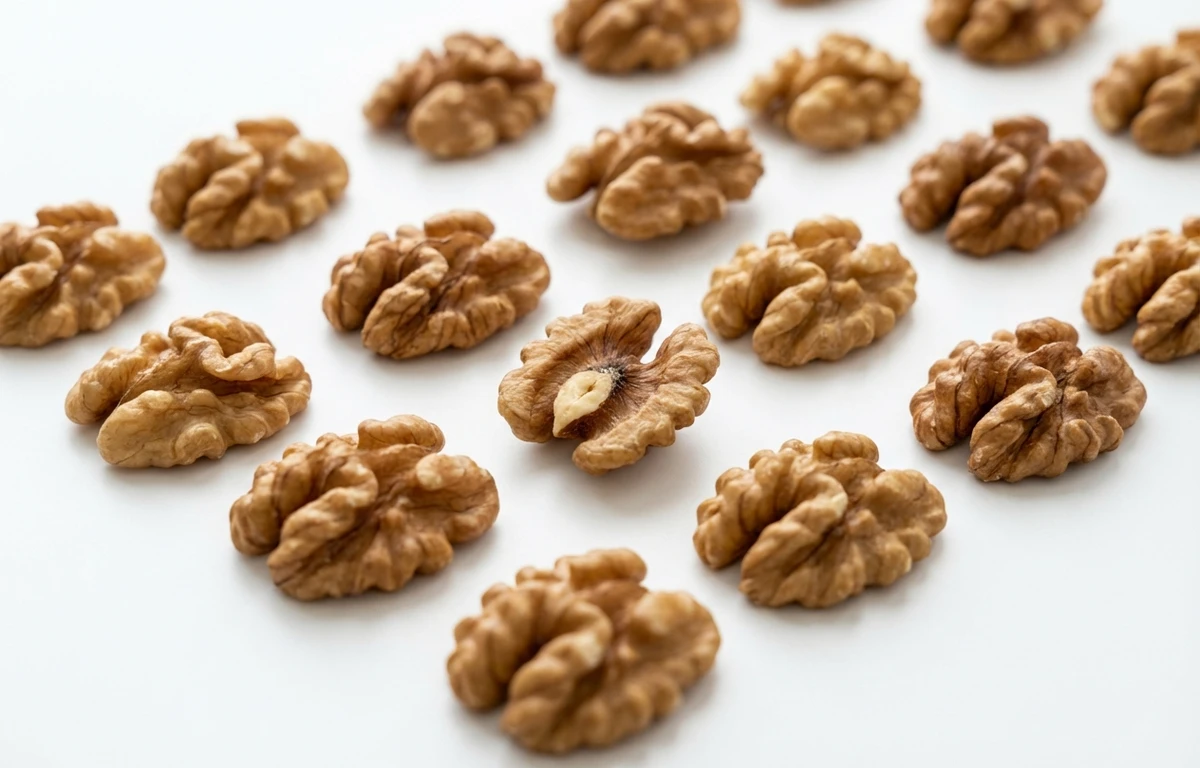
walnut halves.
VegetarianVeganGluten-freeDairy-freeNut-freePeanut-freeSoy-freeEgg-freeShellfish-freeHoney-freeAlcohol-free
ALSO KNOWN AS
akhrotakhrot giriwalnut kernelsshelled walnutsenglish walnutsjuglans regia
SERVING
CALORIES
654
PROTEIN
15.2g
CARBS
13.7g
FAT
65.2g
FIBER
6.7g
NUTRITION PROFILE · per 100 g
Everything in this ingredient.
MACRONUTRIENTS
Calories654kcal—
Protein15.2g30%
Carbohydrates13.7g5%
Fiber6.7g24%
Sugar2.6g5%
Total fat65.2g84%
Saturated fat6.1g31%
Trans fat0g—
Cholesterol0mg0%
Water4.1g—
MINERALS
Sodium2.0mg0%
Potassium441mg9%
Calcium98mg8%
Iron2.9mg16%
Magnesium158mg38%
Phosphorus346mg28%
Zinc3.1mg28%
Copper1.6mg178%
Manganese3.4mg148%
Selenium4.9µg9%
VITAMINS
Vitamin A1.0µg0%
Vitamin C1.3mg1%
Vitamin D0µg0%
Vitamin E0.70mg5%
Vitamin K2.7µg2%
Thiamin (B1)0.34mg28%
Riboflavin (B2)0.15mg12%
Niacin (B3)1.1mg7%
Pantothenic acid (B5)0.57mg11%
Vitamin B60.54mg32%
Folate (B9)98µg25%
Vitamin B120µg0%
%DV based on a 2,000 cal diet. Source: USDA FoodData Central. A dash in the %DV column means there’s no established Daily Value for that nutrient.
MEASUREMENT CONVERSIONS
How much is what.
1 cup110g
1 tablespoon11g
1 teaspoon4g
1 oz28.4g
1 lb453.6g
1 ml0.5g
1 liter450g
1 piece2g
HEALTH BENEFITS
Why eat it.
- ✓Rich in Omega-3 fatty acids (ALA) which support heart health
- ✓High antioxidant content helps reduce oxidative stress
- ✓Supports brain health and cognitive function
- ✓Promotes a healthy gut microbiome
- ✓May help manage type 2 diabetes and lower blood pressure
COOKING TIPS
In the kitchen.
- 1Toast lightly in a dry pan for 3-5 minutes to enhance nutty flavor
- 2Soak in water for a few hours to reduce tannins and improve digestibility
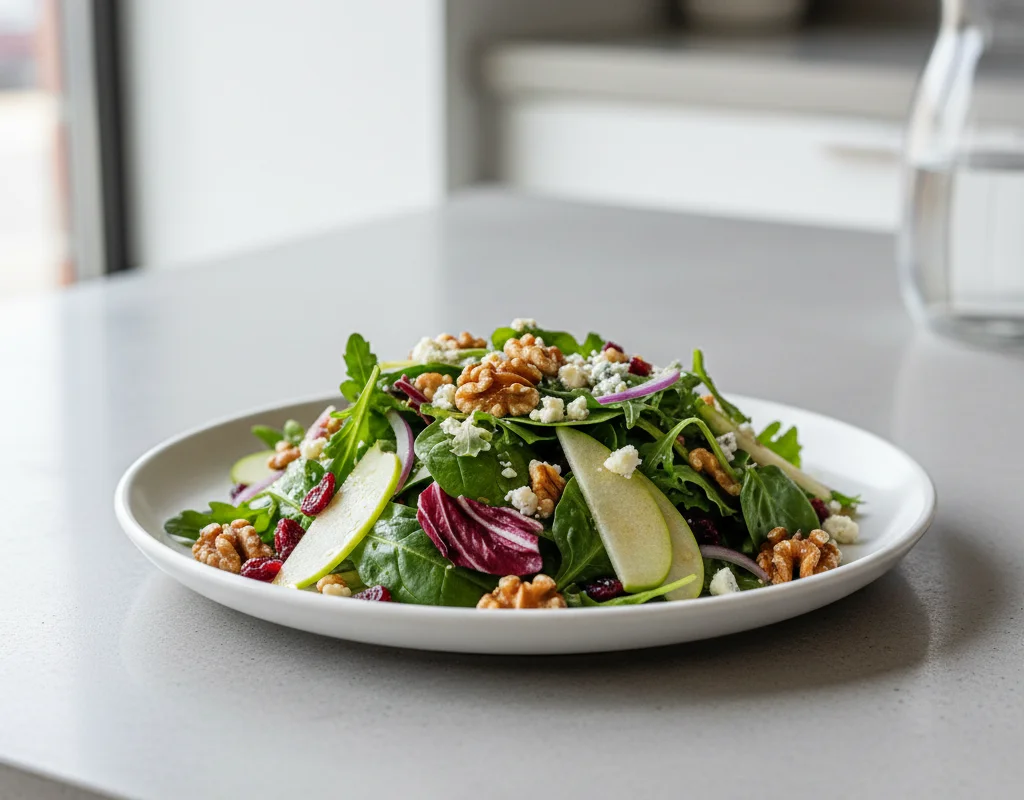
- 3Add to salads, oatmeal, or baked goods for a crunchy texture
STORAGE
Keep it fresh.
- Store in an airtight container in the refrigerator for up to 6 months
- Freeze in a sealed bag for up to 1 year to prevent rancidity
- Keep away from heat, light, and moisture to preserve delicate oils
FAQ
Frequently asked questions.
How long do walnut halves last?
At room temperature, they last about 1 month. In the refrigerator, they stay fresh for 6 months, and in the freezer, they can last up to a year.
How can I tell if walnuts have gone bad?
Rancid walnuts will have a sharp, paint-thinner-like smell and a very bitter, unpleasant taste.
What is the best substitute for walnuts?
Pecans are the closest substitute in terms of texture and oil content. Hazelnuts or macadamia nuts can also work depending on the recipe.
Should I wash walnuts before eating?
It is not necessary to wash them, but some people prefer to soak and rinse them to remove dust and reduce phytic acid.
Are walnuts good for weight loss?
Yes, despite being high in calories, their protein and fiber content promote satiety, which can help control appetite.
Can I freeze walnuts?
Yes, freezing is the best way to store walnuts long-term because it prevents their high fat content from oxidizing.
How do I pick the best quality walnuts?
Look for halves that are plump, pale in color, and uniform in size. Avoid shriveled kernels or those with dark spots.
Are walnuts high in protein?
They contain a moderate amount of protein (about 15g per 100g), making them a good plant-based protein source.
Can walnuts be eaten raw?
Yes, walnut halves are most commonly eaten raw to preserve their healthy Omega-3 fats, which can be sensitive to high heat.
RECIPES
Cook with walnut halves.
3 recipes · sorted by what’s quick