Other1 recipes
white asparagus.
VegetarianVeganGluten-freeDairy-freeNut-freePeanut-freeSoy-freeEgg-freeShellfish-freeHoney-freeAlcohol-freeHalalKosher
ALSO KNOWN AS
spargel
SERVING
CALORIES
25
PROTEIN
2.2g
CARBS
3.9g
FAT
0.10g
FIBER
2.1g
This ingredient is flagged as naturally gluten-free. Per 100 g, it provides 41.6 µg of vitamin K.
NUTRITION PROFILE · per 100 g
Everything in this ingredient.
MACRONUTRIENTS
Calories25.3kcal—
Protein2.2g4%
Carbohydrates3.9g1%
Fiber2.1g8%
Sugar1.9g4%
Total fat0.10g0%
Saturated fat0.03g0%
Trans fat0g—
Cholesterol0mg0%
Water93g—
MINERALS
Sodium2.0mg0%
Potassium202mg4%
Calcium24mg2%
Iron2.1mg12%
Magnesium14mg3%
Phosphorus52mg4%
Zinc0.50mg5%
Copper0.19mg21%
Manganese0.16mg7%
Selenium2.3µg4%
VITAMINS
Vitamin A38µg4%
Vitamin C5.6mg6%
Vitamin D0µg0%
Vitamin E1.1mg7%
Vitamin K41.6µg35%
Thiamin (B1)0.14mg12%
Riboflavin (B2)0.14mg11%
Niacin (B3)1.0mg6%
Pantothenic acid (B5)0.27mg5%
Vitamin B60.09mg5%
Folate (B9)149µg37%
Vitamin B120µg0%
%DV based on a 2,000 cal diet. Source: USDA FoodData Central. A dash in the %DV column means there’s no established Daily Value for that nutrient.
MEASUREMENT CONVERSIONS
How much is what.
1 cup134g
1 tablespoon15g
1 teaspoon5g
1 oz28.4g
1 lb453.6g
1 ml1g
1 liter1000g
1 piece16g
HEALTH BENEFITS
Why eat it.
- ✓Good source of dietary fiber and the prebiotic inulin, which supports digestive health and beneficial gut bacteria.
- ✓Contains folate (Vitamin B9), which is essential for cell growth, DNA formation, and red blood cell production.
- ✓Acts as a natural diuretic due to its high asparagine content, helping to flush excess fluid and salt from the body.
COOKING TIPS
In the kitchen.
- 1Always peel white asparagus before cooking, as its outer skin is tough and fibrous. Start about an inch below the tip and peel downwards to the base.
- 2Trim off the woody bottom ends (about 1-2 inches) as they are too tough to eat.
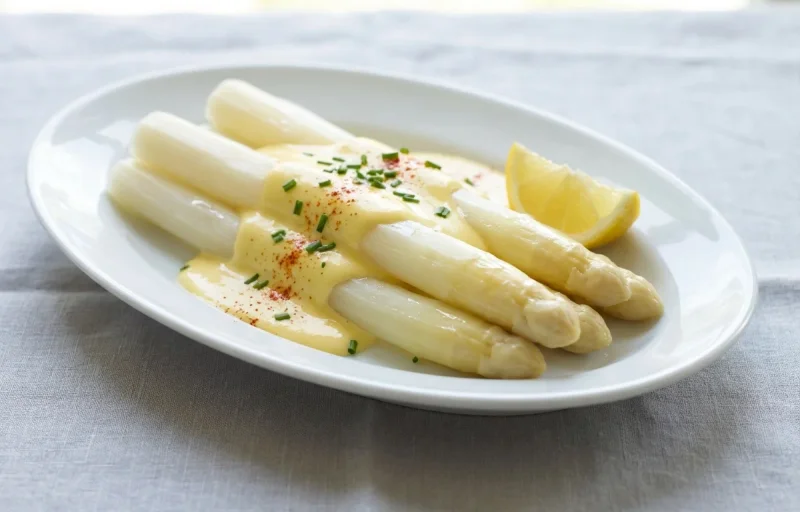
- 3White asparagus is traditionally boiled or steamed until tender-crisp. It pairs exceptionally well with rich sauces like hollandaise, melted butter, or vinaigrettes.
- 4Due to its delicate, slightly sweet, and less bitter flavor compared to green asparagus, simple preparations are best to let its unique taste shine.
STORAGE
Keep it fresh.
- Wrap the ends of the stalks in a damp paper towel, place in a plastic bag, and store in the refrigerator's crisper drawer for up to 4-5 days.
- For optimal freshness, stand the spears upright in a jar or glass with about an inch of water, covering the tops loosely with a plastic bag, and refrigerate.
FAQ
Frequently asked questions.
How many calories and carbs are in white asparagus?
White asparagus is very diet-friendly, containing only 20 calories per 100g. It has approximately 3.9g of carbohydrates and 2.2g of protein, making it an excellent choice for low-calorie and volume-based eating plans.
Is white asparagus keto-friendly?
Yes, white asparagus is keto-friendly. With only 3.9g of total carbohydrates per 100g and a good amount of fiber, it has a very low net carb count that fits easily into a ketogenic or low-carb lifestyle.
What does white asparagus taste like compared to green asparagus?
White asparagus has a milder, more delicate, and slightly sweeter flavor than green asparagus. Because it is grown without sunlight, it lacks the grassy, earthy punch of green varieties and has a more tender, buttery texture when cooked.
Do I need to peel white asparagus?
Yes, peeling is essential for white asparagus. Unlike green asparagus, the outer skin of the white variety is thick, fibrous, and bitter; you should peel the spears from just below the tip all the way to the base before cooking.
How do you cook white asparagus?
The most common method is simmering the peeled spears in water with a pinch of salt, sugar, and a pat of butter for 8 to 12 minutes until tender. It can also be roasted or steamed, but boiling is traditional to maintain its delicate color and flavor.
Can you eat white asparagus raw?
While you can technically eat it raw, it is not common because the stalks are very fibrous. If served raw, it must be peeled very thoroughly and shaved into thin ribbons for salads to make the texture palatable.
What are the digestive benefits of white asparagus?
White asparagus contains the prebiotic fiber inulin, which feeds beneficial gut bacteria and supports digestive health. It also acts as a natural diuretic due to its high asparagine content, helping to flush excess fluid and salt from the body.
How do you store white asparagus to keep it fresh?
Store white asparagus by wrapping the ends in a damp paper towel and placing the spears in a plastic bag in the refrigerator's crisper drawer. For the best taste and texture, it should be consumed within two to three days of purchase.
How can you tell if white asparagus is fresh?
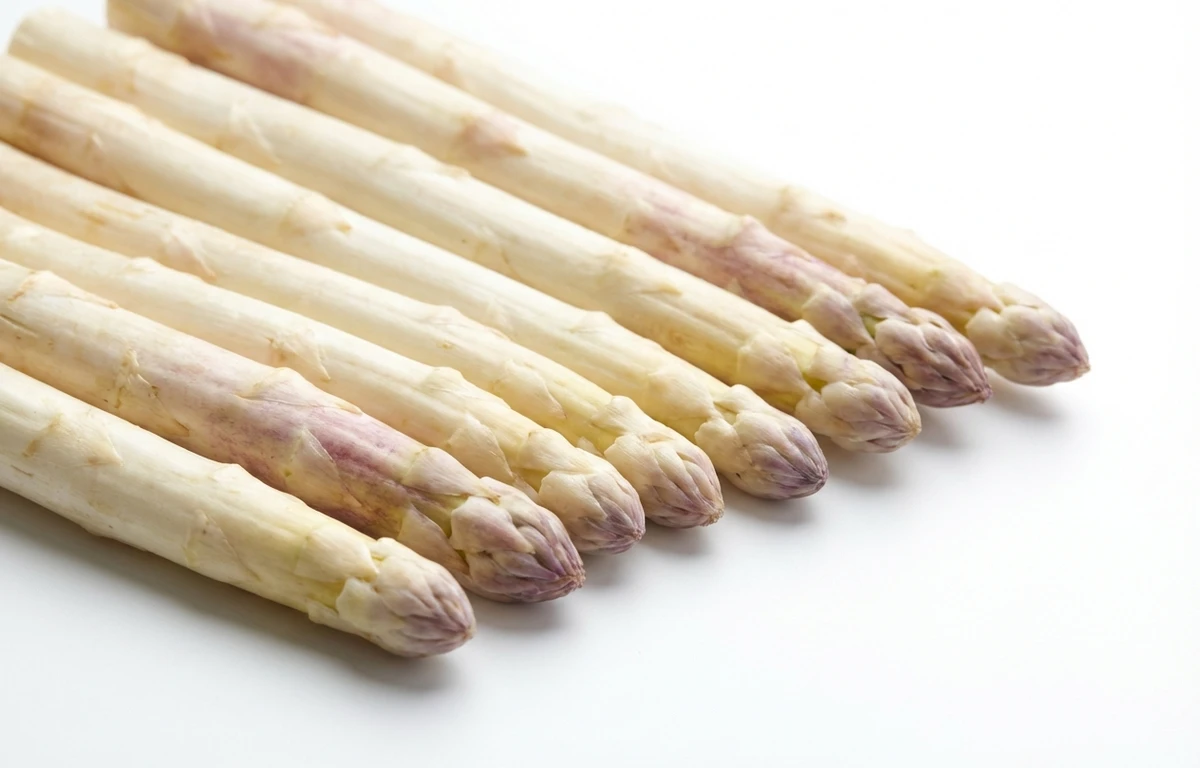
Look for spears that are firm, straight, and have tightly closed tips. If the asparagus feels limp, looks shriveled, or the tips appear mushy or discolored, it is no longer fresh and may have a bitter taste.
RECIPES
Cook with white asparagus.
1 recipes · sorted by what’s quick