Nuts Seeds10 recipes
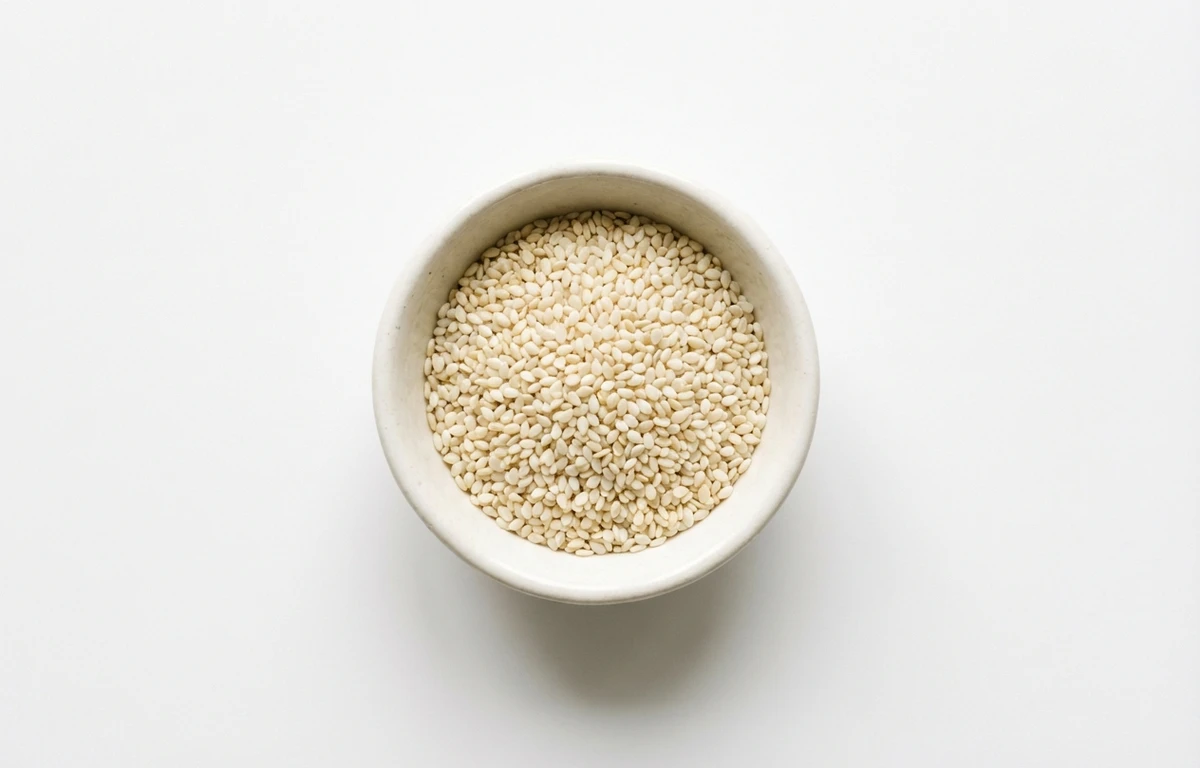
white sesame seeds.
VegetarianVeganGluten-freeDairy-freeNut-freePeanut-freeSoy-freeEgg-freeShellfish-freeHoney-freeAlcohol-free
ALSO KNOWN AS
hulled sesame seedssafed tilsesamum indicumellubengali tilgingelly seedswhite sesame seed
SERVING
CALORIES
573
PROTEIN
17.7g
CARBS
23.4g
FAT
49.7g
FIBER
11.8g
NUTRITION PROFILE · per 100 g
Everything in this ingredient.
MACRONUTRIENTS
Calories573kcal—
Protein17.7g35%
Carbohydrates23.4g9%
Fiber11.8g42%
Sugar0.30g1%
Total fat49.7g64%
Saturated fat7.0g35%
Cholesterol0mg0%
Water4.7g—
MINERALS
Sodium11mg0%
Potassium468mg10%
Calcium975mg75%
Iron14.6mg81%
Magnesium351mg84%
Phosphorus629mg50%
Zinc7.8mg70%
Copper4.1mg453%
Manganese2.5mg107%
Selenium34.4µg63%
VITAMINS
Vitamin A0µg0%
Vitamin C0mg0%
Vitamin D0µg0%
Vitamin E0.25mg2%
Vitamin K0µg0%
Thiamin (B1)0.79mg66%
Riboflavin (B2)0.25mg19%
Niacin (B3)4.5mg28%
Pantothenic acid (B5)0.05mg1%
Vitamin B60.79mg46%
Folate (B9)97µg24%
Vitamin B120µg0%
%DV based on a 2,000 cal diet. Source: USDA FoodData Central. A dash in the %DV column means there’s no established Daily Value for that nutrient.
MEASUREMENT CONVERSIONS
How much is what.
1 cup144g
1 tablespoon9g
1 teaspoon2.5g
1 ml0.6g
1 liter600g
HEALTH BENEFITS
Why eat it.
- ✓Rich source of healthy fats, including polyunsaturated and monounsaturated fats, which support heart health.
- ✓Excellent source of minerals such as calcium, magnesium, manganese, and zinc, which are vital for bone health and metabolic function.
- ✓Contain plant compounds called lignans and phytosterols, which may help lower cholesterol levels.
- ✓A good source of dietary fiber, promoting digestive health and regular bowel movements.
COOKING TIPS
In the kitchen.
- 1Toast seeds in a dry skillet over medium-low heat for 3-5 minutes, stirring constantly, until fragrant and lightly golden to enhance their nutty flavor.
- 2Grind toasted sesame seeds with a neutral oil to create homemade tahini, a key ingredient in hummus, baba ghanoush, and various dressings.
- 3Use as a crunchy topping for salads, stir-fries, noodle dishes, and baked goods like bagels and bread.
- 4Incorporate into a crust or coating for fish, chicken, or tofu before baking or pan-frying for added texture and flavor.
STORAGE
Keep it fresh.
- Store in an airtight container in a cool, dark, and dry place, such as a pantry, for up to 6 months.
- To extend shelf life and prevent the natural oils from becoming rancid, store them in the refrigerator for up to a year or in the freezer for even longer.
FAQ
Frequently asked questions.
Are white sesame seeds healthy?
Yes, white sesame seeds are highly nutritious, providing a rich source of healthy polyunsaturated and monounsaturated fats that support heart health. They are also packed with essential minerals like calcium, magnesium, and zinc, which are vital for bone strength and metabolic function.
How much protein and calcium are in white sesame seeds?
White sesame seeds contain approximately 17.73g of protein per 100g. They are also considered an excellent plant-based source of calcium, making them a great dietary addition for maintaining bone density, especially for those on dairy-free diets.
Are white sesame seeds keto-friendly?
Yes, white sesame seeds are keto-friendly and low-carb. While they contain about 23.45g of carbs per 100g, a significant portion of that is dietary fiber, and their high fat content (49.67g) fits well within a ketogenic nutritional profile.
Are white sesame seeds gluten-free and vegan?
White sesame seeds are naturally gluten-free and 100% vegan. They are a safe and nutrient-dense option for individuals with celiac disease or those following a plant-based lifestyle.
How do you use white sesame seeds in cooking?
They are incredibly versatile and can be used as a garnish for stir-fries, salads, and sushi. They are also the primary ingredient in tahini (sesame paste) and are frequently used in baking breads, crackers, and traditional desserts like halva.
Should I toast white sesame seeds before using them?
While they can be eaten raw, toasting white sesame seeds in a dry pan for 2-3 minutes significantly enhances their nutty flavor and aroma. Toasting also provides a crispier texture that complements both savory and sweet dishes.
Can I eat white sesame seeds raw?
Yes, white sesame seeds can be eaten raw and are safe to consume. However, some people prefer to grind or soak them to improve the digestibility and absorption of certain minerals like calcium.
How should I store white sesame seeds?
Store them in an airtight container in a cool, dry, and dark place to prevent the natural oils from going rancid. For a longer shelf life of up to a year, it is recommended to keep them in the refrigerator or freezer.
How do I know if white sesame seeds have gone bad?
Check for a sharp, bitter, or sour smell, which indicates that the oils in the seeds have oxidized and turned rancid. If the seeds taste soapy or unpleasantly bitter rather than nutty, they should be discarded.
What is the difference between white and black sesame seeds?
White sesame seeds are usually hulled, meaning the outer skin has been removed, resulting in a milder, sweeter flavor. Black sesame seeds retain their hull, offering a crunchier texture, a more intense earthy flavor, and slightly higher levels of antioxidants.
RECIPES
Cook with white sesame seeds.
10 recipes · sorted by what’s quick