
Other
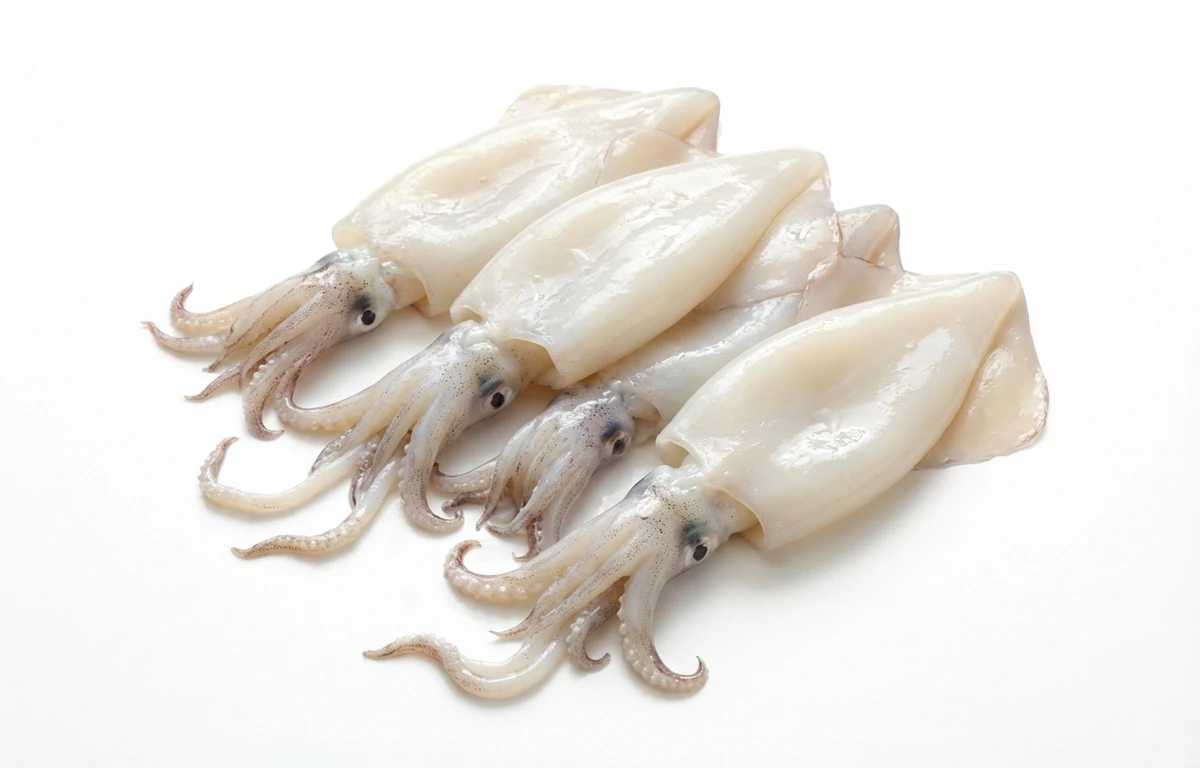
white small squid.
VegetarianVeganGluten-freeDairy-freeNut-freePeanut-freeSoy-freeEgg-freeShellfish-freeHoney-freeAlcohol-free
SERVING
CALORIES
84
PROTEIN
17.4g
CARBS
0g
FAT
1.1g
FIBER
0g
This ingredient is flagged as naturally gluten-free. Per 100 g, it provides 1.8 µg of vitamin K.
NUTRITION PROFILE · per 100 g
Everything in this ingredient.
MACRONUTRIENTS
Calories84.4kcal—
Protein17.4g35%
Carbohydrates0g0%
Fiber0g0%
Sugar0g0%
Total fat1.1g1%
Saturated fat0.30g2%
Trans fat0g—
Cholesterol324mg108%
Water79.4g—
MINERALS
Sodium154mg7%
Potassium134mg3%
Calcium36.5mg3%
Iron0.39mg2%
Magnesium38.5mg9%
Phosphorus151mg12%
Zinc1.6mg15%
Copper1.1mg122%
Manganese0.02mg1%
Selenium70µg127%
VITAMINS
Vitamin A8.6µg1%
Vitamin C0mg0%
Vitamin D0.71µg4%
Vitamin E0.66mg4%
Vitamin K1.8µg2%
Thiamin (B1)0.01mg1%
Riboflavin (B2)0.03mg2%
Niacin (B3)0.71mg4%
Pantothenic acid (B5)0.77mg15%
Vitamin B6118mg6941%
Biotin (B7)1833µg6110%
Folate (B9)0µg0%
%DV based on a 2,000 cal diet. Source: USDA FoodData Central. A dash in the %DV column means there’s no established Daily Value for that nutrient.
MEASUREMENT CONVERSIONS
How much is what.
1 oz28.4g
1 lb453.6g
1 piece18g
HEALTH BENEFITS
Why eat it.
- ✓Excellent source of lean protein, essential for muscle repair and growth.
- ✓Provides B vitamins, particularly B12 and Riboflavin (B2), which support energy metabolism and nervous system health.
- ✓Low in saturated fat, making it a heart-healthy protein option when not deep-fried.
COOKING TIPS
In the kitchen.
- 1To avoid a rubbery texture, cook squid either very quickly over high heat (e.g., stir-frying or grilling for 1-2 minutes) or slowly over low heat (e.g., braising for over 30 minutes).
- 2Pat the squid completely dry before cooking, especially for searing or frying, to ensure it browns rather than steams.
- 3Small squid are ideal for stuffing with ingredients like breadcrumbs, herbs, and rice before being baked or braised.
- 4Lightly scoring the inside of the squid body in a diamond pattern helps it cook evenly and prevents it from curling excessively.
STORAGE
Keep it fresh.
- Store fresh squid in the coldest part of the refrigerator, ideally on ice in a covered container, and use within 1-2 days.
- For longer storage, clean and dry the squid thoroughly, then freeze in an airtight bag or container for up to 3 months.
FAQ
Frequently asked questions.
How much protein and calories are in white small squid?
A 100g serving of white small squid contains approximately 84.37 calories and 17.41g of protein. With 0g of carbohydrates and only 1.15g of fat, it is a very nutrient-dense protein source.
Is white small squid keto-friendly?
Absolutely. White small squid contains zero carbohydrates, making it a perfect protein source for ketogenic and other low-carb lifestyles. Just ensure it is not prepared with breading or sugary glazes.
Is white small squid gluten-free?
In its natural form, white small squid is 100% gluten-free. However, when ordering at restaurants (such as fried calamari), it is often coated in wheat flour, so always check the preparation method.
How do you cook small squid so it isn't rubbery?
The key is to cook it either very fast or very slow. Sauté or grill it over high heat for only 2-3 minutes, or braise it in a liquid for over 30 minutes to break down the connective tissue and ensure tenderness.
What does white small squid taste like?
It has a mild, slightly sweet, and delicate flavor that is less 'fishy' than many other seafoods. Its firm but tender texture makes it excellent at absorbing the flavors of garlic, lemon, and herbs.
Do I need to clean small squid before cooking?
Yes, you should remove the clear, plastic-like cartilage (the pen), the beak located between the tentacles, and the internal organs. While the skin is edible, many prefer to peel it off for a purely white presentation.
How do you store fresh white small squid?
Fresh squid should be stored in the coldest part of your refrigerator, ideally on a bed of ice, and consumed within 1-2 days. For longer storage, it can be cleaned and frozen for up to three months.
How can you tell if white small squid is fresh?
Fresh squid should have a mild, clean scent of the ocean; any strong 'fishy' or ammonia smell indicates spoilage. The flesh should be firm and shiny, and if the eyes are intact, they should be clear rather than cloudy.



















