Grain
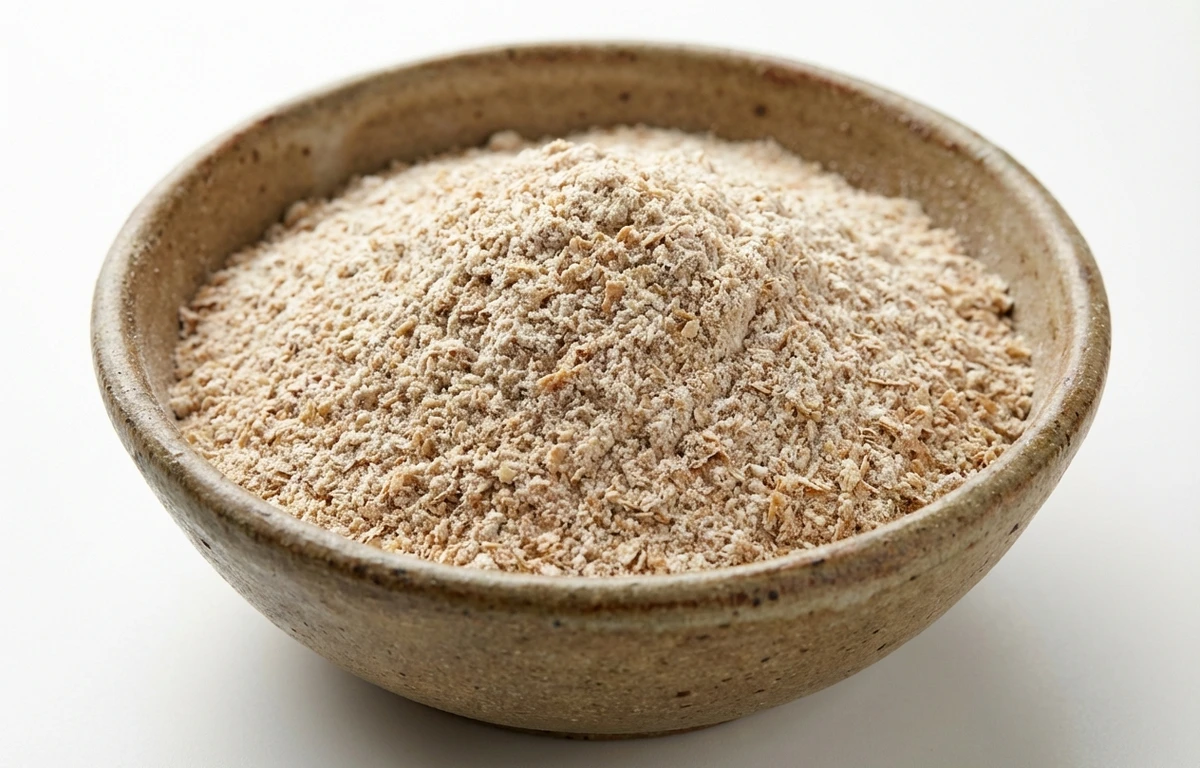
whole-grain wheat flour.
VegetarianVeganGluten-freeDairy-freeNut-freePeanut-freeSoy-freeEgg-freeShellfish-freeHoney-freeAlcohol-freeWhole grain
SERVING
CALORIES
340
PROTEIN
13.2g
CARBS
72g
FAT
2.5g
FIBER
10.7g
NUTRITION PROFILE · per 100 g
Everything in this ingredient.
MACRONUTRIENTS
Calories340kcal—
Protein13.2g26%
Carbohydrates72g26%
Fiber10.7g38%
Sugar0.41g1%
Total fat2.5g3%
Saturated fat0.43g2%
Cholesterol0mg0%
Water10.7g—
MINERALS
Sodium2.0mg0%
Potassium363mg8%
Calcium34mg3%
Iron3.6mg20%
Magnesium137mg33%
Phosphorus357mg29%
Zinc2.6mg24%
Copper0.41mg46%
Manganese4.1mg177%
Selenium61.8µg112%
VITAMINS
Vitamin A0µg0%
Vitamin C0mg0%
Vitamin D0µg0%
Vitamin E0.71mg5%
Vitamin K1.9µg2%
Thiamin (B1)0.50mg42%
Riboflavin (B2)0.17mg13%
Niacin (B3)5.0mg31%
Pantothenic acid (B5)0.60mg12%
Vitamin B60.41mg24%
Folate (B9)44µg11%
Vitamin B120µg0%
%DV based on a 2,000 cal diet. Source: USDA FoodData Central. A dash in the %DV column means there’s no established Daily Value for that nutrient.
MEASUREMENT CONVERSIONS
How much is what.
1 cup120g
1 tablespoon7.5g
1 teaspoon2.5g
1 ml0.5g
1 liter500g
HEALTH BENEFITS
Why eat it.
- ✓Rich in dietary fiber, which aids digestion, promotes satiety, and supports gut health.
- ✓Helps manage blood sugar levels due to its lower glycemic index compared to refined flour.
- ✓Provides essential nutrients like B vitamins (niacin, thiamin, folate), iron, magnesium, and selenium.
- ✓May reduce the risk of chronic diseases, including heart disease and type 2 diabetes, when consumed as part of a balanced diet.
COOKING TIPS
In the kitchen.
- 1Whole-wheat flour absorbs more liquid than all-purpose flour; you may need to increase the liquid in your recipe by about 10-15%.
- 2For a lighter texture in baked goods, start by substituting 25-50% of the all-purpose flour with whole-wheat flour.
- 3Allow doughs made with whole-wheat flour to rest for 20-30 minutes before kneading to allow the bran and germ to fully hydrate, resulting in a softer final product.
- 4Its nutty, robust flavor pairs well with ingredients like molasses, honey, nuts, and spices like cinnamon and nutmeg.
STORAGE
Keep it fresh.
- Store in an airtight container in a cool, dark, and dry place for up to 3 months.
- For longer storage (up to 6-12 months), place in the refrigerator or freezer to prevent the natural oils in the germ from going rancid.
FAQ
Frequently asked questions.
Is whole-grain wheat flour healthy?
Yes, whole-grain wheat flour is highly nutritious as it contains all parts of the grain, including the bran and germ. It is rich in dietary fiber, B vitamins, and essential minerals like iron and magnesium, which support heart health and digestion.
How much protein and fiber are in whole-grain wheat flour?
Per 100g, whole-grain wheat flour provides approximately 13.21g of protein and is a significant source of dietary fiber. This combination helps promote satiety and supports muscle maintenance more effectively than refined flours.
Is whole-grain wheat flour gluten-free?
No, whole-grain wheat flour is not gluten-free. It contains the protein gluten, which provides structure to baked goods, and is therefore unsuitable for individuals with celiac disease or gluten sensitivity.
Can I substitute white flour with whole-grain wheat flour in baking?
Yes, but it is best to start by replacing only 25-50% of the white flour. Because whole-grain flour is denser and more absorbent, you may need to add 1-2 extra tablespoons of liquid per cup of flour to prevent the final product from being too dry.
Is whole-grain wheat flour keto-friendly?
No, it is not keto-friendly. With approximately 71.97g of carbohydrates per 100g, it is too high in carbs for a standard ketogenic diet, which typically limits daily carb intake to under 50g.
How does whole-grain wheat flour affect blood sugar levels?
It has a lower glycemic index than refined white flour, meaning it causes a slower, more gradual rise in blood sugar. The high fiber content slows glucose absorption, making it a better option for managing blood sugar and preventing energy crashes.
How should I store whole-grain wheat flour?
Because it contains natural oils from the grain's germ, it can go rancid. Store it in an airtight container in a cool, dark place for short-term use, or in the refrigerator or freezer to extend its shelf life.
How long does whole-grain wheat flour last?
At room temperature, it typically lasts 1 to 3 months. When stored in the freezer, it can remain fresh for up to 6 to 12 months. Always check for a sour or musty smell, which indicates the oils have spoiled.
What does whole-grain wheat flour taste like?
It has a distinct nutty, earthy flavor and a slightly coarser texture compared to white flour. This adds a rich depth to breads, pancakes, and muffins, though it may be too heavy for delicate cakes or pastries.
Why are baked goods made with this flour denser than those made with white flour?
The bran particles in whole-grain flour can physically cut through gluten strands, reducing the dough's ability to trap air. Additionally, the flour is heavier and more absorbent, resulting in a heartier, more compact texture.