Grain
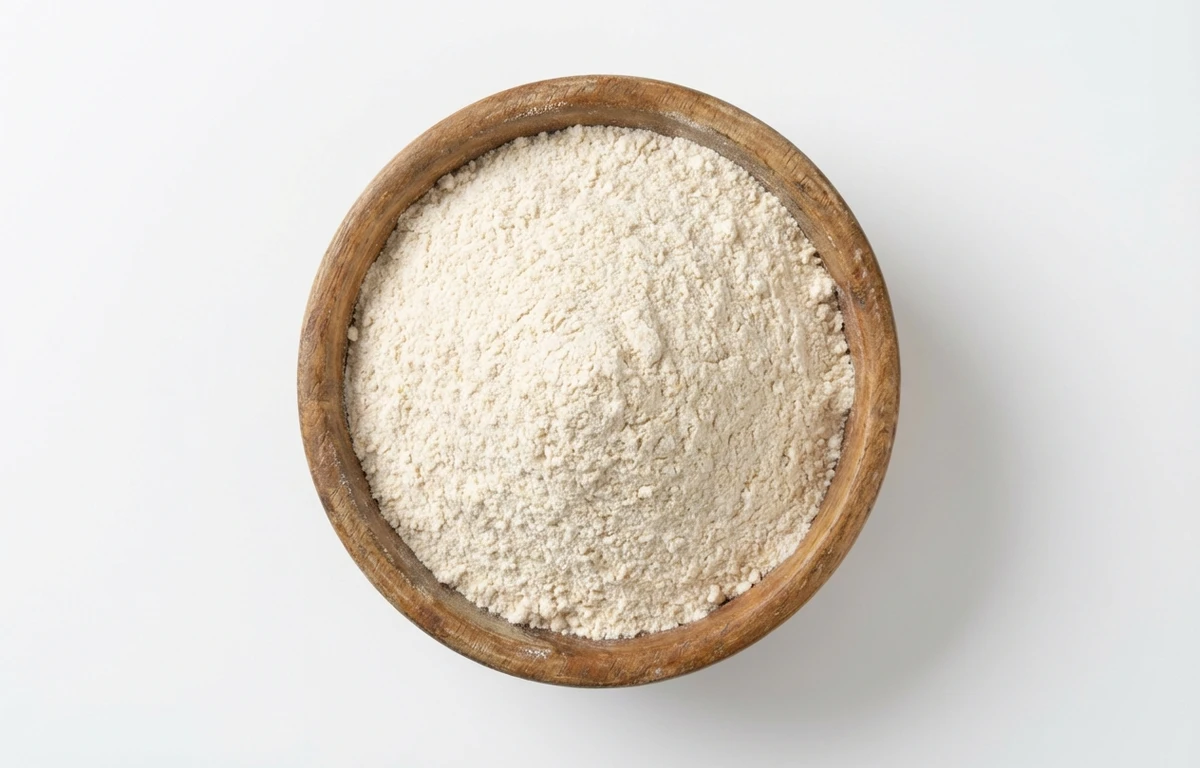
whole-grain white corn flour.
VegetarianVeganGluten-freeDairy-freeNut-freePeanut-freeSoy-freeEgg-freeShellfish-freeHoney-freeAlcohol-freeWhole grain
SERVING
CALORIES
361
PROTEIN
6.9g
CARBS
76.8g
FAT
3.9g
FIBER
7.3g
NUTRITION PROFILE · per 100 g
Everything in this ingredient.
MACRONUTRIENTS
Calories361kcal—
Protein6.9g14%
Carbohydrates76.8g28%
Fiber7.3g26%
Sugar0.64g1%
Total fat3.9g5%
Saturated fat0.54g3%
Cholesterol0mg0%
Water10.9g—
MINERALS
Sodium5.0mg0%
Potassium315mg7%
Calcium7.0mg1%
Iron2.4mg13%
Magnesium93mg22%
Phosphorus272mg22%
Zinc1.7mg16%
Copper0.23mg26%
Manganese0.46mg20%
Selenium15.4µg28%
VITAMINS
Vitamin A0µg0%
Vitamin C0mg0%
Vitamin D0µg0%
Vitamin E0.42mg3%
Vitamin K0.30µg0%
Thiamin (B1)0.25mg21%
Riboflavin (B2)0.08mg6%
Niacin (B3)1.9mg12%
Pantothenic acid (B5)0.66mg13%
Vitamin B60.37mg22%
Folate (B9)25µg6%
Vitamin B120µg0%
%DV based on a 2,000 cal diet. Source: USDA FoodData Central. A dash in the %DV column means there’s no established Daily Value for that nutrient.
MEASUREMENT CONVERSIONS
How much is what.
1 cup117g
1 tablespoon7.3g
1 teaspoon2.4g
1 ml0.5g
1 liter487.5g
HEALTH BENEFITS
Why eat it.
- ✓Rich in dietary fiber, which supports digestive health and promotes satiety.
- ✓Provides complex carbohydrates for sustained energy release.
- ✓Contains antioxidants like lutein and zeaxanthin, which are beneficial for eye health.
- ✓A good source of minerals such as magnesium and phosphorus, important for bone health and energy metabolism.
COOKING TIPS
In the kitchen.
- 1Ideal for making gluten-free baked goods like cornbread, muffins, and pancakes, offering a finer texture and milder flavor than cornmeal.
- 2Use as a thickener for soups, stews, and gravies by first creating a slurry with cold water to prevent lumps.
- 3When substituting for wheat flour, you may need to add a binder like xanthan gum or psyllium husk to improve structure.
- 4Combine with masa harina to make authentic-tasting tortillas and tamales with a softer texture.
STORAGE
Keep it fresh.
- Store in a cool, dark, and dry place in an airtight container to prevent spoilage and pest infestation.
- For long-term storage (beyond 6 months), refrigerate or freeze to keep the natural oils in the germ from becoming rancid.
FAQ
Frequently asked questions.
Is whole-grain white corn flour healthy?
Yes, whole-grain white corn flour is a nutritious choice as it retains the fiber and nutrients of the entire kernel. It provides complex carbohydrates for energy, dietary fiber for digestive health, and essential minerals like magnesium and phosphorus.
How many calories and carbs are in whole-grain white corn flour?
A 100g serving contains approximately 361 calories and 76.85g of carbohydrates. While high in carbs, these are complex carbohydrates that provide a steady release of energy rather than a quick spike in blood sugar.
Is whole-grain white corn flour gluten-free?
Yes, white corn is naturally gluten-free, making this flour an excellent alternative for individuals with celiac disease or gluten intolerance. However, always check the label to ensure it was processed in a gluten-free facility to avoid cross-contamination.
Is this flour keto-friendly?
No, whole-grain white corn flour is not keto-friendly. It contains nearly 77g of carbohydrates per 100g, which exceeds the daily carb limit for most ketogenic diets.
What are the health benefits of the antioxidants in white corn flour?
Whole-grain white corn contains antioxidants like lutein and zeaxanthin. these compounds are specifically known for supporting eye health and may help protect against age-related macular degeneration.
What is the difference between white and yellow corn flour?
The primary difference is the variety of corn used; white corn flour has a milder, more neutral flavor compared to the slightly sweeter taste of yellow corn flour. While yellow corn has more beta-carotene, white corn flour still offers significant fiber and mineral content.
How do you use whole-grain white corn flour in cooking?
It is ideal for making traditional tortillas, tamales, and cornbread. It can also be used as a gluten-free coating for frying or as a thickener for gravies and stews, though it provides a different texture than wheat flour.
Can I substitute white corn flour for wheat flour in baking?
You can substitute it, but because it lacks gluten, it will not provide the same elasticity or rise in yeast-based breads. It is best used in recipes specifically designed for corn flour or by replacing up to 25% of wheat flour in standard recipes for added texture.
How should I store whole-grain white corn flour?
Because it is a whole-grain product containing natural oils, it should be stored in an airtight container in a cool, dry place. To extend its shelf life and prevent rancidity, you can store it in the refrigerator or freezer.
Is whole-grain white corn flour the same as cornstarch?
No, they are very different. Corn flour is made by grinding the whole kernel into a fine powder, whereas cornstarch is a refined starch extracted only from the endosperm. Cornstarch is used almost exclusively as a thickener, while corn flour is used as a structural ingredient in doughs.