
Loading...
Also known as:
Per 100g
Nutrition data source: USDA FoodData Central
Common measurement equivalents in grams
Yes, it is a nutritious whole grain that contains the entire kernel, including the fiber-rich bran and nutrient-dense germ. It provides essential minerals like magnesium and phosphorus, along with antioxidants that support overall health.
It is rich in dietary fiber, which aids digestion and promotes satiety. It also contains carotenoids like lutein and zeaxanthin for eye health, and complex carbohydrates that provide sustained energy release.
A 100g serving contains approximately 361 calories and 76.85g of carbohydrates. It also provides about 6.93g of protein and 3.86g of fat, making it a high-energy food source.
Naturally, corn is gluten-free, making this flour a safe option for those with celiac disease or gluten sensitivity. However, always check the label for 'certified gluten-free' to ensure no cross-contamination occurred during processing.
No, it is not keto-friendly as it is very high in carbohydrates, with nearly 77g per 100g serving. Those on a strict ketogenic diet should avoid grain-based flours and opt for low-carb alternatives like almond or coconut flour.
The main difference is the texture; corn flour is ground into a fine, smooth powder, while cornmeal is much coarser and grittier. Corn flour is better for delicate baking and thickening, whereas cornmeal is used for dishes like polenta or textured cornbread.
It has a distinctively sweet, earthy, and nutty corn flavor that is more robust than white corn flour. Because it is a whole-grain product, it offers a richer and more complex taste profile compared to refined versions.
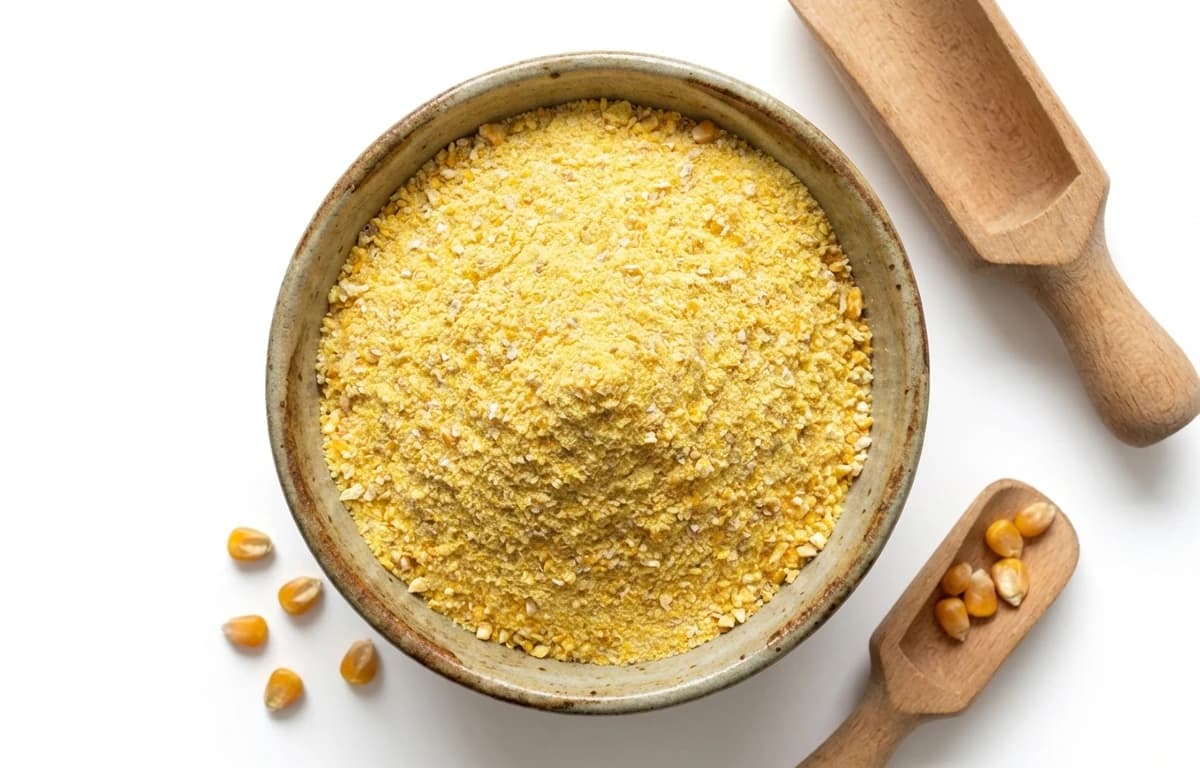
whole-grain yellow corn flour is a versatile ingredient found in cuisines around the world. With 361 calories per 100g and 6.93 grams of protein, it's a nutritious addition to many dishes.
Explore more ingredients in the grain category with complete nutrition information.
View all grain →Discover 0 recipes featuring whole-grain yellow corn flour with step-by-step instructions.
Browse recipes →Explore more ingredients similar to whole-grain yellow corn flour.
The most-searched ingredients on CraftMyMeals.
It is versatile and can be used to make tortillas, pancakes, muffins, and bread. It also works excellently as a gluten-free thickening agent for soups, stews, and gravies, or as a breading for fried foods.
Because it contains natural oils from the corn germ, it can spoil faster than refined flours. Store it in an airtight container in a cool, dark place for up to 3 months, or in the freezer for up to a year to maintain freshness.
Yellow corn flour is generally considered more nutritious because it contains higher levels of carotenoids (antioxidants) like lutein. While both provide similar fiber if they are whole-grain, the yellow variety offers additional benefits for eye health.