
Protein
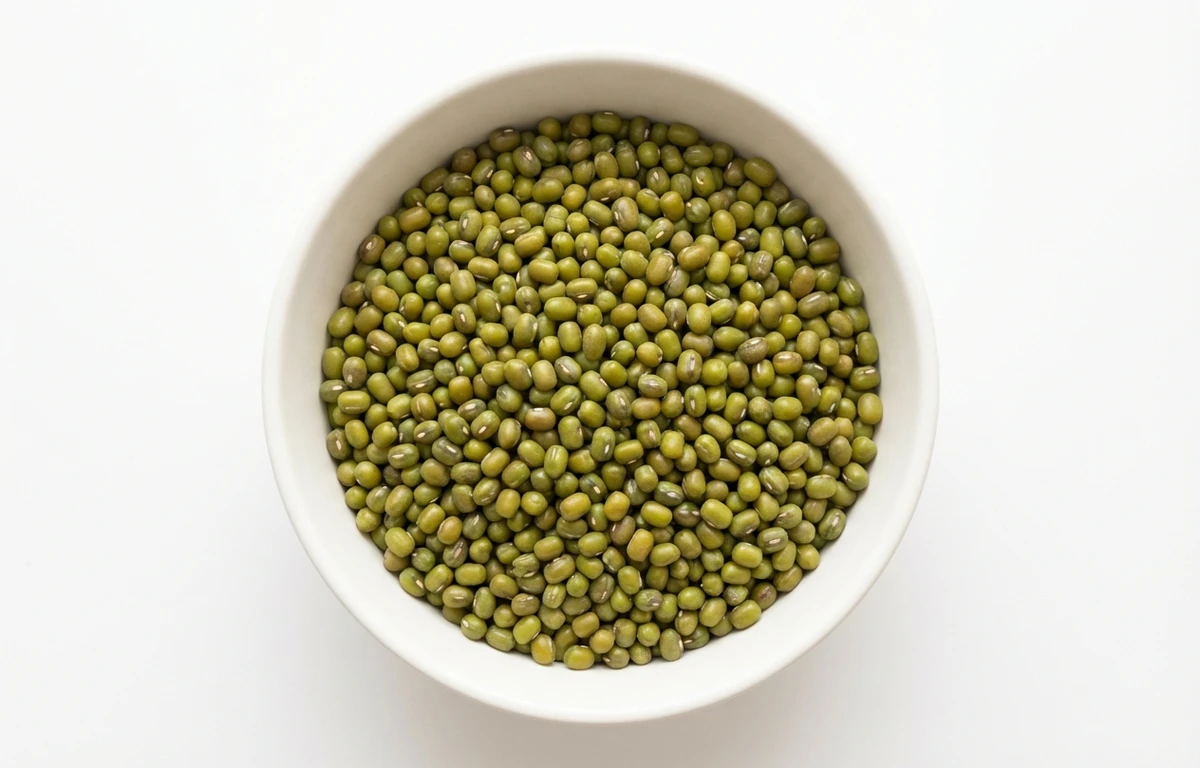
whole green mung beans.
VegetarianVeganGluten-freeDairy-freeNut-freePeanut-freeSoy-freeEgg-freeShellfish-freeHoney-freeAlcohol-free
ALSO KNOWN AS
hesarukalu
SERVING
CALORIES
347
PROTEIN
23.9g
CARBS
62.6g
FAT
1.1g
FIBER
16.3g
This ingredient is flagged as naturally gluten-free. Per 100 g, it provides 9.0 µg of vitamin K.
NUTRITION PROFILE · per 100 g
Everything in this ingredient.
MACRONUTRIENTS
Calories347kcal—
Protein23.9g48%
Carbohydrates62.6g23%
Fiber16.3g58%
Sugar6.6g13%
Total fat1.1g1%
Saturated fat0.35g2%
Trans fat0g—
Cholesterol0mg0%
Water9.1g—
MINERALS
Sodium15mg1%
Potassium1246mg27%
Calcium132mg10%
Iron6.7mg37%
Magnesium189mg45%
Phosphorus367mg29%
Zinc2.7mg24%
Copper0.94mg104%
Manganese1.0mg45%
Selenium8.2µg15%
VITAMINS
Vitamin A6.0µg1%
Vitamin C4.8mg5%
Vitamin D0µg0%
Vitamin E0.51mg3%
Vitamin K9.0µg8%
Thiamin (B1)0.62mg52%
Riboflavin (B2)0.23mg18%
Niacin (B3)2.3mg14%
Pantothenic acid (B5)1.9mg38%
Vitamin B60.38mg22%
Folate (B9)625µg156%
Vitamin B120µg0%
%DV based on a 2,000 cal diet. Source: USDA FoodData Central. A dash in the %DV column means there’s no established Daily Value for that nutrient.
MEASUREMENT CONVERSIONS
How much is what.
1 cup207g
1 tablespoon13g
1 teaspoon4.3g
1 ml0.9g
1 liter866.7g
HEALTH BENEFITS
Why eat it.
- ✓May help lower LDL ('bad') cholesterol levels, contributing to heart health.
- ✓Good source of essential nutrients such as folate, magnesium, and manganese.
COOKING TIPS
In the kitchen.
- 1Soak whole mung beans for at least 4 hours or overnight to significantly reduce cooking time and improve digestibility.
- 2To cook on the stovetop, use a ratio of 1 part beans to 3 parts water. Bring to a boil, then simmer for about 45-60 minutes until tender.
- 3Mung beans do not require pre-soaking for pressure cooking; cook for about 9-12 minutes on high pressure.
- 4Sprout mung beans by soaking them overnight, draining, and rinsing them twice daily for 2-4 days for a crunchy addition to salads and stir-fries.
STORAGE
Keep it fresh.
- Store dried mung beans in an airtight container in a cool, dark, and dry place for up to one year.
- Cooked mung beans can be stored in a sealed container in the refrigerator for 3-5 days or frozen for up to 6 months.
FAQ
Frequently asked questions.
How much protein is in whole green mung beans?
Whole green mung beans are protein-dense, containing approximately 23.86g of protein per 100g of dried beans. This makes them a superior protein source for vegetarians and vegans compared to many other grains.
Are mung beans keto-friendly?
No, mung beans are generally not keto-friendly. With approximately 62.62g of carbohydrates per 100g, they are too high in carbs for a strict ketogenic diet, though they are considered a healthy complex carbohydrate for other dietary patterns.
Do I need to soak whole green mung beans before cooking?
While not strictly required, soaking mung beans for 4-8 hours is recommended. Soaking reduces cooking time, helps break down complex sugars that cause gas, and improves the absorption of nutrients.
What do whole green mung beans taste like?
They have a mild, slightly sweet, and nutty flavor. Their versatile taste allows them to be used in a variety of dishes, ranging from savory soups and curries to sweet porridges and desserts.
How should I store dried mung beans and how long do they last?
Store dried mung beans in an airtight container in a cool, dry, and dark place. When stored properly, they can last for 1-2 years, though older beans may require longer cooking times to become tender.
Can you sprout whole green mung beans?
Yes, whole green mung beans are the most common beans used for sprouting. Sprouting them for 2-3 days increases their vitamin C content and makes their nutrients even easier for the body to absorb.
Are mung beans easier to digest than other legumes?
Yes, mung beans are widely considered one of the easiest legumes to digest. They are less likely to cause bloating or flatulence compared to beans like kidney beans or chickpeas, especially when soaked or sprouted.



















